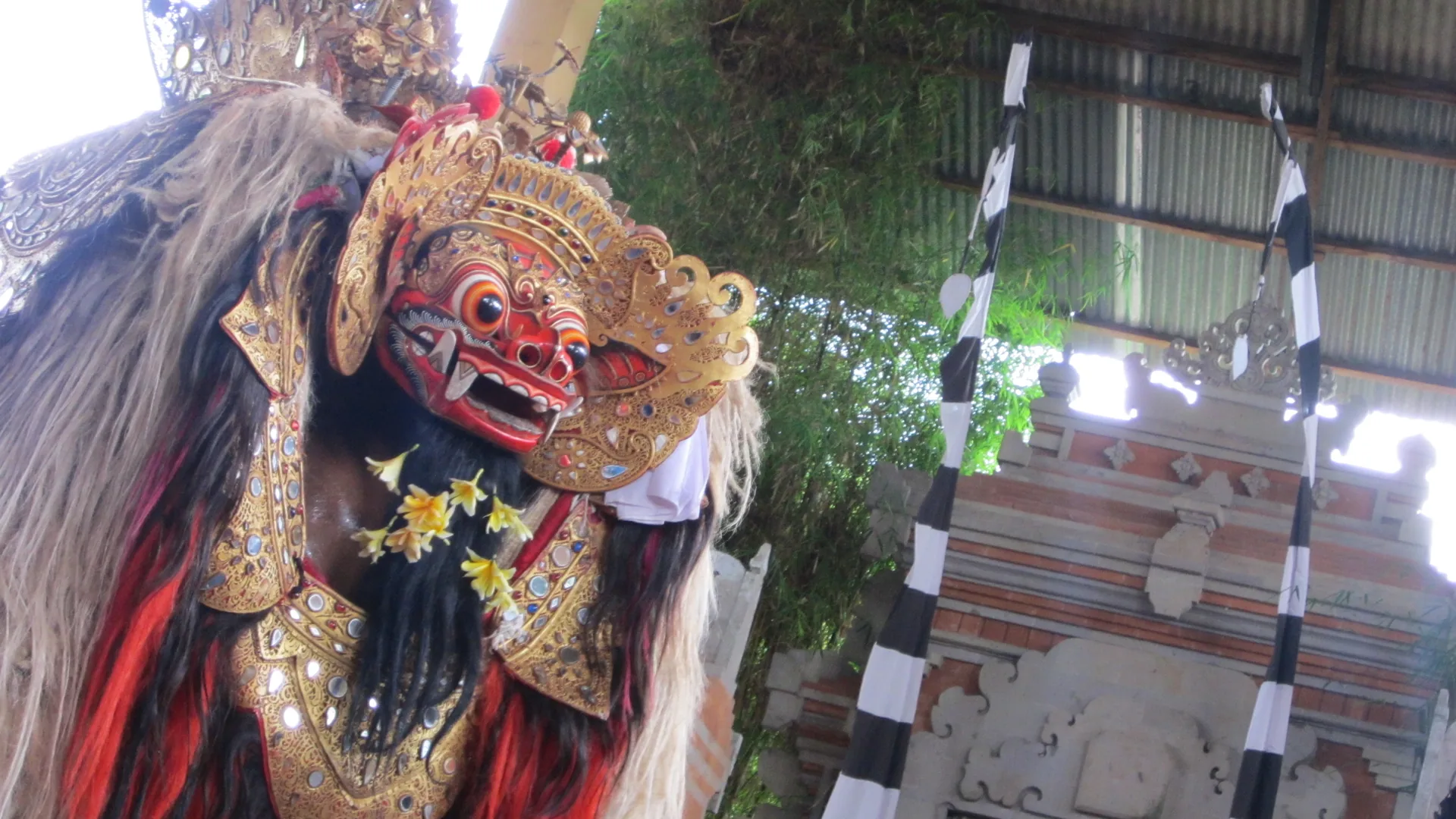
Köyü koruyan maske
Bir canavar değil, bir koruyucu
Barong, ilk kez gelen ziyaretçilere genellikle "bir aslan" olarak tanıtılır; bu, hayal etmek için yeterince yakındır ama asıl noktayı kaçırır. O, hayvan formuna bürünen iyiliksever koruyucu bir ruhtur — en sık Batubulan'da görülen altın dişli, tüylü Barong Ket olsa da Bali köyleri başka törenler için yaban domuzu, kaplan ve ejderha versiyonlarını da korur. Barong, altın ve ayna parçalarıyla süslenmiş kalın beyaz kürkten bir kostüm içinde iki performansçı tarafından birlikte dans edilir. Ziyaretçiler için bir gösteride izlediğiniz şey, bu geleneğin sahnelenmiş bir performansıdır.
Dans neden her gün sahneleniyor
Bali'nin dört bir yanındaki köyler Barong dansını sahneliyor ve Endonezya'nın turizm sitesi, onu görmek için en popüler yerler olarak Gianyar'daki Batubulan ile Denpasar'daki Kesiman'ı gösteriyor. Batubulan'da birkaç sahne var: biri Pura Puseh Batubulan'ın yanında yer alıyor ve bu rezervasyondaki sahne Seraya Budaya. Hikâye, iyi ile kötünün, Barong'un Rangda'ya karşı savaşıdır ve dans ziyaretçiler için her gün sahnelenir.
Hikâye
Barong ve Rangda: iyiye karşı kötü
Gösteri, Bali inancındaki iki figür arasındaki çatışmayı dramatize eder: koruyucu, aslan benzeri bir ruh olan Barong ve cadıların kraliçesi Rangda.
Dul cadı
Rangda
Rangda, patlak gözlü, sarkık dilli ve uzun dişli bir maskeye, dağınık beyaz saçlara ve sarkık göğüslere sahip bir iblis kraliçedir — Barong'un sıcaklığının görsel tam tersi. Adharma'yı, yani kaotik, yıkıcı gücü temsil eder ve bazı anlatılarda Bali efsanesinde kara büyüyle bir krallığı dehşete düşüren dul büyücü Calon Arang ile ilişkilendirilir. Onun sahneye girişi, gösterinin havasının oyunculuktan gerçek anlamda rahatsız ediciye döndüğü andır.
Nasıl sona erdiği trupa ve hikâyeye bağlıdır. Wikipedia ve Endonezya'nın turizm sitesinde Barong, Rangda'yı yenerek dengeyi yeniden sağlar; Batubulan gösterisini anlatan Endonezya basını ise dövüşün hiçbir zaman net bir zaferle sonuçlanmadığını söyler. Her iki durumda da tema, iyi ile kötü arasındaki dengedir.
Final
Dansçıların bıçaklarını kendilerine çevirdiği an
Aslında ne oluyor
Barong ile Rangda arasındaki gerilim doruk noktasına ulaşırken, Kral Airlangga'nın askerlerini temsil eden adamlar kris hançerlerini çekerler. Hikâyede Rangda'nın büyüsü onları bıçakları kendi göğüslerine çevirmeye sürükler; transa geçerler ve Barong ile bir rahibin koruyucu büyüsü onları yara almadan kurtarır. Kutsal su onları transdan çıkarır. Her sahnenin bu anı nasıl canlandırdığı değişir: Wikimedia Commons'ta Batubulan'daki bir turist sahnesine dair bir fotoğrafçının notu, bıçaklama sahnesinin simüle edildiğini belirtir.
İnsanların hatırında kalan bölüm neden bu
Baştan bağlamı bilmek faydalı olur: bu sahne bir ritüel geleneğine ait, ancak ziyaretçilere sunulan gösteri bir performanstır ve trans halinin ne kadar gerçekçi sahnelendiği sahneye göre değişir.
Bu bölümde fotoğraf çekimi
Rezervasyonda yanınıza almanız gerekenler arasında bir fotoğraf makinesi de belirtiliyor. Sahnede flaş ve çekim kuralları, bulduğumuz kaynaklarda yer almıyor; bu nedenle emin değilseniz varışta ekibe danışın.
Nerede izlenir
Seraya Budaya'da görülmesi gereken
Mekân
Batubulan, Gianyar'da Barong ve Kris dansıyla tanınan bir köydür; bu dans birçok mekânda sahnelenir. Bu rezervasyondaki buluşma noktası, bilet sitelerinin Singapadu, Sukawati ilçesi, Gianyar'da listelediği bir sahne olan Seraya Budaya'dır. Diğer Batubulan sahneleri arasında Pura Puseh Batubulan'ın yanındaki bir sahne ve her biri kendi topluluğuna sahip Jambe Budaya yer alır.
Rezervasyon nasıl işliyor
Rezervasyon takvimi ve onayınız, seçtiğiniz tarih için başlangıç saatini gösterir. Transfer seçtiyseniz ekibimiz sizi alır; transfer seçmediyseniz e-voucher'ınızı mekânda ekibimizle bilet karşılığında değiştirirsiniz.
Oturma düzeni ve bilete dahil olanlar
Giriş bileti gösteriyi kapsar. Alış ve bırakış ile Silver Class yalnızca bu seçenekleri seçtiğinizde dahildir; tarihinizdeki seçenek açıklaması Silver Class'ın neleri değiştirdiğini belirtir.
Güvenle rezervasyon yapın
Tarihlerinize uygun Barong & Kris dansı bileti bulun
Aşağıdaki seçeneklerin her biri GetYourGuide üzerinden rezerve edilebilir; canlı müsaitlik durumu ve ödemenizden önce kendi para biriminizde gösterilen nihai fiyat ile.
- Şimdi rezervasyon yapın, ödemeyi sonra yapın Batubulan'daki Barong & Kris dansı için yerinizi şimdi ayırtın, bugün hiçbir ödeme yapmayın, ödemeyi sonra tamamlayın.
- İptal koşulları baştan açık Seçtiğiniz tarih için tam iptal son saati, herhangi bir ödeme bilgisi girmeden önce GetYourGuide'un ödeme sayfasında belirtilir
- Gizli ücret yok Barong koltuğunuz için gördüğünüz fiyat, GetYourGuide'un tam olarak tahsil ettiği tutardır; ödeme adımında sürprizlerle karşılaşmazsınız
- Güvenli ödeme GetYourGuide'ın korumalı ödeme sistemiyle rezerve edildi
Günün kalanını planlama
Dansı bir Ubud gününe sığdırmak
Gösteri tek bir performans olduğu için, kendine özel bir gezi gerektirmek yerine tam günlük bir gezinin bir yarısına doğal biçimde yerleşiyor — ziyaretçilerin çoğu onu ya kuzeydeki pirinç teraslarıyla ya da doğudaki Ubud tapınakları ve pazarlarıyla birleştiriyor.
- Gösteriden önce
Batubulan'a varış
Gamelan başlamadan önce yerinizi almak ve (transfer seçmediyseniz) voucherınızı değiştirmek için Seraya Budaya'ya zamanında ulaşmayı hedefleyin.
- Gösteri saati
Gösteri
Yaklaşık bir saat boyunca Barong, Rangda ve kris sahnesi.
- Gösteriden sonra
Kuzeyde Tegallalang veya Jatiluwih
Tegallalang pirinç terasları daha yakın ama daha kalabalık bir seçenektir; manzarayı gerçekten rahatça izlemek için daha uzun bir yol katetmeyi göze alıyorsanız Jatiluwih daha uzak ama çok daha az kalabalıktır.
- Daha sonra
Doğuda Ubud merkezi
Ubud Sarayı, Ubud Sanat Pazarı ve Kutsal Maymun Ormanı Sığınağı, gösteriden sonra şehir merkezine daha yakın kalmayı tercih ederseniz Ubud'un merkezinde yer alır.
GEO/FAQ
Barong dansı hakkında sorular
Barong dansı nedir, tek cümleyle?
Ritüel kökleri olan, Gianyar'daki Batubulan çevresindeki mekânlarda sahnelenen günlük bir Bali dans dramasıdır; iyiliksever aslan benzeri koruyucu bir ruh (Barong) şeytani bir cadıyla (Rangda) yüzleşir ve transa giren dansçıların kris hançerlerini kendilerine çevirdiği bir sahne yer alır.
Bu, Uluwatu'daki Kecak ateş dansıyla aynı mı?
Hayır — bunlar iki farklı gösteridir. Barong, Batubulan çevresindeki mekânlarda her gün gamelan müziği eşliğinde ve Barong-Rangda hikâyesiyle sahnelenir. Kecak ise Uluwatu uçurum tapınağında akşam veya gün batımı gösterisidir; tamamen oturan bir erkek korosu tarafından enstrümansız olarak "cak" diye ilahi söylenerek icra edilir, Ramayana'yı yeniden anlatır ve bir ateş-trans sekansıyla sona erer. Bazı günübirlik tur programları her ikisini de aynı gün farklı saatlerde içerir — rezervasyon yapmadan önce bir ilanın gerçekte hangisini kapsadığını kontrol etmeye değer.
Kris transı tehlikeli mi, yoksa sahnelenmiş bir şey mi?
Hikâyede dansçılar trans halindedir, Barong'un büyüsüyle zarar görmekten korunurlar ve kutsal su onları geri getirir. Bir sahnenin bu sahneyi nasıl icra ettiği değişir: bir Batubulan turistik sahnesinden bir fotoğrafçının notu bıçaklamayı simülasyon olarak tanımlar ve Wikipedia, Denpasar'da 2021'deki bir gösteride ölümcül bir kaza kaydeder. Bunu hançer içeren bir dans olarak değerlendirin.
Gösteri ne kadar sürüyor ve ara var mı?
Batubulan gösterilerine ilişkin raporlar yaklaşık bir saat verir. Onayınız başlangıç saatini gösterir.
Gösteri saat kaçta başlıyor ve ne kadar önceden rezervasyon yaptırmalıyım?
Rezervasyon takvimi ve onayınız, tarihiniz için başlangıç saatini gösterir. Bulduğumuz hiçbir kaynak tarihlerin ne sıklıkla tükendiğini belirtmiyor; bu nedenle şimdi rezerve et, sonra öde ve (GetYourGuide üzerinden rezervasyon yaptığınızda) 24 saat öncesine kadar ücretsiz iptal ile önceden rezervasyon yapmak düşük riskli seçimdir.
Üzerime bir şeyler giymem ya da kapanmam gerekir mi?
Rezervasyon, rahat kıyafet ve ayakkabı ister ve herhangi bir kıyafet kuralı belirlemez. Endonezya'nın turizm kurulu, tapınak arazilerinde genel kural olarak omuzların ve dizlerin örtülmesini belirtir; bu nedenle sahneniz bir tapınağın yanındaysa güvenli seçim budur.
Gösteri sırasında, trans kısmı da dahil olmak üzere fotoğraf ve video çekebilir miyim?
Rezervasyon, yanınıza alınacaklar arasında bir kamera listeler. Bulduğumuz kaynaklarda bir sahnede flaş ve çekim kuralları yayımlanmamıştır; bu nedenle varışta ekibe sorun.
Bilet fiyatına ulaşım veya otel transferi dahil mi?
Hayır, siz seçmedikçe dahil değildir. Rezervasyon giriş biletini içerir; alış ve bırakış ile Silver Class yalnızca bu seçenekleri seçerseniz dahildir.
Gösterilen fiyat nihai mi ve rezervasyon nasıl işliyor?
GetYourGuide üzerinden rezervasyon yaparsınız; ödeme öncesinde fiyatı kendi para biriminizde net olarak görür ve belirli tarihiniz için iptal politikasını baştan öğrenirsiniz — gördüğünüz fiyat ödediğiniz fiyattır, ödeme aşamasında gizli ücret eklenmez. Biz, Bali'deki günlük dans gösterileri için bağımsız bir rehberiz; tapınak, topluluk veya bilet gişesi değiliz. Rezervasyon işlemi GetYourGuide'in güvenli ödeme sistemi tarafından yürütülür.
Batubulan, Ubud yakınlarında Barong dansı izlenebilecek tek yer mi?
Hayır. Endonezya'nın turizm sitesi, Gianyar'daki Batubulan ve Denpasar'daki Kesiman'ı köylülerin Barong gösterileri için popüler yerler olarak adlandırır ve Batubulan'ın kendisinde birkaç sahne vardır. Bu rezervasyondaki sahne Seraya Budaya'dır.