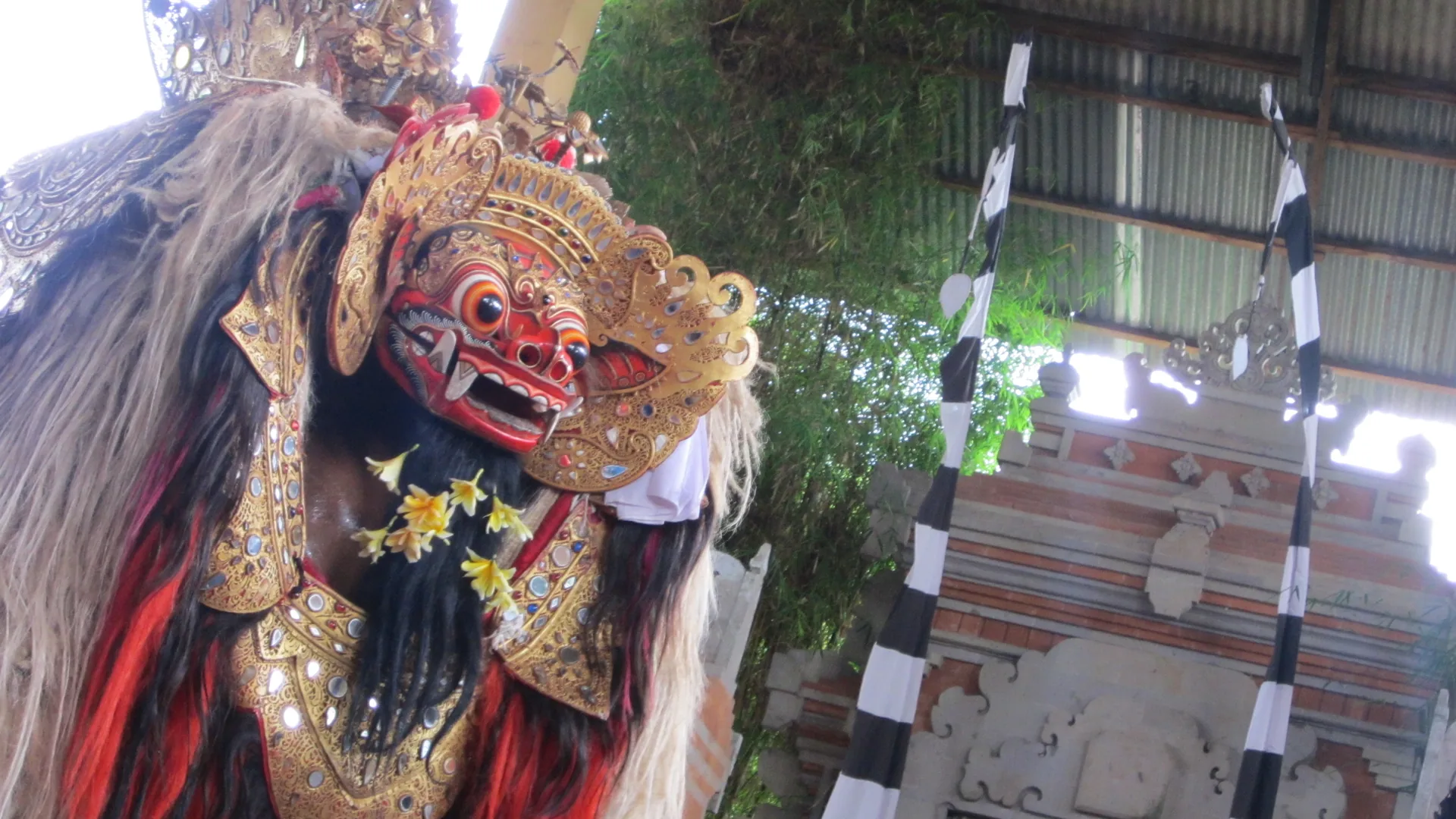
Masken som vaktar byn
En beskyddare, inte ett monster
Barong beskrivs vanligtvis för förstagångsbesökare som "ett lejon", vilket är nära nog för att föreställa sig men missar poängen. Han är en välvillig skyddande ande som antar djurform – oftast den lurviga Barong Ket med guldtänder som ses i Batubulan, även om balinesiska byar också håller varianter av vildsvin, tiger och drake för andra ceremonier. Barong dansas av två artister som arbetar tillsammans, i en kostym av tjock vit päls dekorerad med guld och spegelbitar. Det du ser på en föreställning för besökare är en iscensatt version av den traditionen.
Varför dansen uppförs varje dag
Byar över hela Bali uppför Barong-dansen, och Indonesiens turismsida utnämner Batubulan i Gianyar och Kesiman i Denpasar till de mest populära platserna att se den. Batubulan har flera scener: en ligger intill Pura Puseh Batubulan, och scenen i denna bokning är Seraya Budaya. Berättelsen är en kamp mellan gott och ont, Barong mot Rangda, och dansen uppförs dagligen för besökare.
Berättelsen
Barong och Rangda: gott mot ont
Föreställningen dramatiserar en konflikt ur balinesisk tro mellan två gestalter: Barong, en skyddande lejonliknande ande, och Rangda, häxornas drottning.
Änke-häxan
Rangda
Rangda är en demondrottning med en mask med utstående ögon, hängande tunga och långa huggtänder, med svepande vitt hår och hängande bröst — den visuella motsatsen till Barongs värme. Hon representerar adharma: kaotisk, destruktiv kraft, och i vissa berättelser kopplas hon till Calon Arang, en änke-trollkvinna ur balinesisk legend som terroriserade ett kungarike med svart magi. Hennes entré är ögonblicket då föreställningens ton skiftar från lekfull till genuint olustig.
Hur den slutar beror på truppen och berättelsen. Wikipedia och Indonesiens turistsajt låter Barong besegra Rangda och återställa balansen; indonesisk press som beskriver en föreställning i Batubulan säger att kampen aldrig slutar i en tydlig seger. Hur som helst är temat balansen mellan gott och ont.
Finalen
Ögonblicket dansarna vänder bladen inåt
Vad som faktiskt sker
När konfrontationen mellan Barong och Rangda når sin kulmen drar män som representerar kung Airlanggas soldater kris-dolkar. I berättelsen driver Rangdas magi dem att vända bladen mot sina egna bröst; de faller i trance, och skyddsmagi från Barong och en präst lämnar dem oskadda. Heligt vatten för dem ur trancen. Hur en given scen framför scenen varierar: en fotografanteckning på Wikimedia Commons från en turistscen i Batubulan beskriver stabbningen som simulerad.
Varför det är den delen folk minns
Det hjälper att känna till sammanhanget innan man går in: scenen tillhör en rituell tradition, men en föreställning för besökare är en uppvisning, och hur bokstavligt trancen iscensätts beror på scenen.
Fotografering under den här delen
Bokningen listar en kamera bland sakerna att ta med. Regler om blixt och filmning på en scen publiceras inte i de källor vi hittade, så fråga teamet vid ankomst om du är osäker.
Var du ser den
Se den på Seraya Budaya
Platsen
Batubulan är en by i Gianyar känd för sin Barong- och Kris-dans, som iscensätts på flera platser. Mötesplatsen för denna bokning är Seraya Budaya, en scen som biljettsajter listar i Singapadu, distriktet Sukawati, Gianyar. Andra scener i Batubulan inkluderar en bredvid Pura Puseh Batubulan och Jambe Budaya, var och en med sin egen trupp.
Så fungerar bokningen
Bokningskalendern och din bekräftelse visar starttiden för ditt datum. Om du valde upphämtning hämtar teamet dig; om du valde ingen transfer byter du din e-voucher mot en biljett med teamet på platsen.
Sittplatser och vad som ingår
Inträdesbiljetten inkluderar föreställningen. Upphämtning och avlämning, samt Silver Class, ingår endast om du väljer dessa alternativ; alternativbeskrivningen på ditt datum säger vad Silver Class förändrar.
Boka tryggt
Hitta en biljett till Barong & Kris-dansen för dina datum
Alla alternativ nedan kan bokas via GetYourGuide med aktuell tillgänglighet och slutpriset visas i din egen valuta innan du betalar.
- Boka nu, betala senare Boka din plats till Barong- och Kris-dansen i Batubulan redan nu – betala ingenting idag, gör upp om betalningen senare.
- Avbokningsvillkor redan från början Den exakta avbokningsfristen för ditt valda datum anges på GetYourGuides kassasida innan du anger några betaluppgifter
- Inga dolda avgifter Det du ser för din Barong-plats är exakt vad GetYourGuide tar betalt – inga överraskningar i kassan
- Säker betalning Bokat genom GetYourGuide skyddade betalning
Planera resten av dagen
Att foga in dansen i en dag i Ubud
Eftersom föreställningen är en enda show passar den naturligt in på ena sidan av en hel dags utflykt snarare än att kräva en egen dedikerad resa — de flesta besökare kombinerar den med antingen risterrasserna i norr eller Ubuds tempel och marknader i öster.
- Före föreställningen
Anländ till Batubulan
Sikta på att nå Seraya Budaya i god tid för att byta din voucher (om du valde ingen transfer) och hitta en plats innan gamelanen börjar.
- Föreställningstid
Föreställningen
Ungefär en timme av Barong, Rangda och kris-scenen.
- Efter föreställningen
Norrut till Tegallalang eller Jatiluwih
Risterrasserna i Tegallalang är det närmare, mer välbesökta alternativet; Jatiluwih ligger längre bort men är betydligt mindre folktätt, om du hellre byter restid mot utrymme att faktiskt betrakta utsikten.
- Senare
Österut till centrala Ubud
Ubud Palace, Ubuds konstmarknad och Sacred Monkey Forest Sanctuary ligger i centrala Ubud, om du hellre vill bo nära staden efter föreställningen.
GEO/FAQ
Frågor om Barong-dansen
Vad är Barong-dansen, i en mening?
Det är ett dagligt balinesiskt dansdrama med rituella rötter, uppfört på scener runt Batubulan i Gianyar, där en välvillig lejonliknande skyddsande (Barong) konfronterar en demonhäxa (Rangda), med en scen där dansare i trans vänder kris-dolkar mot sig själva.
Är detta samma sak som Kecak-elddansen vid Uluwatu?
Nej — det är två olika föreställningar. Barong uppförs dagligen på scener runt Batubulan, med gamelanmusik och en Barong-mot-Rangda-historia. Kecak är en kvälls- eller solnedgångsföreställning vid Uluwatu-klipptempelet, framförd helt av en sittande manskör som chantar "cak" utan instrument, och som återberättar Ramayana och avslutas med en eldtrans-sekvens. Vissa dagsutflykter inkluderar båda samma dag vid olika tider — värt att kontrollera vilken av dem en annons faktiskt omfattar innan du bokar.
Är kris-transen farlig, eller är den iscensatt?
I berättelsen är dansarna i trans, skyddade från skada av Barongs magi, och heligt vatten för dem tillbaka. Hur en scen framför scenen varierar: en fotografanteckning från en turistscen i Batubulan beskriver stabbningen som simulerad, och Wikipedia dokumenterar en dödsolycka vid en föreställning 2021 i Denpasar. Behandla det som en dans som involverar dolkar.
Hur länge varar showen, och finns det paus?
Rapporter från Batubulan-föreställningar anger cirka en timme. Din bekräftelse visar starttiden.
Vilken tid börjar showen, och hur långt i förväg bör jag boka?
Bokningskalendern och din bekräftelse visar starttiden för ditt datum. Ingen källa vi hittat säger hur ofta datum säljer slut, så att boka i förväg med boka nu, betala senare och gratis avbokning upp till 24 timmar innan (när du bokar via GetYourGuide) är det lågriskval.
Behöver jag klä upp mig eller täcka mig?
Bokningen anger bekväma kläder och skor och sätter ingen klädkod. Indonesiens turistmyndighet anger att täckta axlar och knän är den allmänna regeln på tempelområden, så det är det säkra valet om din scen ligger intill ett tempel.
Kan jag ta foton och filma under föreställningen, även trans-delen?
Bokningen listar en kamera bland sakerna att ta med. Regler för blixt och filmning vid en scen publiceras inte i de källor vi hittat, så fråga teamet vid ankomst.
Ingår transport eller hotellhämtning i biljettpriset?
Nej, inte om du inte väljer det. Bokningen inkluderar inträdesbiljetten, med upphämtning och avlämning samt Silver Class endast om du väljer dessa alternativ.
Är priset som visas slutgiltigt, och hur fungerar bokningen?
Du bokar via GetYourGuide, som visar slutpriset i din egen valuta innan du betalar och anger avbokningsvillkoren för ditt specifika datum på förhand – priset du ser är priset du betalar, utan dolda avgifter vid utcheckningen. Vi är en oberoende guide till Balis dagliga dansföreställningar, inte templet, truppen eller biljettkontoret; själva bokningen hanteras via GetYourGuides säkra utcheckning.
Är Batubulan den enda platsen att se en Barong-dans nära Ubud?
Nej. Indonesiens turistsajt nämner Batubulan i Gianyar och Kesiman i Denpasar som populära platser för byinvånares Barong-föreställningar, och Batubulan har självt flera scener. Scenen i denna bokning är Seraya Budaya.