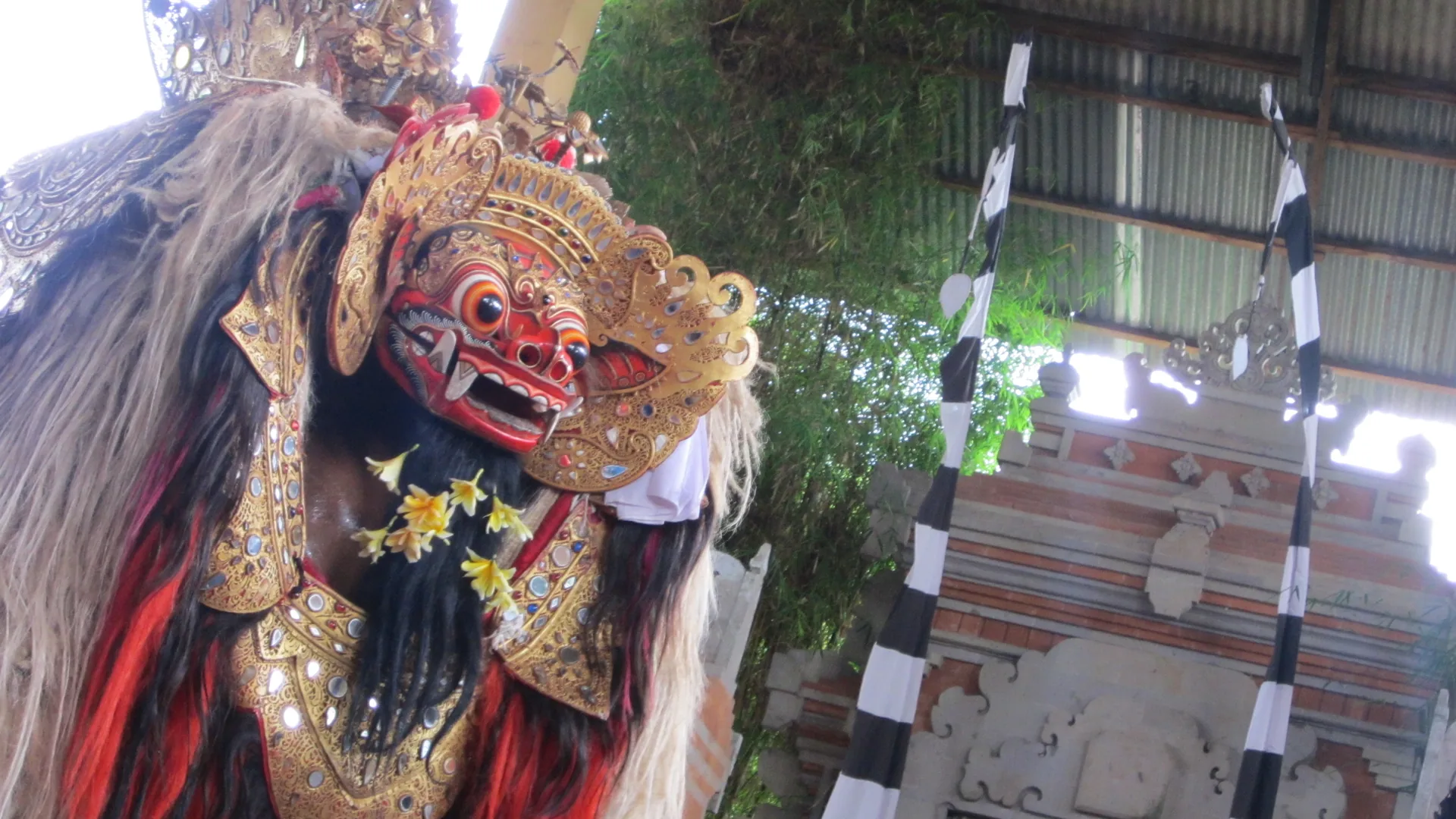
Maska, ktorá chráni dedinu
Ochranca, nie netvor
Barong sa návštevníkom, ktorí ho vidia prvýkrát, zvyčajne opisuje ako „lev“, čo je na predstavu celkom výstižné, no podstatu to vystihuje len čiastočne. Je to dobrotivý ochranný duch, ktorý na seba berie zvieraciu podobu — najčastejšie chlpatý Barong Ket so zlatými klmi, akého vidno v Batubulane, hoci balijské dediny si pre iné obrady uchovávajú aj verzie v podobe diviaka, tigra či draka. Baronga tancujú dvaja umelci spoločne, v kostýme z hrubej bielej srsti zdobenom zlatom a zrkadielkami. To, čo sledujete na predstavení pre návštevníkov, je inscenovaná podoba tejto tradície.
Prečo sa tanec inscenuje každý deň
Barongov tanec inscenujú dediny po celej Bali a indonézsky turistický portál uvádza Batubulan v Gianyare a Kesiman v Denpasare ako najobľúbenejšie miesta, kde ho vidieť. Batubulan má niekoľko pódií: jedno sa nachádza vedľa Pura Puseh Batubulan a pódium na tejto rezervácii je Seraya Budaya. Príbeh je bojom dobra proti zlu, Barong proti Rangde, a tanec sa inscenuje denne pre návštevníkov.
Príbeh
Barong a Rangda: dobro proti zlu
Predstavenie dramatizuje konflikt z balijského presvedčenia medzi dvoma postavami: Barongom, ochranným duchom v podobe leva, a Rangdou, kráľovnou čarodejníc.
Vdova-čarodejnica
Rangda
Rangda je démonická kráľovná s maskou vypúlených očí, visiacim jazykom a dlhými tesákmi, s dlhými bielymi vlasmi a visiacimi prsiami — vizuálny protiklad Barongovej vľúdnosti. Predstavuje adharmu: chaotickú, ničivú silu, a v niektorých podaniach sa spája s Calon Arang, vdovou-čarodejnicou z balijskej legendy, ktorá čiernou mágiou terorizovala celé kráľovstvo. Jej príchod je chvíľou, keď sa tón predstavenia zmení z hravého na naozaj znepokojujúci.
Ako sa skončí, závisí od súboru a príbehu. Wikipedia a indonézsky turistický portál uvádzajú, že Barong porazí Rangdu a obnoví rovnováhu; indonézska tlač opisujúca predstavenie v Batubulane tvrdí, že boj sa nikdy neskončí jasným víťazstvom. Tak či onak, témou je rovnováha medzi dobrom a zlom.
Finále
Chvíľa, keď tanečníci obrátia čepele proti sebe
Čo sa vlastne deje
Keď napätie medzi Barongom a Rangdou vrcholí, muži predstavujúci vojakov kráľa Airlanggu vytiahnu dýky kris. V príbehu ich Rangdina mágia prinúti obrátiť čepele proti vlastným prsiam; upadnú do tranzu a ochranná mágia Baronga a kňaza ich nechá nezranených. Svätá voda ich preberie z tranzu. Ako konkrétné javisko scénu stvárni, sa líši: poznámka fotografa na Wikimedia Commons z turistického javiska v Batubulane opisuje bodanie ako simulované.
Prečo si túto časť ľudia najviac pamätajú
Pomôže vedieť, do čoho idete: scéna patrí k rituálnej tradícii, ale predstavenie pre návštevníkov je performancia a to, ako doslovne je tranz stvárnený, závisí od javiska.
Fotografovanie počas tejto časti
V zozname vecí na rezervácii je uvedený aj fotoaparát. Pravidlá o blesku a filmovaní na javisku nie sú zverejnené v zdrojoch, ktoré sme našli, preto sa v prípade neistoty opýtajte tímu pri príchode.
Kde ho vidieť
Uvidíte to v Seraya Budaya
Miesto konania
Batubulan je dedina v Gianyare známa svojím tancom Barong a Kris, ktorý sa hrá na niekoľkých miestach. Miesto stretnutia pri tejto rezervácii je Seraya Budaya, javisko, ktoré ticketové stránky uvádzajú v Singapadu, okres Sukawati, Gianyar. Medzi ďalšie javiská v Batubulane patrí jedno vedľa Pura Puseh Batubulan a Jambe Budaya, každé s vlastným súborom.
Ako funguje rezervácia
Kalendár rezervácie a vaše potvrdenie zobrazujú čas začiatku pre váš dátum. Ak ste si zvolili vyzdvihnutie, tím si po vás príde; ak ste si zvolili bez transferu, vymeníte svoj e-voucher za vstupenku s tímom na mieste.
Sedenie a čo je v cene
Vstupenka zahŕňa predstavenie. Vyzdvihnutie a odvoz, ako aj Silver Class, sú zahrnuté len vtedy, ak si tieto možnosti vyberiete; popis možnosti pre váš dátum uvádza, čo Silver Class mení.
Rezervujte s istotou
Nájdite lístok na tanec Barong & Kris na vaše termíny
Každú z nižšie uvedených možností si môžete rezervovať cez GetYourGuide – s aktuálnou dostupnosťou a konečnou cenou zobrazenou vo vašej mene ešte pred platbou.
- Rezervujte teraz, zaplaťte neskôr Rezervujte si miesto na tanec Barong & Kris v Batubulane už teraz, dnes neplatíte nič, vyrovnáte neskôr.
- Podmienky zrušenia jasne vopred Presný termín zrušenia pre váš zvolený dátum je uvedený na pokladničnej stránke GetYourGuide predtým, než zadáte akékoľvek platobné údaje
- Žiadne skryté poplatky To, čo vidíte za svoje miesto Barong, je presne to, čo GetYourGuide účtuje – žiadne prekvapenia pri platbe
- Bezpečná platba Rezervované cez chránenú platbu GetYourGuide
Plánovanie zvyšku dňa
Ako zaradiť tanec do dňa v Ubude
Keďže ide o jediné predstavenie, prirodzene zapadne na jednu stranu celodenného výletu a nevyžaduje si vlastnú samostatnú cestu — väčšina návštevníkov ho spája buď s ryžovými terasami na severe, alebo s Ubudskými chrámami a trhmi na východe.
- Pred predstavením
Príchod do Batubulanu
Snážte sa doraziť do Seraya Budaya s dostatočným predstihom, aby ste si vymenili voucher (ak ste si zvolili bez transferu) a našli si miesto pred začiatkom gamelanu.
- Čas predstavenia
Predstavenie
Približne hodina Baronga, Rangdy a scény s kris.
- Po predstavení
Na sever do Tegallalangu alebo Jatiluwihu
Ryžové terasy Tegallalang sú bližšou, no rušnejšou možnosťou; Jatiluwih je ďalej, no oveľa menej preplnené, ak radšej vymeníte dlhší čas na cestu za priestor, kde si výhľad naozaj vychutnáte.
- Neskôr
Na východ do centra Ubudu
Ubud Palace, Ubud Art Market a Sacred Monkey Forest Sanctuary sa nachádzajú v centre Ubudu, ak by ste po predstavení radšej zostali bližšie k mestu.
GEO/FAQ
Otázky o tancovaní Barong
Čo je tanec Barong v jednej vete?
Je to každodenná balijská tanečná dráma s rituálnymi koreňmi, uvádzaná na scénach v okolí Batubulanu v Gianyare, v ktorej dobrotivý duch ochrancu podobný levovi (Barong) čelí démonickej čarodejnici (Rangda), so scénou, v ktorej tanečníci v tranzu obracajú kris dýky proti sebe.
Je to to isté ako Kecak ohnivý tanec v Uluwatu?
Nie — sú to dve rôzne predstavenia. Barong sa uvádza denne na scénach v okolí Batubulanu, s gamelanovou hudbou a dejovou líniou Barong proti Rangde. Kecak je večerná alebo západom slnka predstavenie v chrámovom komplexe na útese Uluwatu, ktoré úplne odohráva sediaci mužský zbor skandujúci „cak" bez nástrojov, prerozprávajúci Ramayanu a končiaci ohnivou tranzovou sekvenciou. Niektoré itineráre denných výletov zahŕňajú obe v ten istý deň v rôznych časoch — pred rezerváciou sa oplatí overiť, ktoré predstavenie daná ponuka skutočne zahŕňa.
Je kris tranz nebezpečný, alebo ide o inscenáciu?
V príbehu sú tanečníci v tranzu, chránení pred zranením Barongovou mágiou, a svätená voda ich privádza späť. Ako scéna predstavenie stvárňuje, sa líši: poznámka fotografa z jednej turistickej scény v Batubulane opisuje bodnutie ako simulované a Wikipedia zaznamenáva smrteľnú nehodu na predstavení v roku 2021 v Denpasare. Berte to ako tanec, ktorý zahŕňa dýky.
Ako dlho predstavenie trvá a je tam prestávka?
Správy o predstaveniach v Batubulane uvádzajú približne hodinu. Váš potvrdzovací e-mail uvádza čas začiatku.
O koľkej začína show a ako dlho vopred si mám rezervovať?
Rezervačný kalendár a vaše potvrdenie uvádzajú čas začiatku pre váš dátum. Žiadny zdroj, ktorý sme našli, neuvádza, ako často sa dátumy vypredajú, takže rezervácia vopred s možnosťou rezervovať teraz, zaplatiť neskôr a bezplatným zrušením až 24 hodín pred termínom (pri rezervácii cez GetYourGuide) je voľbou s nízkym rizikom.
Musím sa obliecť formálne alebo si zakryť telo?
Rezervácia vyžaduje pohodlné oblečenie a obuv a nestanovuje žiadny dress code. Indonézska turistická rada uvádza zakryté ramená a kolená ako všeobecné pravidlo v chrámových priestoroch, takže to je bezpečná voľba, ak sa vaša scéna nachádza vedľa chrámu.
Môžem počas predstavenia vrátane tranzovej časti fotografovať a natáčať video?
Rezervácia uvádza fotoaparát medzi vecami, ktoré si treba vziať. Pravidlá týkajúce sa blesku a filmovania na scéne nie sú zverejnené v zdrojoch, ktoré sme našli, preto sa informujte u tímu pri príchode.
Je v cene lístka zahrnutá doprava alebo vyzdvihnutie z hotela?
Nie, iba ak si to vyberiete. Rezervácia zahŕňa vstupenku, pričom vyzdvihnutie a odvoz a Silver Class sú zahrnuté len vtedy, ak si tieto možnosti vyberiete.
Je uvedená cena konečná a ako funguje rezervácia?
Rezervujete cez GetYourGuide, ktorý zobrazí konečnú cenu vo vašej mene ešte pred platbou a vopred uvedie podmienky storna pre váš konkrétny termín – cena, ktorú vidíte, je cena, ktorú zaplatíte, bez skrytých poplatkov pri dokončení nákupu. Sme nezávislý sprievodca dennými tanečnými predstaveniami na Bali, nie chrám, súbor ani pokladňa; samotná rezervácia prebieha cez bezpečný pokladničný systém GetYourGuide.
Je Batubulan jediné miesto, kde sa dá pri Ubud-e vidieť tanec Barong?
Nie. Indonézska turistická stránka uvádza Batubulan v Gianyare a Kesiman v Denpasare ako obľúbené miesta pre dedinské Barong predstavenia a samotný Batubulan má niekoľko scén. Scéna v tejto rezervácii je Seraya Budaya.