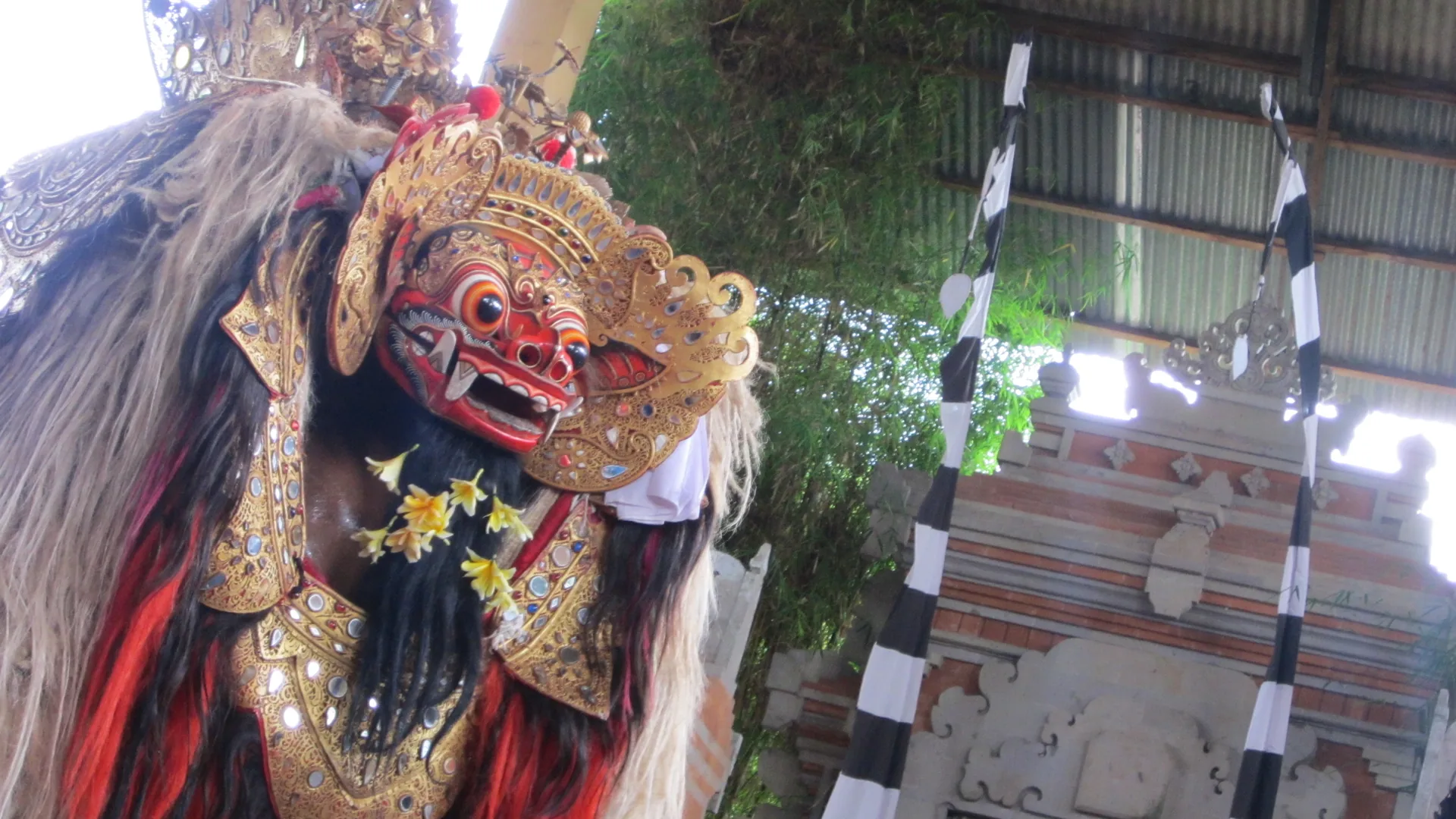
Маска, что охраняет деревню
Защитник, а не чудовище
Баронг обычно описывают тем, кто приезжает на Бали впервые, как «льва» — этого достаточно, чтобы представить себе образ, но упускает самую суть. Он — доброжелательный дух-защитник, принимающий облик животного: чаще всего это косматый Баронг Кет с золотыми клыками, которого можно увидеть в Батубулане, хотя в балийских деревнях для других церемоний держат также версии в виде кабана, тигра и дракона. Баронга танцуют два исполнителя, работающие в паре, в костюме из густого белого меха, украшенного золотом и зеркальными пластинами. То, что вы видите на представлении для туристов, — это сценическая версия этой традиции.
Почему танец исполняют каждый день
В деревнях по всему Бали исполняют танец Баронг, и туристический портал Индонезии называет Батубулан в Гианьяре и Кесиман в Денпасаре самыми популярными местами, где его можно увидеть. В Батубулане есть несколько сцен: одна расположена рядом с Пура Пусех Батубулан, а сцена, представленная в этом бронировании, — Серая Будая. Сюжет — битва добра и зла, Баронг против Рангды, и танец исполняется ежедневно для посетителей.
Сюжет
Баронг и Рангда: добро против зла
Представление драматизирует конфликт из балийских верований между двумя фигурами: Баронгом, защитным духом в образе льва, и Рангдой, королевой ведьм.
Вдова-ведьма
Rangda
Рангда — царица демонов в маске с выпученными глазами, свисающим языком и длинными клыками, с распущенными седыми волосами и отвислой грудью — полная визуальная противоположность теплоте Баронга. Она олицетворяет адхарму — хаотичную, разрушительную силу, а в некоторых версиях легенды её связывают с Калон Аранг, вдовой-колдуньей из балийских преданий, наводившей ужас на целое королевство своей чёрной магией. Её появление — момент, когда тон представления резко меняется с игривого на по-настоящему тревожный.
То, чем всё закончится, зависит от труппы и от самой истории. В Википедии и на индонезийском туристическом сайте Баронг побеждает Ранду и восстанавливает равновесие; индонезийская пресса, описывая представление в Батубулане, утверждает, что схватка никогда не заканчивается явной победой. Так или иначе, главная тема — равновесие между добром и злом.
Финал
Момент, когда танцоры обращают клинки против себя
Что происходит на самом деле
Когда противостояние Баронга и Рангды достигает кульминации, мужчины, изображающие воинов короля Аирлангги, достают кинжалы-крис. По сюжету, магия Рангды заставляет их обратить клинки на собственную грудь; они впадают в транс, а защитная магия Баронга и жреца оставляет их невредимыми. Святая вода выводит их из транса. То, как та или иная сцена исполняет этот эпизод, варьируется: заметка фотографа на Wikimedia Commons с туристической сцены в Батубулане описывает удары как имитацию.
Почему это самая запоминающаяся часть
Полезно заранее понимать контекст: эта сцена принадлежит ритуальной традиции, но представление для посетителей — это спектакль, и то, насколько буквально изображается транс, зависит от сцены.
Фотосъёмка в этой части
В списке того, что нужно взять с собой при бронировании, указана фотокамера. Правила использования вспышки и съёмки на сцене не опубликованы в найденных нами источниках, поэтому, если вы не уверены, уточните у команды по прибытии.
Где посмотреть
Увидеть это в Seraya Budaya
Место проведения
Батубулан — это деревня в Гианьяре, известная своим танцем Баронг и Крис, который исполняется на нескольких площадках. Место встречи по этому бронированию — Seraya Budaya, сцена, которую билетные сайты указывают в Сингападу, районе Сукавати, Гианьяр. Среди других сцен Батубулана — одна рядом с Pura Puseh Batubulan и Jambe Budaya, каждая со своей труппой.
Как работает бронирование
В календаре бронирования и в вашем подтверждении указано время начала для выбранной вами даты. Если вы выбрали трансфер, команда заберёт вас; если вы выбрали вариант без трансфера, вы обменяете свой электронный ваучер на билет у команды на месте.
Места и что входит в билет
Входной билет включает шоу. Трансфер и класс Silver включены только при выборе соответствующих опций; описание опции на вашу дату указывает, что именно меняет класс Silver.
Бронируйте с уверенностью
Найдите билет на танец Баронг и Крис на ваши даты
Каждый вариант ниже можно забронировать через GetYourGuide с актуальной информацией о наличии мест и итоговой ценой в вашей валюте до оплаты.
- Бронируйте сейчас, оплачивайте позже Забронируйте место на представление танца Баронг и Крис в Батубулане прямо сейчас — сегодня вы не платите ничего, расчёт позже.
- Условия отмены — сразу и без сюрпризов Точное время, до которого можно отменить бронирование для выбранной вами даты, указано на странице оформления заказа GetYourGuide, прежде чем вы введёте платёжные данные.
- Никаких скрытых комиссий То, что вы видите для места на Баронг, — это ровно то, что взимает GetYourGuide, никаких сюрпризов при оформлении заказа
- Безопасная оплата Бронирование через защищённую оплату GetYourGuide
Планирование остатка дня
Как вписать представление в день в Убуде
Поскольку шоу представляет собой единственное представление, оно естественно вписывается в одну часть насыщенного дня, не требуя отдельной поездки — большинство посетителей сочетают его либо с рисовыми террасами на севере, либо с храмами и рынками Убуда на востоке.
- Перед началом шоу
Прибытие в Батубулан
Постарайтесь прибыть в Seraya Budaya заблаговременно, чтобы обменять ваучер (если вы выбрали вариант без трансфера) и занять место до начала гамелана.
- Время сеанса
Представление
Около часа Баронга, Рангды и сцены с крисом.
- После шоу
На север, в Тегаллаланг или Джатилувих
Рисовые террасы Тегаллаланг — ближе и многолюднее; Джатилувих дальше, зато гораздо спокойнее, если вы готовы потратить больше времени на дорогу ради возможности спокойно рассмотреть виды.
- Позже
На восток, в центр Убуда
Дворец Убуд, Художественный рынок Убуда и Святилище Священного обезьяньего леса находятся в центре Убуда, если после представления вы предпочтёте остановиться ближе к городу.
GEO/FAQ
Вопросы о танце Баронг
Что такое танец Баронг одним предложением?
Это ежедневное балийское танцевальное представление с ритуальными корнями, которое проходит на площадках в окрестностях Батубулана в Гианьяре: доброжелательный дух-хранитель в облике льва (Баронг) противостоит демонической ведьме (Рангда), а в одной из сцен впавшие в транс танцоры обращают кинжалы-крис против самих себя.
Это то же самое, что танец огня Кечак в Улувату?
Нет — это два разных представления. Баронг показывают ежедневно на площадках в окрестностях Батубулана, в сопровождении музыки гамелан и сюжетной линии противостояния Баронга и Рангды. Кечак — вечернее представление или шоу на закате у храма на утёсе Улувату, полностью исполняемое сидящим мужским хором, скандирующим «чак» без инструментов; в нём рассказывается Рамаяна, а завершается он сценой огненного транса. Некоторые однодневные экскурсионные маршруты включают оба представления в один день в разное время — стоит уточнить, какое именно из них входит в конкретное предложение, прежде чем бронировать.
Опасен ли танец с крисом или это постановка?
В сюжете танцоры находятся в трансе, защищённые от вреда магией Баронга, а святая вода возвращает их в сознание. То, как сцена воспроизводит этот эпизод, варьируется: заметка фотографа с одной туристической сцены в Батубулане описывает удары как имитацию, а Википедия фиксирует смертельный несчастный случай на представлении 2021 года в Денпасаре. Относитесь к этому как к танцу с участием кинжалов.
Сколько длится представление и есть ли антракт?
По отзывам, представление в Батубулане длится около часа. Время начала указано в вашем подтверждении.
Во сколько начинается шоу и за сколько нужно бронировать?
В календаре бронирования и в вашем подтверждении указано время начала для выбранной вами даты. Ни в одном из найденных нами источников не сказано, как часто даты распродаются, поэтому забронировать заранее с опцией «резервируйте сейчас, платите позже» и бесплатной отменой не позднее чем за 24 часа (при бронировании через GetYourGuide) — это выбор с минимальным риском.
Нужно ли мне наряжаться или закрывать одежду?
При бронировании рекомендуется удобная одежда и обувь, строгий дресс-код не предусмотрен. Туристический совет Индонезии в качестве общего правила на территории храмов рекомендует закрывать плечи и колени — это безопасный выбор, если ваша площадка находится рядом с храмом.
Можно ли фотографировать и снимать видео во время представления, включая часть с трансом?
В списке того, что стоит взять с собой при бронировании, упоминается фотокамера. Правила использования вспышки и съёмки на сцене не опубликованы в найденных нами источниках, поэтому уточните у команды по прибытии.
Входит ли в стоимость билета трансфер или встреча в отеле?
Нет, только если вы сами их не выберете. В бронирование включён входной билет; трансфер от отеля и обратно, а также Silver Class добавляются только в том случае, если вы выберете эти опции.
Является ли указанная цена окончательной, и как работает бронирование?
Вы бронируете через GetYourGuide, где перед оплатой отображается итоговая цена в вашей валюте и заранее указаны условия отмены для вашей даты — цена, которую вы видите, является ценой, которую вы платите, без скрытых комиссий при оформлении. Мы — независимый путеводитель по ежедневным танцевальным представлениям на Бали, а не храм, труппа или касса; само бронирование обрабатывается через защищённую систему оплаты GetYourGuide.
Является ли Батубулан единственным местом, где можно увидеть танец Баронг рядом с Убудом?
Нет. На туристическом сайте Индонезии Батубулан в Гианьяре и Кесиман в Денпасаре названы популярными местами для деревенских представлений Баронг, и в самом Батубулане есть несколько сцен. Сцена, указанная в этом бронировании, — Seraya Budaya.