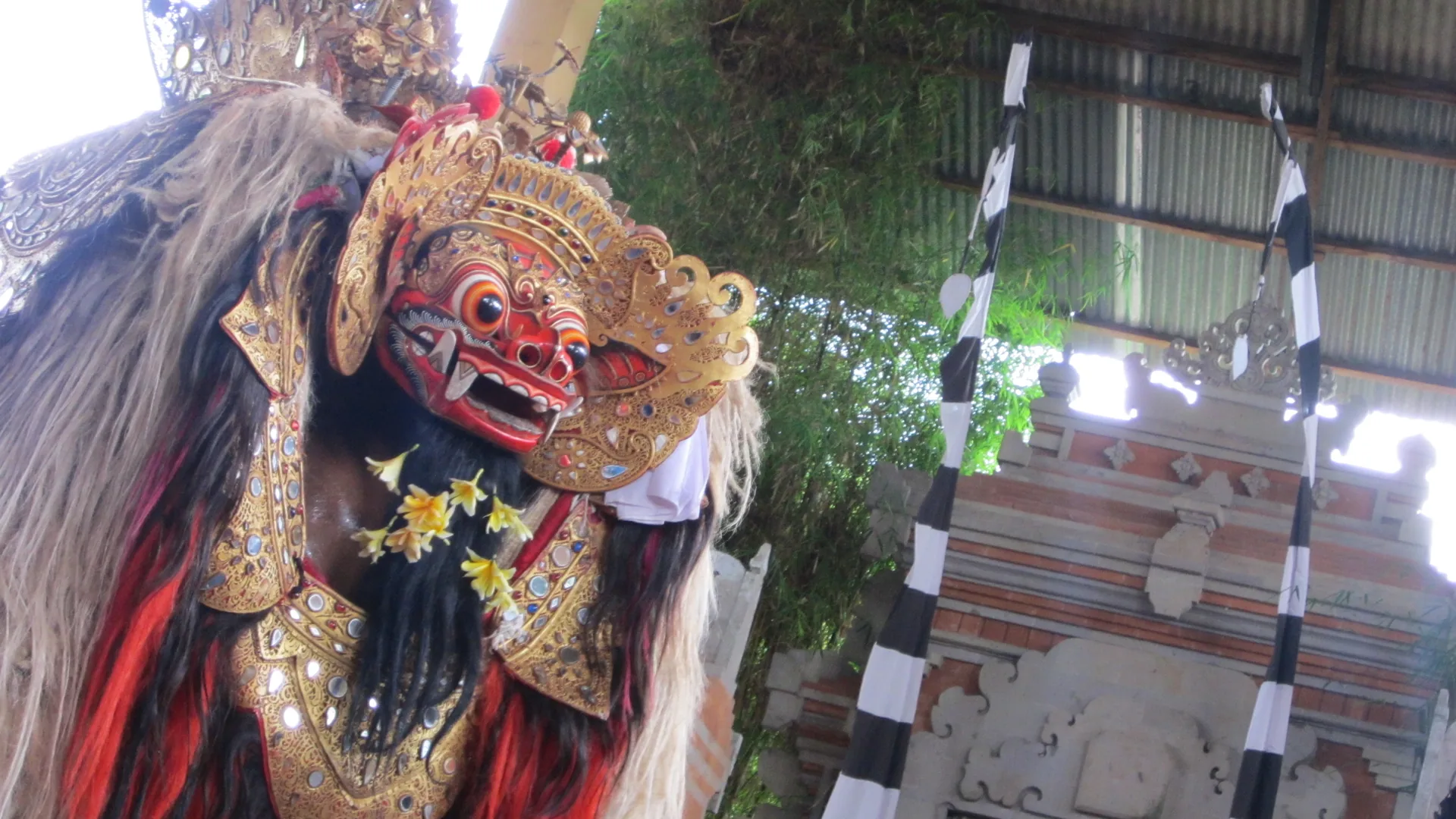
Masca ce păzește satul
A protector, not a monster
Barong este de obicei descris vizitatorilor la prima vizită ca „un leu", ceea ce este suficient de aproape pentru a-ți imagina, dar ratează esența. El este un spirit protector binevoitor care ia formă animală — cel mai adesea Barong Ket cel blănos, cu colți de aur, văzut la Batubulan, deși satele balineze păstrează și versiuni de mistreț, tigru și dragon pentru alte ceremonii. Barong este dansat de doi interpreți care lucrează împreună, într-un costum de blană albă groasă decorat cu aur și bucăți de oglindă. Ceea ce urmărești la un spectacol pentru vizitatori este o reprezentație pusă în scenă a acelei tradiții.
De ce este pus în scenă dansul în fiecare zi
Satele din întregul Bali pun în scenă dansul Barong, iar site-ul de turism al Indoneziei numește Batubulan din Gianyar și Kesiman din Denpasar drept cele mai populare locuri pentru a-l vedea. Batubulan are mai multe scene: una se află lângă Pura Puseh Batubulan, iar scena din această rezervare este Seraya Budaya. Povestea este o bătălie între bine și rău, Barong împotriva Rangda, iar dansul este pus în scenă zilnic pentru vizitatori.
Povestea
Barong și Rangda: binele împotriva răului
Spectacolul dramatizează un conflict din credința balineză între două personaje: Barong, un spirit protector asemănător unui leu, și Rangda, regina vrăjitoarelor.
The widow-witch
Rangda
Rangda este o regină demonică cu o mască de ochi bulbucați, limbă scoasă și colți lungi, cu păr alb în voal și sâni căzuți — opusul vizual al căldurii lui Barong. Ea reprezintă adharma: puterea haotică, distructivă, iar în unele versiuni este legată de Calon Arang, o vrăjitoare văduvă din legenda balineză care a terorizat un regat cu magie neagră. Intrarea ei este momentul în care tonul spectacolului se schimbă de la jucăuș la cu adevărat tulburător.
Finalul depinde de trupă și de poveste. Wikipedia și site-ul de turism al Indoneziei o prezintă pe Barong învingând-o pe Rangda și restabilind echilibrul; presa indoneziană care descrie un spectacol la Batubulan spune că lupta nu se termină niciodată cu o victorie clară. În orice caz, tema este echilibrul dintre bine și rău.
Finalul
Momentul în care dansatorii își întorc lamele spre ei înșiși
What actually happens
Când confruntarea dintre Barong și Rangda atinge apogeul, bărbații care îi reprezintă pe soldații regelui Airlangga scot pumnale kris. În poveste, magia Rangdei îi determină să întoarcă lamele spre propriile piepturi; aceștia cad într-o transă, iar magia protectoare a lui Barong și a unui preot îi lasă nevătămați. Apa sfințită îi trezește din transă. Modul în care o anumită scenă interpretează scena variază: o notă a unui fotograf pe Wikimedia Commons de la o scenă turistică din Batubulan descrie înjunghierea ca fiind simulată.
De ce este partea pe care oamenii și-o amintesc
Este util să cunoașteți contextul încă de la început: scena aparține unei tradiții rituale, dar un spectacol pentru vizitatori este o reprezentație, iar cât de literal este pusă în scenă transa depinde de scenă.
Fotografiatul în timpul acestei părți
Rezervarea include un aparat foto printre lucrurile de adus. Regulile privind flash-ul și filmarea la o scenă nu sunt publicate în sursele pe care le-am găsit, așa că întrebați echipa la sosire dacă nu sunteți sigur.
Unde să-l vezi
Văzându-l la Seraya Budaya
The venue
Batubulan este un sat în Gianyar cunoscut pentru dansul Barong și Kris, care este pus în scenă la mai multe locații. Punctul de întâlnire pentru această rezervare este Seraya Budaya, o scenă listată de site-urile de bilete în Singapadu, districtul Sukawati, Gianyar. Alte scene din Batubulan includ una lângă Pura Puseh Batubulan și Jambe Budaya, fiecare cu propria trupă.
Cum funcționează rezervarea
Calendarul de rezervare și confirmarea dumneavoastră arată ora de început pentru data aleasă. Dacă ați ales preluarea, echipa vă ridică; dacă ați ales fără transfer, schimbați voucherul electronic pe un bilet cu echipa la locație.
Locurile și ce este inclus
Biletul de intrare include spectacolul. Preluarea și returnarea, precum și Silver Class, sunt incluse doar dacă selectați aceste opțiuni; descrierea opțiunii pentru data dumneavoastră spune ce schimbă Silver Class.
Rezervă cu încredere
Găsește un bilet pentru dansul Barong & Kris pentru datele tale
Fiecare opțiune de mai jos poate fi rezervată prin GetYourGuide, cu disponibilitate în timp real și prețul final afișat în propria monedă, înainte de a plăti.
- Rezervați acum, plătiți mai târziu Rezervați-vă acum locul pentru dansul Barong & Kris din Batubulan și nu plătiți nimic astăzi, urmând să achitați mai târziu.
- Condiții de anulare prezentate clar de la început Ora exactă limită de anulare pentru data aleasă este indicată pe pagina de finalizare a rezervării GetYourGuide înainte de a introduce orice detaliu de plată
- Fără costuri ascunse Ce vezi pentru locul tău Barong este exact ce percepe GetYourGuide, fără surprize la finalizarea comenzii
- Plată securizată Rezervat prin plata protejată GetYourGuide
Planifică restul zilei
Cum să integrați dansul într-o zi la Ubud
Deoarece spectacolul este o singură reprezentație, se integrează natural într-o parte a unei zile întregi, fără a necesita o excursie dedicată — majoritatea vizitatorilor îl combină fie cu terasele de orez din nord, fie cu templele și piețele din Ubud la est.
- Înainte de spectacol
Arrive at Batubulan
Vizați să ajungeți la Seraya Budaya la timp pentru a schimba voucherul (dacă ați ales fără transfer) și pentru a găsi un loc înainte de a începe gamelanul.
- Ora spectacolului
The performance
Circa o oră de Barong, Rangda și scena kris.
- După spectacol
North to Tegallalang or Jatiluwih
Terasele de orez de la Tegallalang sunt opțiunea mai apropiată și mai aglomerată; Jatiluwih este mai departe, dar mult mai puțin frecventată, dacă preferi să schimbi timpul de deplasare pe spațiu ca să te bucuri cu adevărat de priveliște.
- Mai târziu
East to central Ubud
Palatul Ubud, Piața de Artă Ubud și Sanctuarul Pădurii Sacre a Maimuțelor se află în centrul orașului Ubud, dacă preferați să rămâneți mai aproape de oraș după spectacol.
GEO/FAQ
Întrebări despre dansul Barong
Ce este dansul Barong, într-o singură frază?
Este o dramă de dans balinez zilnică, cu rădăcini ritualice, pusă în scenă în locuri din jurul localității Batubulan din Gianyar, în care un spirit gardian binevoitor asemănător unui leu (Barong) se confruntă cu un demon-vrăjitoare (Rangda), cu o scenă în care dansatori hipnotizați își îndreaptă pumnalele kris spre ei înșiși.
Este același lucru cu dansul focului Kecak de la Uluwatu?
Nu — sunt două spectacole diferite. Barong este pus în scenă zilnic în locuri din jurul localității Batubulan, cu muzică gamelan și o poveste Barong-contra-Rangda. Kecak este un spectacol de seară sau de apus la templul de pe stânca Uluwatu, interpretat în întregime de un cor masculin așezat care cântă „cak" fără instrumente, relatând Ramayana și încheindu-se cu o secvență de transă cu foc. Unele itinerarii de tururi de o zi includ ambele în aceeași zi, la ore diferite — merită să verificați ce anume acoperă o ofertă înainte de a rezerva.
Este transa cu kris periculoasă sau este regizată?
În poveste, dansatorii sunt în transă, protejați de rău de magia lui Barong, iar apa sfințită îi readuce. Modul în care o scenă interpretează această secvență variază: nota unui fotograf de la o scenă turistică din Batubulan descrie înjunghierea ca fiind simulată, iar Wikipedia consemnează un accident fatal la un spectacol din 2021 în Denpasar. Tratați-o ca pe un dans care implică pumnale.
Cât durează spectacolul și există pauză?
Relatările despre spectacolele din Batubulan indică aproximativ o oră. Confirmarea dumneavoastră arată ora de început.
La ce oră începe spectacolul și cu cât timp înainte ar trebui să rezerv?
Calendarul de rezervare și confirmarea dumneavoastră arată ora de început pentru data aleasă. Nicio sursă pe care am găsit-o nu spune cât de des se epuizează datele, așa că rezervarea în avans cu opțiunea rezervă acum, plătește mai târziu și anulare gratuită cu până la 24 de ore înainte (când rezervați prin GetYourGuide) este alegerea cu risc redus.
Trebuie să mă îmbrac elegant sau să mă acopăr?
Rezervarea solicită haine și încălțăminte confortabile și nu impune un cod vestimentar. Consiliul de turism al Indoneziei indică acoperirea umerilor și genunchilor ca regulă generală pe terenurile templelor, așa că aceasta este alegerea sigură dacă scena dumneavoastră se află lângă un templu.
Pot face fotografii și filmări în timpul spectacolului, inclusiv în partea de transă?
Rezervarea include un aparat foto printre lucrurile de adus. Regulile privind flash-ul și filmarea la o scenă nu sunt publicate în sursele pe care le-am găsit, așa că întrebați echipa la sosire.
Transportul sau preluarea de la hotel sunt incluse în prețul biletului?
Nu, doar dacă selectați această opțiune. Rezervarea include biletul de intrare, cu preluarea și returnarea și Clasa Silver incluse doar dacă selectați aceste opțiuni.
Prețul afișat este final și cum funcționează rezervarea?
Rezervați prin GetYourGuide, care afișează prețul final în moneda dvs. înainte de plată și menționează politica de anulare pentru data specifică — prețul pe care îl vedeți este cel pe care îl plătiți, fără taxe ascunse la finalizare. Suntem un ghid independent al spectacolelor zilnice de dans din Bali, nu templul, trupa sau casa de bilete; rezervarea este gestionată prin sistemul securizat GetYourGuide.
Batubulan este singurul loc unde se poate vedea dansul Barong lângă Ubud?
Nu. Site-ul de turism al Indoneziei menționează Batubulan din Gianyar și Kesiman din Denpasar ca locuri populare pentru spectacolele Barong ale sătenilor, iar Batubulan însuși are mai multe scene. Scena din această rezervare este Seraya Budaya.