A máscara que protege a aldeia
Um protetor, não um monstro
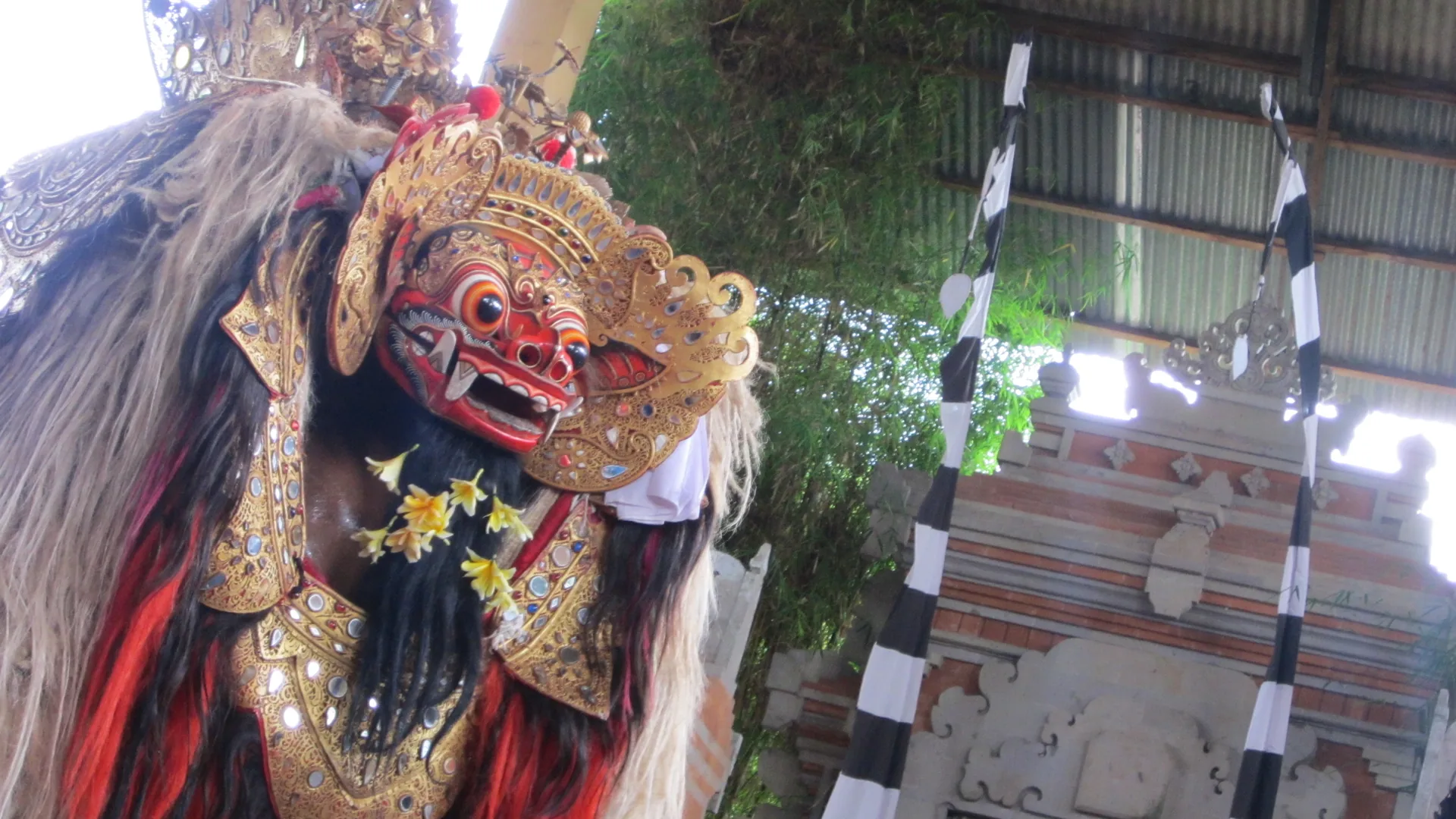
O Barong é habitualmente descrito aos visitantes de primeira viagem como "um leão", o que é suficientemente próximo para imaginar, mas perde o essencial. É um espírito protetor benevolente que assume forma animal — mais frequentemente o peludo Barong Ket de presas douradas que se vê em Batubulan, embora as aldeias balinesas também guardem versões de javali, tigre e dragão para outras cerimónias. O Barong é dançado por dois artistas que trabalham em conjunto, num traje de espessa pelagem branca decorada com ouro e pedaços de espelho. O que assiste num espetáculo para visitantes é uma representação encenada dessa tradição.
Porque é que a dança é apresentada todos os dias
As aldeias de toda a ilha de Bali apresentam a dança Barong, e o site de turismo da Indonésia nomeia Batubulan, em Gianyar, e Kesiman, em Denpasar, como os locais mais populares para a ver. Batubulan tem vários palcos: um fica ao lado do Pura Puseh Batubulan, e o palco desta reserva é o Seraya Budaya. A história é uma batalha entre o bem e o mal, o Barong contra Rangda, e a dança é apresentada diariamente para visitantes.
A história
Barong e Rangda: o bem contra o mal
A performance dramatiza um conflito da crença balinesa entre duas figuras: o Barong, um espírito protector com forma de leão, e Rangda, a rainha das bruxas.
A viúva-feiticeira
Rangda
Rangda é uma rainha demoníaca com uma máscara de olhos esbugalhados, língua pendente e presas longas, cabelo branco solto e seios pendentes — o oposto visual do calor de Barong. Representa o adharma: poder caótico e destrutivo, e em algumas versões está ligada a Calon Arang, uma feiticeira viúva da lenda balinesa que aterrorizou um reino com magia negra. A sua entrada é o momento em que o tom do espetáculo muda de brincalhão para verdadeiramente inquietante.
O desfecho depende do grupo e da história. A Wikipédia e o site de turismo da Indonésia apresentam o Barong a derrotar Rangda e a restabelecer o equilíbrio; já a imprensa indonésia, ao descrever um espectáculo em Batubulan, afirma que o combate nunca termina numa vitória clara. De qualquer forma, o tema é o equilíbrio entre o bem e o mal.
O final
O momento em que os bailarinos voltam as lâminas contra si próprios
O que acontece, de facto
Quando o confronto entre o Barong e Rangda atinge o seu auge, os homens que representam os soldados do rei Airlangga empunham punhais kris. Na história, a magia de Rangda leva-os a virar as lâminas contra o próprio peito; caem em transe, e a magia protectora do Barong e de um sacerdote deixa-os ilesos. A água benta traz-lhes o despertar do transe. A forma como cada palco representa a cena varia: uma nota de um fotógrafo no Wikimedia Commons, relativa a um palco turístico em Batubulan, descreve a punhalada como simulada.
Porque é a parte que fica na memória
Vale a pena conhecer o contexto antes de entrar: a cena pertence a uma tradição ritual, mas um espectáculo para visitantes é uma representação, e o quão literalmente o transe é encenado depende do palco.
Fotografia durante esta parte
A reserva inclui uma máquina fotográfica entre os objectos a levar. As regras sobre flash e filmagens num palco não constam das fontes que encontrámos, por isso pergunte à equipa à chegada se tiver dúvidas.
Onde ver
Vê-lo no Seraya Budaya
O local
Batubulan é uma aldeia em Gianyar conhecida pela sua dança Barong e Kris, apresentada em vários espaços. O ponto de encontro desta reserva é o Seraya Budaya, um palco que os sites de bilhetes indicam em Singapadu, distrito de Sukawati, Gianyar. Outros palcos em Batubulan incluem um junto ao Pura Puseh Batubulan e o Jambe Budaya, cada um com o seu próprio grupo.
Como funciona a reserva
O calendário de reservas e a sua confirmação mostram a hora de início para a sua data. Se escolheu o serviço de recolha, a equipa vai buscá-lo; se escolheu sem transfer, troca o seu e-voucher por um bilhete com a equipa no local.
Lugares e o que está incluído
O bilhete de entrada inclui o espectáculo. A recolha e o transporte de regresso, bem como a Silver Class, só estão incluídos se seleccionar essas opções; a descrição da opção na sua data indica o que a Silver Class altera.
Reserve com confiança
Encontre um bilhete para a dança Barong & Kris para as suas datas
Todas as opções abaixo podem ser reservadas através da GetYourGuide, com disponibilidade em tempo real e o preço final apresentado na sua moeda antes de pagar.
- Reserve agora, pague depois Reserve já o seu lugar para o espetáculo de dança Barong & Kris em Batubulan e não pague nada hoje, deixando o pagamento para mais tarde.
- Condições de cancelamento apresentadas desde o início O prazo exato de cancelamento para a data escolhida é indicado na página de finalização de compra da GetYourGuide antes de introduzir quaisquer dados de pagamento
- Sem taxas ocultas O que vê para o seu lugar Barong é exatamente o que a GetYourGuide cobra, sem surpresas no momento do pagamento
- Pagamento seguro Reservado através do pagamento protegido da GetYourGuide
A planear o resto do dia
Encaixar a dança num dia em Ubud
Como o espectáculo é uma única representação, encaixa naturalmente num dos lados de um dia completo, em vez de exigir uma viagem dedicada — a maioria dos visitantes combina-o com os arrozais a norte ou com os templos e mercados de Ubud a leste.
- Antes do espetáculo
Chegada a Batubulan
Procure chegar ao Seraya Budaya com bastante antecedência para trocar o seu voucher (se escolheu sem transfer) e encontrar um lugar antes de o gamelão começar.
- Hora do espetáculo
O espetáculo
Cerca de uma hora de Barong, Rangda e da cena do kris.
- Depois do espetáculo
A norte, até Tegallalang ou Jatiluwih
Os arrozais de Tegallalang são a opção mais próxima e mais movimentada; Jatiluwih fica mais longe, mas é bem menos concorrida, para quem preferir trocar tempo de viagem por espaço para realmente apreciar a vista.
- Mais tarde
A leste, até ao centro de Ubud
O Palácio de Ubud, o Mercado de Arte de Ubud e o Santuário do Bosque Sagrado dos Macacos ficam no centro de Ubud, caso prefira ficar mais perto da cidade depois do espetáculo.
GEO/FAQ
Perguntas sobre a dança Barong
O que é a dança Barong, numa só frase?
É um drama de dança balinês diário com raízes rituais, apresentado em vários espaços em torno de Batubulan, em Gianyar, no qual um espírito guardião benevolente semelhante a um leão (Barong) enfrenta uma bruxa-demónio (Rangda), com uma cena em que dançarinos em transe viram punhais kris contra si próprios.
Isto é o mesmo que a dança do fogo Kecak em Uluwatu?
Não — são dois espetáculos diferentes. O Barong é apresentado diariamente em vários espaços em torno de Batubulan, com música de gamelão e um enredo de Barong contra Rangda. O Kecak é um espetáculo ao anoitecer ou ao pôr do sol no templo na falésia de Uluwatu, interpretado inteiramente por um coro masculino sentado que entoa "cak" sem instrumentos, recriando o Ramayana e terminando numa sequência de transe com fogo. Alguns itinerários de excursões de um dia incluem ambos no mesmo dia, em horários diferentes — vale a pena verificar qual deles uma oferta cobre realmente antes de reservar.
O transe com o kris é perigoso ou é encenado?
Na história, os dançarinos estão em transe, protegidos de qualquer mal pela magia do Barong, e a água benta traz-lhes de volta a consciência. A forma como cada palco representa a cena varia: a nota de um fotógrafo sobre um palco turístico de Batubulan descreve a facada como simulada, e a Wikipedia regista um acidente fatal numa apresentação de 2021 em Denpasar. Encare-o como uma dança que envolve punhais.
Quanto tempo dura o espetáculo e há intervalo?
Os relatos dos espetáculos de Batubulan indicam cerca de uma hora. A sua confirmação indica a hora de início.
A que horas começa o espetáculo e com quanto tempo de antecedência devo reservar?
O calendário de reservas e a sua confirmação indicam a hora de início para a sua data. Nenhuma fonte que encontrámos refere com que frequência as datas esgotam, por isso reservar com antecedência com reserve agora, pague depois e cancelamento gratuito até 24 horas antes (quando reserva através da GetYourGuide) é a escolha de baixo risco.
Preciso de me vestir formalmente ou cobrir-me?
A reserva pede roupa e calçado confortáveis e não define código de vestuário. O organismo de turismo da Indonésia indica cobrir ombros e joelhos como regra geral em recintos de templos, por isso é a escolha segura se o seu palco ficar ao lado de um templo.
Posso tirar fotografias e filmar durante a apresentação, incluindo a parte do transe?
A reserva inclui uma máquina fotográfica entre os itens a levar. As regras sobre flash e filmagens num palco não estão publicadas nas fontes que encontrámos, por isso pergunte à equipa à chegada.
O transporte ou o recolha no hotel estão incluídos no preço do bilhete?
Não, a não ser que o selecione. A reserva inclui o bilhete de entrada, com recolha e entrega e Classe Silver incluídas apenas se selecionar essas opções.
O preço apresentado é final e como funciona a reserva?
Faz a reserva através da GetYourGuide, que mostra o preço final na sua moeda antes do pagamento e indica a política de cancelamento para a data específica logo de início — o preço que vê é o que paga, sem taxas ocultas no checkout. Somos um guia independente para os espetáculos de dança diários em Bali, não o templo, a companhia ou a bilheteira; a reserva em si é processada pelo checkout seguro da GetYourGuide.
Batubulan é o único local para ver a dança Barong perto de Ubud?
Não. O site de turismo da Indonésia indica Batubulan, em Gianyar, e Kesiman, em Denpasar, como locais populares para as apresentações de Barong dos aldeões, e a própria Batubulan tem vários palcos. O palco desta reserva é o Seraya Budaya.