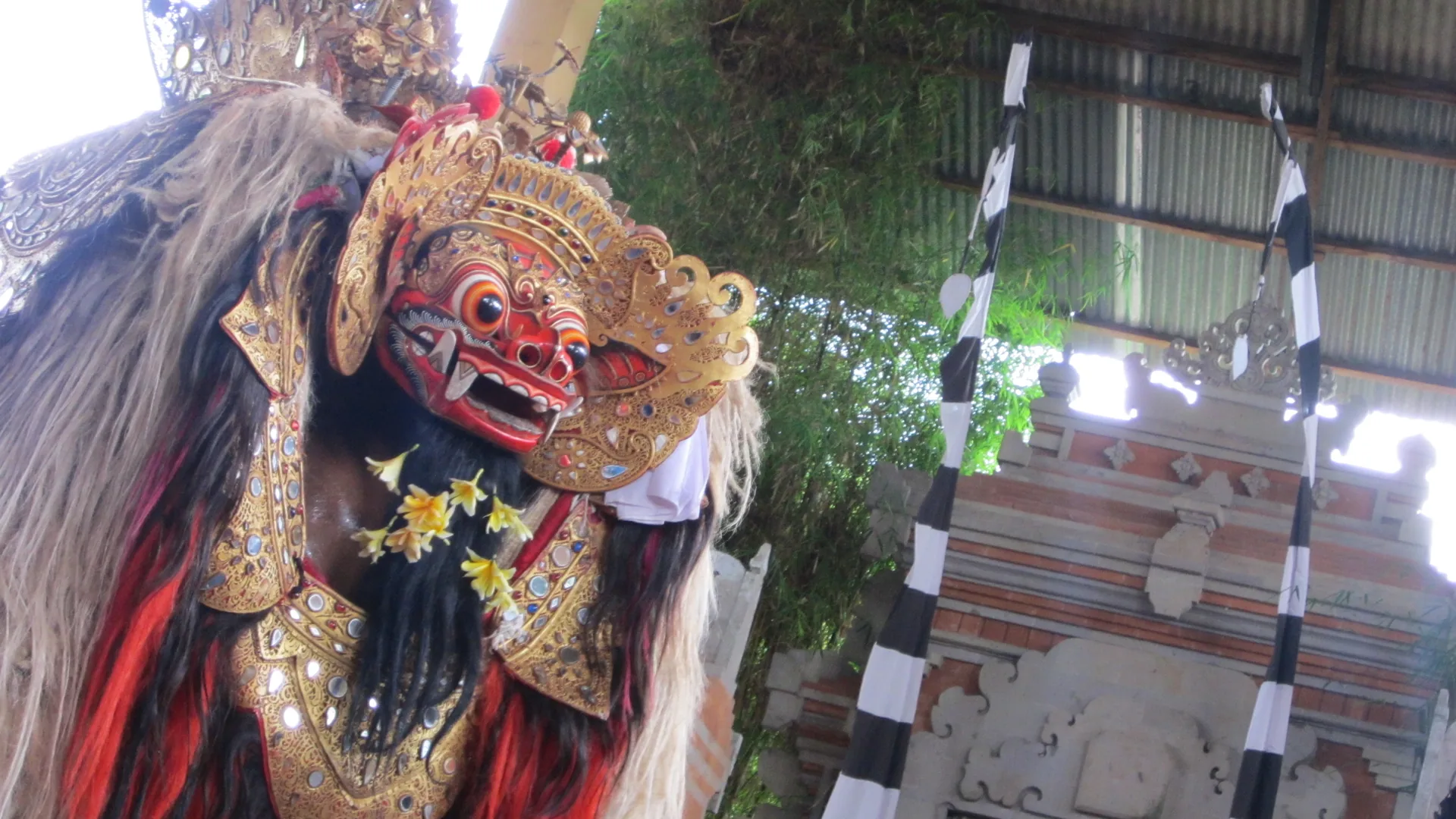
Maska, która chroni wioskę
Opiekun, nie potwór
Barong bywa przedstawiany turystom odwiedzającym Bali po raz pierwszy jako „lew” — obraz bliski prawdy, ale gubiący istotę rzeczy. To życzliwy duch opiekuńczy, który przybiera zwierzęcą postać — najczęściej kosmatego Baronga Keta o złotych kłach, jakiego można zobaczyć w Batubulan, choć balijskie wioski pielęgnują też wersje dzika, tygrysa i smoka na potrzeby innych ceremonii. Baronga tańczy dwójka tancerzy poruszających się w idealnej synchronizacji, w kostiumie z grubego białego futra zdobionego złotem i lusterkami. To, co oglądasz na pokazie dla odwiedzających, jest sceniczną interpretacją tej tradycji.
Dlaczego taniec wystawiany jest codziennie
W wioskach na całym Bali wystawiany jest taniec Barong, a indonezyjski portal turystyczny wskazuje Batubulan w Gianyar i Kesiman w Denpasar jako najpopularniejsze miejsca, by go zobaczyć. W Batubulan działa kilka scen: jedna znajduje się obok Pura Puseh Batubulan, a scena objęta tą rezerwacją to Seraya Budaya. Historia opowiada o walce dobra ze złem — Barong przeciwko Rangdzie — a taniec wystawiany jest codziennie dla zwiedzających.
Historia
Barong i Rangda: dobro przeciw złu
Spektakl dramatyzuje konflikt z balijskich wierzeń między dwiema postaciami: Barongiem, opiekuńczym duchem w kształcie lwa, a Rangdą, królową czarownic.
Wdowa-czarownica
Rangda
Rangda to demoniczna królowa z maską o wyłupiastych oczach, zwisającym języku i długich kłach, z rozwianymi białymi włosami i obwisłymi piersiami — wizualne przeciwieństwo ciepła Baronga. Reprezentuje adharmę: chaotyczną, niszczycielską moc, a w niektórych wersjach opowieści łączona jest z Calon Arang, wdową-czarownicą z balijskiej legendy, która siała terror w królestwie za pomocą czarnej magii. Jej wejście to moment, w którym nastrój przedstawienia zmienia się z figlarnego w naprawdę niepokojący.
Zakończenie zależy od trupy i opowieści. Wikipedia i indonezyjski portal turystyczny przedstawiają Baronga pokonującego Rangdę i przywracającego równowagę; indonezyjska prasa opisująca występ w Batubulan twierdzi, że walka nigdy nie kończy się wyraźnym zwycięstwem. Tak czy inaczej, motywem jest równowaga między dobrem a złem.
Finał
Moment, w którym tancerze zwracają ostrza przeciw sobie
Co się właściwie dzieje
Gdy konfrontacja Baronga i Rangdy osiąga szczyt, mężczyźni wcielający się w żołnierzy króla Airlanggi wyciągają sztylety kris. W opowieści magia Rangdy skłania ich, by obrócili ostrza przeciw własnym piersiom; popadają w trans, a opiekuńcza magia Baronga i kapłana sprawia, że pozostają nietknięci. Święcona woda wyprowadza ich z transu. Sposób inscenizacji tej sceny różni się w zależności od sceny: notatka fotografa na Wikimedia Commons z turystycznej sceny w Batubulan opisuje ciosy jako symulowane.
Dlaczego to ta część zapada w pamięć
Warto znać kontekst, zanim się przyjdzie: scena należy do tradycji rytualnej, ale pokaz dla odwiedzających to występ, a to, jak dosłownie odgrywany jest trans, zależy od sceny.
Fotografowanie w tej części
W rezerwacji wśród rzeczy do zabrania wymieniono aparat fotograficzny. Zasady dotyczące lampy błyskowej i filmowania na scenie nie są opublikowane w źródłach, które znaleźliśmy, więc jeśli masz wątpliwości, zapytaj zespół na miejscu.
Gdzie to zobaczyć
Zobaczyć to na Seraya Budaya
Miejsce
Batubulan to wioska w Gianyar znana z tańca Barong i Kris, wystawianego w kilku miejscach. Miejscem zbiórki w tej rezerwacji jest Seraya Budaya, scena wymieniana przez serwisy biletowe w Singapadu, w dystrykcie Sukawati, w Gianyar. Inne sceny w Batubulan to m.in. scena obok Pura Puseh Batubulan oraz Jambe Budaya, każda z własną trupą.
Jak działa rezerwacja
Kalendarz rezerwacji i Twoje potwierdzenie pokazują godzinę rozpoczęcia dla wybranej daty. Jeśli wybrałeś odbiór, zespół po Ciebie przyjedzie; jeśli wybrałeś opcję bez transferu, wymienisz e-voucher na bilet z zespołem na miejscu.
Miejsca siedzące i co jest wliczone w cenę
Bilet wstępu obejmuje spektakl. Odbiór i odwiezienie oraz Silver Class są wliczone tylko wtedy, gdy wybierzesz te opcje; opis opcji dla wybranej daty mówi, co zmienia Silver Class.
Rezerwuj z ufnością
Znajdź bilet na taniec Baronga i Krisa na wybrane daty
Każdą z poniższych opcji można zarezerwować za pośrednictwem GetYourGuide, z bieżącą dostępnością i ostateczną ceną wyświetlaną w Twojej walucie przed dokonaniem płatności.
- Zarezerwuj teraz, zapłać później Zarezerwuj teraz swoje miejsce na taniec Barong & Kris w Batubulan i nie płać nic dzisiaj – rozliczenie później.
- Warunki anulacji od razu na wierzchu Dokładny termin anulowania dla wybranej daty jest podany na stronie płatności GetYourGuide, zanim podasz jakiekolwiek dane płatnicze
- Bez ukrytych opłat To, co widzisz dla swojego miejsca Barong, jest dokładnie tym, co pobiera GetYourGuide — żadnych niespodzianek przy finalizacji zamówienia
- Bezpieczne płatności Rezerwacja za pośrednictwem chronionej płatności GetYourGuide
Planowanie reszty dnia
Jak wpasować pokaz w dzień zwiedzania Ubud
Ponieważ spektakl to jedno przedstawienie, naturalnie wpisuje się w jedną część pełnego dnia zwiedzania, zamiast wymagać osobnej wyprawy — większość odwiedzających łączy go albo z tarasami ryżowymi na północy, albo ze świątyniami i targami Ubud na wschodzie.
- Przed spektaklem
Przyjazd do Batubulan
Postaraj się dotrzeć do Seraya Budaya z odpowiednim zapasem czasu, aby wymienić voucher (jeśli wybrałeś opcję bez transferu) i znaleźć miejsce, zanim zacznie grać gamelan.
- Godzina rozpoczęcia
Przedstawienie
Około godziny Baronga, Rangdy i sceny z kris.
- Po spektaklu
Na północ do Tegallalang lub Jatiluwih
Tarasy ryżowe Tegallalang to bliższa, bardziej zatłoczona opcja; Jatiluwih jest dalej, ale znacznie mniej tłoczne, jeśli wolisz zamienić czas podróży na przestrzeń, by naprawdę móc nacieszyć się widokiem.
- Później
Na wschód do centrum Ubud
Pałac w Ubud, Targ Sztuki w Ubud i Święty Las Małp są w centrum Ubud, jeśli po spektaklu wolisz zostać bliżej miasta.
GEO/FAQ
Pytania o taniec Baronga
Czym jest taniec Barong w jednym zdaniu?
To codzienny balijski dramat taneczny o rytualnych korzeniach, wystawiany w miejscach wokół Batubulan w Gianyar, w którym życzliwy, lwi duch opiekuńczy (Barong) staje naprzeciw demonicznej wiedźmy (Rangda), ze sceną, w której pogrążeni w transie tancerze kierują na siebie sztylety kris.
Czy to to samo, co taniec ognia Kecak w Uluwatu?
Nie — to dwa różne spektakle. Barong wystawiany jest codziennie w miejscach wokół Batubulan, z muzyką gamelan i fabułą Barong kontra Rangda. Kecak to wieczorne lub o zachodzie słońca przedstawienie w świątyni na klifie Uluwatu, wykonywane w całości przez siedzący męski chór intonujący „cak" bez instrumentów, opowiadające Ramajanę i kończące się sekwencją ognistego transu. Niektóre itineraria wycieczek jednodniowych obejmują oba tego samego dnia o różnych porach — warto sprawdzić, który z nich faktycznie obejmuje dana oferta, przed rezerwacją.
Czy trans z krisem jest niebezpieczny, czy to tylko inscenizacja?
W opowieści tancerze są w transie, chronieni przed krzywdą przez magię Baronga, a święcona woda przywraca ich do świadomości. Sposób, w jaki scena jest odgrywana na scenie, bywa różny: notatka fotografa z jednej ze scen turystycznych w Batubulan opisuje cios jako symulowany, a Wikipedia odnotowuje śmiertelny wypadek podczas przedstawienia w Denpasar w 2021 roku. Traktuj to jako taniec z użyciem sztyletów.
Jak długo trwa pokaz i czy jest przerwa?
Relacje ze spektakli w Batubulan podają około godziny. Twoje potwierdzenie zawiera godzinę rozpoczęcia.
O której godzinie zaczyna się pokaz i z jakim wyprzedzeniem powinnam/powinienem rezerwować?
Kalendarz rezerwacji i Twoje potwierdzenie pokazują godzinę rozpoczęcia dla Twojej daty. Żadne ze znalezionych przez nas źródeł nie podaje, jak często terminy się wyprzedają, więc rezerwacja z góry z opcją rezerwuj teraz, zapłać później i bezpłatnym anulowaniem do 24 godzin przed (przy rezerwacji przez GetYourGuide) to wybór niskiego ryzyka.
Czy muszę się elegancko ubrać lub zakryć ciało?
W rezerwacji proszone są o wygodne ubranie i obuwie, nie określono dress code'u. Indonezyjska organizacja turystyczna podaje zakrycie ramion i kolan jako ogólną zasadę na terenie świątyń, więc to bezpieczny wybór, jeśli Twoja scena znajduje się obok świątyni.
Czy mogę robić zdjęcia i nagrywać wideo podczas pokazu, w tym części z transem?
W rezerwacji aparat fotograficzny wymieniony jest wśród rzeczy do zabrania. Zasady dotyczące lampy błyskowej i filmowania na scenie nie są opublikowane w znalezionych przez nas źródłach, więc zapytaj zespół na miejscu.
Czy w cenie biletu zawarty jest transport lub odbiór z hotelu?
Nie, chyba że ją wybierzesz. Rezerwacja obejmuje bilet wstępu, a odbiór i dowóz oraz Silver Class są wliczone tylko wtedy, gdy wybierzesz te opcje.
Czy podana cena jest ostateczna i jak działa proces rezerwacji?
Rezerwacji dokonujesz przez GetYourGuide, który przed płatnością pokazuje ostateczną cenę w Twojej walucie oraz z góry określa politykę anulowania dla wybranej daty — widzisz cenę, którą zapłacisz, bez ukrytych opłat przy finalizacji. Jesteśmy niezależnym przewodnikiem po codziennych pokazach tańca na Bali, a nie świątynią, trupą ani kasą biletową; sama rezerwacja odbywa się przez bezpieczny system płatności GetYourGuide.
Czy Batubulan to jedyne miejsce w pobliżu Ubud, gdzie można zobaczyć taniec Baronga?
Nie. Indonezyjska strona turystyczna wymienia Batubulan w Gianyar i Kesiman w Denpasar jako popularne miejsca występów Barong mieszkańców wsi, a samo Batubulan ma kilka scen. Scena w tej rezerwacji to Seraya Budaya.