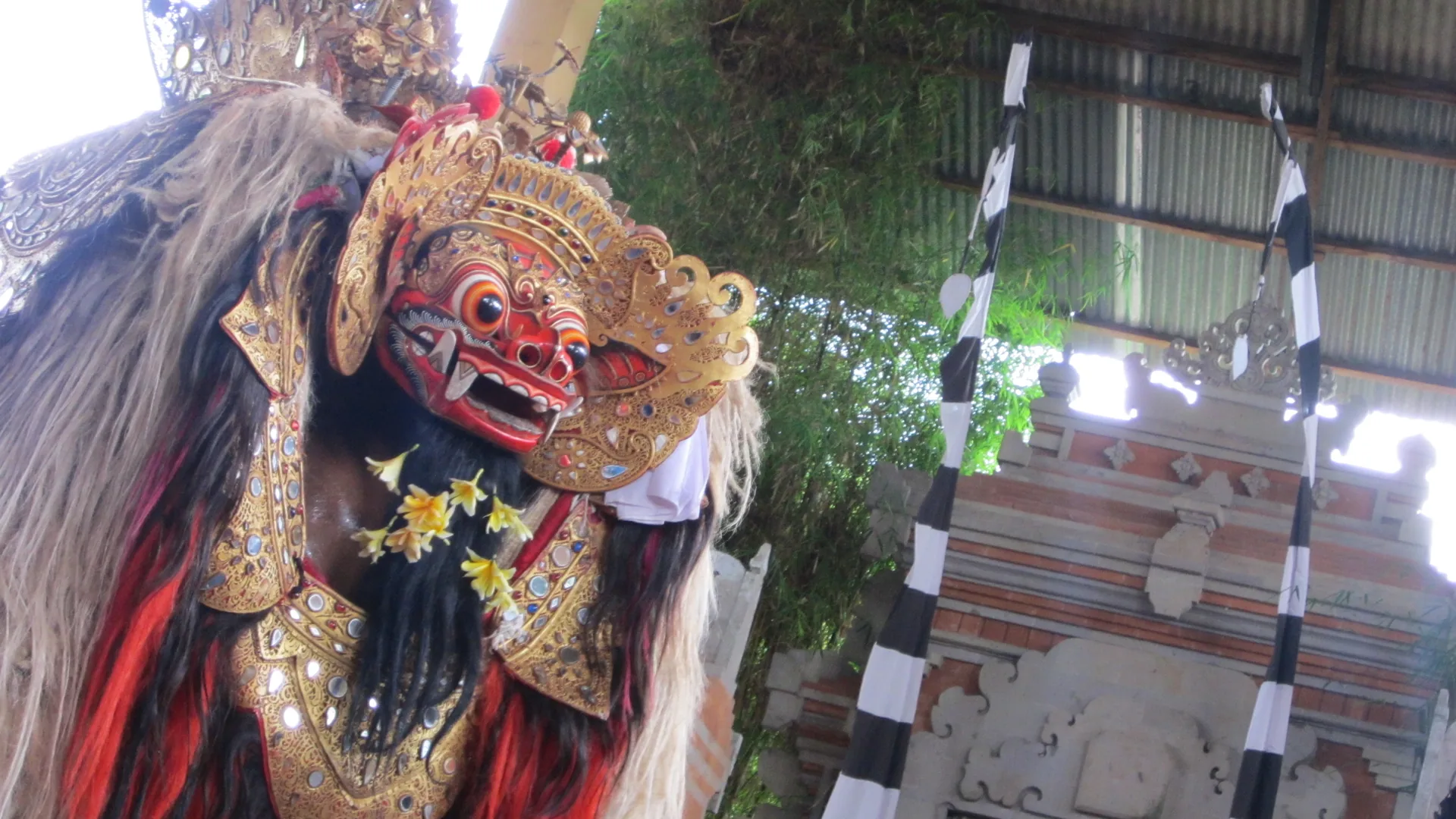
Masken som vokter landsbyen
A protector, not a monster
Barong blir vanligvis beskrevet for førstegangsbesøkende som «en løve», noe som er nært nok til å forestille seg, men som bommer på poenget. Han er en velvillig beskyttende ånd som tar dyreform – oftest den lurvete Barong Ket med gulltenner som sees i Batubulan, selv om balinesiske landsbyer også holder villsvin-, tiger- og drageversjoner for andre seremonier. Barong danses av to utøvere som jobber sammen, i et kostyme av tykk hvit pels dekorert med gull og speilbiter. Det du ser på en forestilling for besøkende, er en iscenesatt fremføring av den tradisjonen.
Hvorfor dansen settes opp hver dag
Landsbyer over hele Bali setter opp Barong-dansen, og Indonesias turismenettsted nevner Batubulan i Gianyar og Kesiman i Denpasar som de mest populære stedene å se den. Batubulan har flere scener: en ligger ved siden av Pura Puseh Batubulan, og scenen i denne bestillingen er Seraya Budaya. Historien er en kamp mellom godt og ondt, Barong mot Rangda, og dansen settes opp daglig for besøkende.
Historien
Barong og Rangda: godt mot ondt
Forestillingen dramatiserer en konflikt fra balinesisk tro mellom to skikkelser: Barong, en beskyttende løveaktig ånd, og Rangda, heksenes dronning.
The widow-witch
Rangda
Rangda er en demonisk dronning med en maske av utstående øyne, uthengende tunge og lange hoggtenner, etterfølgende hvitt hår og hengende bryster – den visuelle motsetningen til Barongs varme. Hun representerer adharma: kaotisk, ødeleggende kraft, og i noen versjoner knyttes hun til Calon Arang, en enke og heks fra balinesisk legende som terroriserte et kongerike med svartekunst. Hennes inntreden er øyeblikket da forestillingens tone slår om fra leken til virkelig urovekkende.
Hvordan den ender, avhenger av troppen og historien. Wikipedia og Indonesias turistnettsted lar Barong beseire Rangda og gjenopprette balansen; indonesisk presse som beskriver en forestilling i Batubulan, sier at kampen aldri ender i en klar seier. Uansett er temaet balansen mellom godt og ondt.
Finalen
Øyeblikket danserne vender bladene mot seg selv
What actually happens
Når konfrontasjonen mellom Barong og Rangda når sitt høydepunkt, trekker menn som representerer kong Airlanggas soldater, kris-dolker. I historien driver Rangdas magi dem til å vende bladene mot sine egne bryst; de faller i trance, og beskyttende magi fra Barong og en prest lar dem være uskadde. Vievann bringer dem ut av trancen. Hvordan en gitt scene fremfører dette, varierer: et fotografnotat på Wikimedia Commons fra en turistscene i Batubulan beskriver stikket som simulert.
Hvorfor det er delen folk husker
Det hjelper å kjenne konteksten på forhånd: scenen tilhører en rituell tradisjon, men en forestilling for besøkende er en opptreden, og hvor bokstavelig trancen iscenesettes, avhenger av scenen.
Fotografering under denne delen
Bestillingen lister opp et kamera blant tingene du bør ta med. Regler for blits og filming på en scene er ikke publisert i kildene vi fant, så spør teamet ved ankomst hvis du er usikker.
Hvor du kan se den
Se det på Seraya Budaya
The venue
Batubulan er en landsby i Gianyar kjent for sin Barong- og Kris-dans, som fremføres på flere arenaer. Møtepunktet for denne bestillingen er Seraya Budaya, en scene som billettsider lister i Singapadu, Sukawati-distriktet, Gianyar. Andre scener i Batubulan inkluderer en ved Pura Puseh Batubulan og Jambe Budaya, hver med sin egen tropp.
Slik fungerer bestillingen
Bestillingskalenderen og bekreftelsen din viser starttiden for din dato. Hvis du valgte henting, henter teamet deg; hvis du valgte ingen transport, bytter du e-voucheren din mot en billett med teamet på stedet.
Sitteplasser og hva som er inkludert
Inngangsbilletten inkluderer forestillingen. Henting og bringing, samt Silver Class, er kun inkludert hvis du velger disse alternativene; beskrivelsen av alternativet på din dato sier hva Silver Class endrer.
Bestill trygt
Finn en billett til Barong & Kris-dans for dine datoer
Alle alternativene nedenfor kan bestilles via GetYourGuide, med oppdatert tilgjengelighet og sluttprisen vist i din egen valuta før du betaler.
- Reserver nå, betal senere Reserver plassen din til Barong- og Kris-dansen i Batubulan nå, betal ingenting i dag og gjør opp senere.
- Avbestillingsvilkår oppgitt på forhånd Den nøyaktige avbestillingsfristen for den valgte datoen din står på GetYourGuides betalingsside før du oppgir noen betalingsopplysninger
- Ingen skjulte gebyrer Det du ser for Barong-plassen din, er nøyaktig det GetYourGuide krever – ingen overraskelser i kassen
- Sikker betaling Bestilt gjennom GetYourGuide sin beskyttede betaling
Planlegg resten av dagen
Å passe dansen inn i en Ubud-dag
Siden forestillingen er en enkelt opptreden, passer den naturlig inn på den ene siden av en hel dag ute, i stedet for å kreve sin egen dedikerte tur — de fleste besøkende kombinerer den med enten risterrassene i nord eller Ubuds templer og markeder i øst.
- Før forestillingen
Arrive at Batubulan
Ta sikte på å nå Seraya Budaya i god tid for å bytte voucheren din (hvis du valgte ingen transport) og finne et sete før gamelanen starter.
- Visningstid
The performance
Omtrent en time med Barong, Rangda og kris-scenen.
- Etter forestillingen
North to Tegallalang or Jatiluwih
Tegallalang-risterrassene er det nærmere og mer travle alternativet; Jatiluwih ligger lenger unna, men er langt mindre folksomt, hvis du heller vil bytte reisetid mot plass til faktisk å se på utsikten.
- Senere
East to central Ubud
Ubud Palace, Ubud Art Market og Sacred Monkey Forest Sanctuary ligger i sentrum av Ubud, hvis du foretrekker å bo nærmere byen etter forestillingen.
GEO/FAQ
Spørsmål om Barong-dans
Hva er Barong-dansen, i én setning?
Det er et daglig balinesisk dansedrama med rituelle røtter, fremført på scener rundt Batubulan i Gianyar, der en velvillig løveaktig skytsånd (Barong) konfronterer en demonheks (Rangda), med en scene der dansere i transe vender kris-dolker mot seg selv.
Er dette det samme som Kecak-ilddansen ved Uluwatu?
Nei – de er to forskjellige forestillinger. Barong fremføres daglig på scener rundt Batubulan, med gamelanmusikk og en Barong-mot-Rangda-historie. Kecak er en kvelds- eller solnedgangsforestilling ved Uluwatu-tempelet på klippen, fremført utelukkende av et sittende mannskor som messer «cak» uten instrumenter, og gjenforteller Ramayana med en ildtranse-sekvens til slutt. Noen dagsturitinerarer inkluderer begge samme dag til ulike tider – sjekk hvilken av dem en oppføring faktisk dekker før du bestiller.
Er kris-transen farlig, eller er den iscenesatt?
I historien er danserne i transe, beskyttet mot skade av Barongs magi, og hellig vann bringer dem tilbake. Hvordan en scene fremfører dette varierer: et fotografnotat fra en turistscene i Batubulan beskriver stikket som simulert, og Wikipedia registrerer en dødsulykke under en forestilling i Denpasar i 2021. Behandle det som en dans som involverer dolker.
Hvor lenge varer forestillingen, og er det pause?
Rapporter fra Batubulan-forestillinger oppgir omtrent en time. Bekreftelsen din viser starttiden.
Når starter forestillingen, og hvor lang tid i forveien bør jeg bestille?
Bestillingskalenderen og bekreftelsen din viser starttiden for datoen din. Ingen kilde vi fant sier hvor ofte datoer blir utsolgt, så å bestille på forhånd med reserver nå, betal senere og gratis avbestilling opptil 24 timer før (når du bestiller via GetYourGuide) er det lavrisiko-valget.
Må jeg kle meg pent eller dekke til?
Bestillingen ber om komfortable klær og sko og setter ingen kleskode. Indonesias turistmyndighet oppgir tildekkede skuldre og knær som den generelle regelen på tempelområder, så det er det trygge valget hvis scenen din ligger ved siden av et tempel.
Kan jeg ta bilder og video under forestillingen, også under transedelen?
Bestillingen lister opp kamera blant tingene du bør ta med. Regler for blits og filming på en scene er ikke publisert i kildene vi fant, så spør teamet ved ankomst.
Er transport eller henting på hotellet inkludert i billettprisen?
Nei, ikke med mindre du velger det. Bestillingen inkluderer inngangsbilletten, med henting og bringing samt Silver Class kun inkludert hvis du velger disse alternativene.
Er prisen som vises endelig, og hvordan fungerer bestillingen?
Du bestiller via GetYourGuide, som viser den endelige prisen i din egen valuta før du betaler, og oppgir avbestillingsreglene for din spesifikke dato på forhånd – prisen du ser er prisen du betaler, uten skjulte gebyrer ved betaling. Vi er en uavhengig guide til Balis daglige danseforestillinger, ikke tempelet, troppen eller billettkontoret; selve bestillingen håndteres via GetYourGuides sikre betalingsløsning.
Er Batubulan det eneste stedet å se en Barong-dans nær Ubud?
Nei. Indonesias turistnettsted nevner Batubulan i Gianyar og Kesiman i Denpasar som populære steder for landsbyboeres Barong-forestillinger, og Batubulan har selv flere scener. Scenen i denne bestillingen er Seraya Budaya.