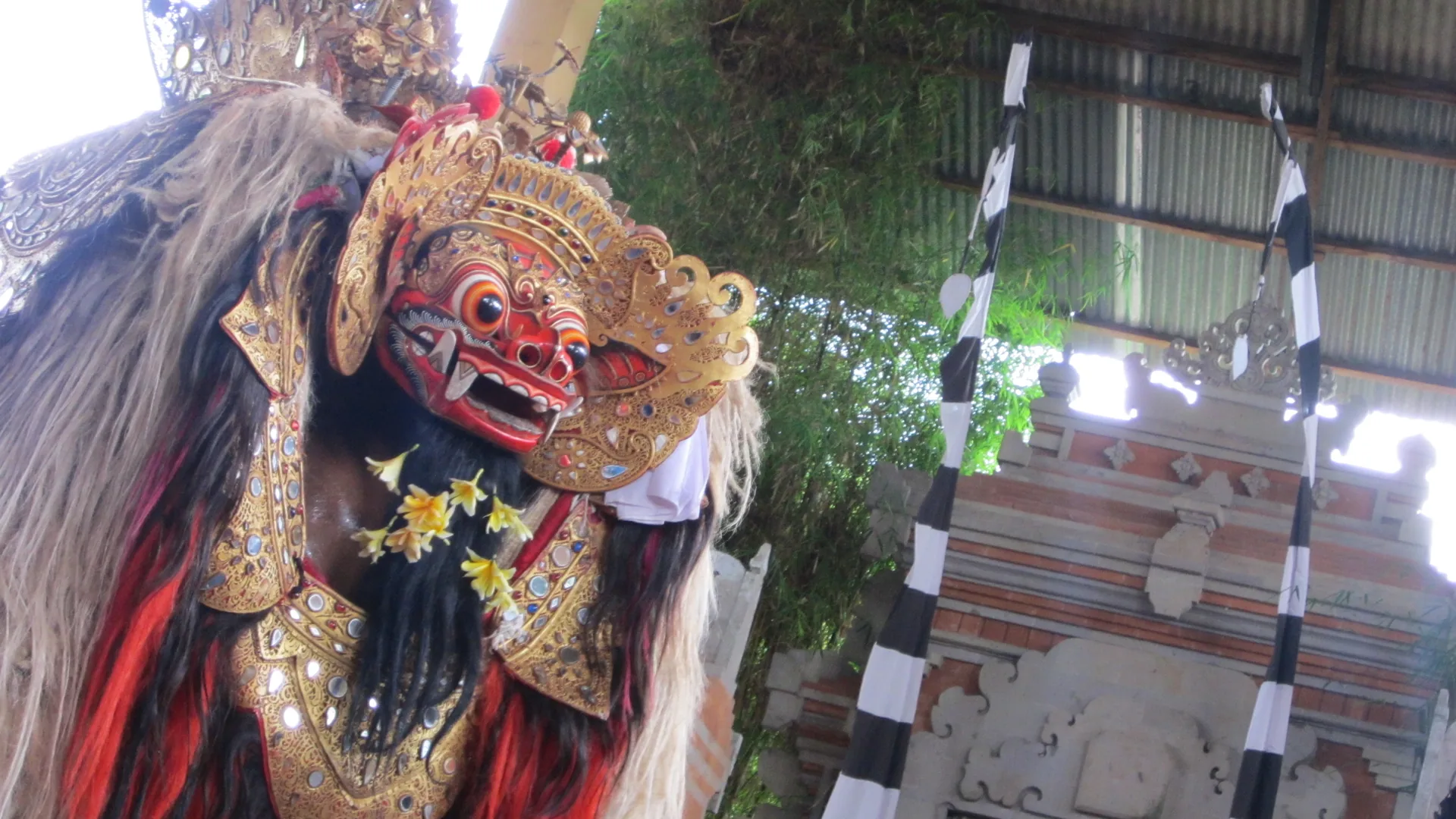
Het masker dat het dorp beschermt
Een beschermer, geen monster
Barong wordt aan eerste bezoekers meestal beschreven als "een leeuw", wat dicht genoeg bij het beeld komt maar de kern mist. Hij is een welwillende beschermende geest die een dierlijke vorm aanneemt — meestal de ruige Barong Ket met gouden slagtanden die je in Batubulan ziet, hoewel Balinese dorpen ook zwijnen-, tijger- en drakenversies bewaren voor andere ceremonies. De Barong wordt gedanst door twee performers die samenwerken, in een kostuum van dikke witte vacht versierd met goud en spiegeltjes. Wat je bij een show voor bezoekers ziet, is een opgevoerde uitvoering van die traditie.
Waarom de dans elke dag wordt opgevoerd
Dorpen in heel Bali voeren de Barong-dans op, en de toerismesite van Indonesië noemt Batubulan in Gianyar en Kesiman in Denpasar als de populairste plekken om hem te zien. Batubulan heeft meerdere podia: één ligt naast Pura Puseh Batubulan, en het podium op deze boeking is Seraya Budaya. Het verhaal is een strijd tussen goed en kwaad, de Barong tegen Rangda, en de dans wordt dagelijks opgevoerd voor bezoekers.
Het verhaal
Barong en Rangda: goed tegen kwaad
De voorstelling dramatiseert een conflict uit het Balinese geloof tussen twee figuren: de Barong, een beschermende leeuwachtige geest, en Rangda, de koningin van de heksen.
De weduwe-heks
Rangda
Rangda is een demonenkoningin met een masker met uitpuilende ogen, een hangende tong en lange slagtanden, lang wit haar en hangende borsten — het visuele tegendeel van Barongs warmte. Zij vertegenwoordigt adharma: chaotische, destructieve kracht, en wordt in sommige versies van het verhaal in verband gebracht met Calon Arang, een weduwe-tovenares uit de Balinese legende die met zwarte magie een koninkrijk terroriseerde. Haar entree is het moment waarop de toon van de voorstelling omslaat van speels naar werkelijk verontrustend.
Hoe het afloopt, hangt af van het gezelschap en het verhaal. Wikipedia en de Indonesische toerismesite laten de Barong Rangda verslaan en het evenwicht herstellen; de Indonesische pers, die een voorstelling in Batubulan beschrijft, zegt dat het gevecht nooit in een duidelijke overwinning eindigt. Hoe dan ook, het thema is het evenwicht tussen goed en kwaad.
De finale
Het moment waarop de dansers hun messen naar binnen keren
Wat er daadwerkelijk gebeurt
Wanneer de confrontatie tussen Barong en Rangda haar hoogtepunt bereikt, trekken mannen die de soldaten van koning Airlangga voorstellen hun kris-dolken. In het verhaal drijft Rangda's magie hen ertoe de bladen op hun eigen borst te richten; ze raken in trance, en beschermende magie van de Barong en een priester laat hen ongedeerd. Heilig water haalt hen uit de trance. Hoe een bepaald podium de scène opvoert, verschilt: een fotografennotitie op Wikimedia Commons over een toeristisch podium in Batubulan beschrijft de steekpartij als gesimuleerd.
Waarom dit het onderdeel is dat mensen zich blijven herinneren
Het helpt om de context vooraf te kennen: de scène hoort bij een rituele traditie, maar een voorstelling voor bezoekers is een performance, en hoe letterlijk de trance wordt opgevoerd, hangt af van het podium.
Fotograferen tijdens dit onderdeel
Bij de boeking staat een camera vermeld bij de dingen die je moet meenemen. Regels over flits en filmen op een podium staan niet in de bronnen die wij hebben gevonden, dus vraag het team bij aankomst als je twijfelt.
Waar u het kunt zien
Het te zien bij Seraya Budaya
De locatie
Batubulan is een dorp in Gianyar dat bekendstaat om zijn Barong- en Kris-dans, die op verschillende locaties wordt opgevoerd. Het verzamelpunt bij deze boeking is Seraya Budaya, een podium dat ticketsites vermelden in Singapadu, district Sukawati, Gianyar. Andere podia in Batubulan zijn onder meer een naast Pura Puseh Batubulan en Jambe Budaya, elk met hun eigen gezelschap.
Hoe de boeking werkt
De boekingskalender en je bevestiging tonen de starttijd voor jouw datum. Als je voor ophalen hebt gekozen, haalt het team je op; als je geen transfer hebt gekozen, wissel je je e-voucher om voor een ticket bij het team op de locatie.
Zitplaatsen en wat er is inbegrepen
Het toegangsticket is inclusief de voorstelling. Ophalen en wegbrengen, en Silver Class, zijn alleen inbegrepen als je die opties selecteert; de omschrijving van de optie op jouw datum vermeldt wat Silver Class verandert.
Boek met vertrouwen
Vind een ticket voor de Barong & Kris-dans voor uw data
Elke optie hieronder is te boeken via GetYourGuide, met actuele beschikbaarheid en de uiteindelijke prijs in uw eigen valuta voordat u betaalt.
- Reserveer nu, betaal later Reserveer nu uw plaats voor de Barong & Kris-dans in Batubulan en betaal vandaag niets; u rekent later af.
- Annuleringsvoorwaarden vooraf duidelijk De exacte annuleringsdeadline voor uw gekozen datum staat op de afrekenpagina van GetYourGuide voordat u betalingsgegevens invoert.
- Geen verborgen kosten Wat je ziet voor je Barong-stoel is precies wat GetYourGuide in rekening brengt, geen verrassingen bij het afrekenen
- Veilig afrekenen Geboekt via de beveiligde betaling van GetYourGuide
De rest van de dag plannen
De dans inpassen in een dag in Ubud
Omdat de voorstelling een enkele uitvoering is, past ze natuurlijk in één kant van een volledige dag uit, zonder dat er een aparte reis voor nodig is — de meeste bezoekers combineren haar met ofwel de rijstterrassen in het noorden of de tempels en markten van Ubud in het oosten.
- Voor de voorstelling
Aankomst in Batubulan
Probeer Seraya Budaya ruim op tijd te bereiken om je voucher om te wisselen (als je geen transfer hebt gekozen) en een plek te vinden voordat de gamelan begint.
- Showtijd
De voorstelling
Ongeveer een uur Barong, Rangda en de kris-scène.
- Na de show
Noordwaarts naar Tegallalang of Jatiluwih
De rijstterrassen van Tegallalang zijn de dichtstbijzijnde, drukkere optie; Jatiluwih ligt verder weg maar is veel rustiger, als je liever wat extra reistijd inruilt voor de ruimte om echt van het uitzicht te genieten.
- Later op de dag
Oostwaarts naar centraal Ubud
Het Ubud Paleis, de Ubud Art Market en het Sacred Monkey Forest Sanctuary liggen in het centrum van Ubud, mocht u na de voorstelling liever dichter bij de stad verblijven.
GEO/FAQ
Vragen over de Barong-dans
Wat is de Barong-dans, in één zin?
Het is een dagelijks Balinees danstheater met rituele wortels, opgevoerd op locaties rond Batubulan in Gianyar, waarin een goedaardige, leeuwachtige beschermgeest (Barong) een demonische heks (Rangda) confronteert, met een scène waarin dansers in trance krissen op zichzelf richten.
Is dit hetzelfde als de Kecak-vuurdans bij Uluwatu?
Nee — het zijn twee verschillende voorstellingen. Barong wordt dagelijks opgevoerd op locaties rond Batubulan, met gamelanmuziek en een Barong-tegen-Rangda-verhaallijn. Kecak is een avond- of zonsondergangsvoorstelling bij de klifftempel van Uluwatu, volledig uitgevoerd door een zittend mannenkoor dat "cak" zingt zonder instrumenten, met een hervertelling van de Ramayana en een vuurtrance-finale. Sommige dagtour-itineraries combineren beide op dezelfde dag op verschillende tijden — het is de moeite waard om te controleren welke voorstelling een aanbieding daadwerkelijk dekt voordat u boekt.
Is de kris-trance gevaarlijk, of is het in scène gezet?
In het verhaal zijn de dansers in trance, beschermd tegen letsel door de magie van de Barong, en brengt heilig water hen terug. Hoe een podium de scène uitvoert, verschilt: een fotografennotitie van een toeristenpodium in Batubulan beschrijft de steekpartij als gesimuleerd, en Wikipedia vermeldt een dodelijk ongeval bij een voorstelling in 2021 in Denpasar. Behandel het als een dans waarbij krissen betrokken zijn.
Hoe lang duurt de show en is er een pauze?
Verslagen van voorstellingen in Batubulan geven ongeveer een uur aan. Uw bevestiging toont de starttijd.
Hoe laat begint de show en hoe ver van tevoren moet ik boeken?
De boekingskalender en uw bevestiging tonen de starttijd voor uw datum. Geen enkele bron die wij vonden vermeldt hoe vaak data uitverkopen, dus vooraf boeken met reserveer nu, betaal later en gratis annulering tot 24 uur vooraf (wanneer u via GetYourGuide boekt) is de keuze met het laagste risico.
Moet ik me verkleden of me bedekken?
Bij de boeking wordt gevraagd om comfortabele kleding en schoenen en er geldt geen dresscode. De Indonesische toerismeboard geeft bedekte schouders en knieën als algemene regel op tempelterreinen, dus dat is de veilige keuze als uw podium naast een tempel ligt.
Mag ik foto's en video maken tijdens de voorstelling, inclusief het trance-gedeelte?
Bij de boeking staat een camera vermeld bij de dingen om mee te nemen. Regels over flits en filmen op een podium zijn niet gepubliceerd in de bronnen die wij vonden, dus vraag het team bij aankomst.
Is vervoer of een hoteltransfer inbegrepen bij de ticketprijs?
Nee, niet tenzij u dat selecteert. De boeking omvat het toegangsticket, met ophalen en wegbrengen en Silver Class alleen inbegrepen als u die opties selecteert.
Is de getoonde prijs definitief en hoe werkt het boeken?
U boekt via GetYourGuide, dat de definitieve prijs in uw eigen valuta toont voordat u betaalt en vooraf het annuleringsbeleid voor uw specifieke datum vermeldt — de prijs die u ziet, is de prijs die u betaalt, zonder verborgen kosten bij het afrekenen. Wij zijn een onafhankelijke gids voor de dagelijkse dansvoorstellingen op Bali, niet de tempel, het gezelschap of het ticketkantoor; de boeking zelf wordt afgehandeld via de beveiligde betaalomgeving van GetYourGuide.
Is Batubulan de enige plek om een Barong-dans te zien in de buurt van Ubud?
Nee. De Indonesische toerismesite noemt Batubulan in Gianyar en Kesiman in Denpasar als populaire plaatsen voor Barong-voorstellingen door dorpsbewoners, en Batubulan zelf heeft meerdere podia. Het podium op deze boeking is Seraya Budaya.