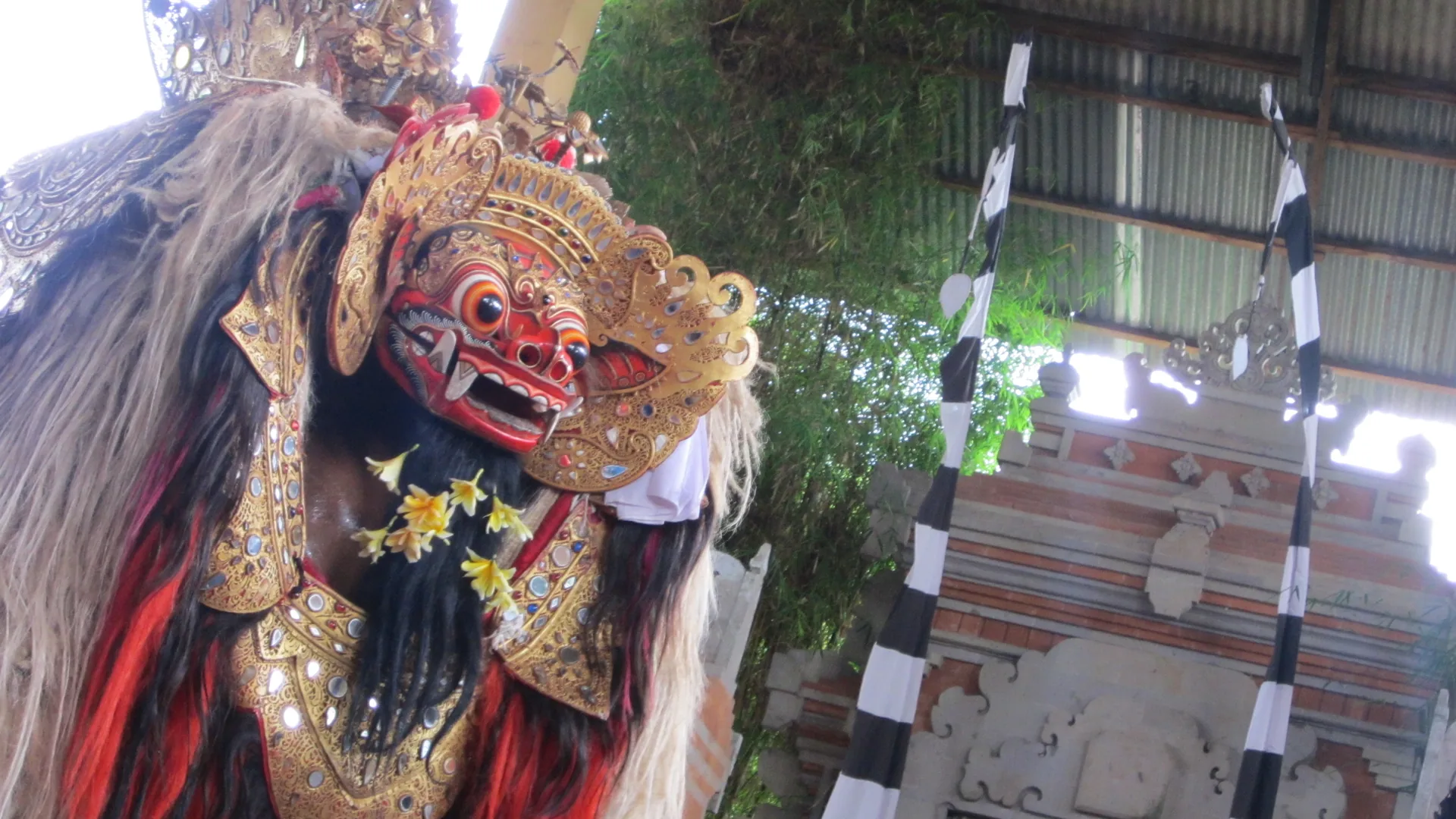
Maska, kas sargā ciemu
A protector, not a monster
Barong pirmreizējiem apmeklētājiem parasti tiek raksturots kā "lauva" — tas ir pietiekami tuvu, lai radītu priekšstatu, taču palaiž garām būtību. Viņš ir labvēlīgs aizsarggars, kas pieņem dzīvnieka veidolu — visbiežāk tas ir pinkainais Barong Ket ar zelta ilkņiem, ko var redzēt Batubulanā, lai gan Bali ciematos citām ceremonijām tiek turētas arī mežacūkas, tīģera un pūķa versijas. Barong dejo divi izpildītāji kopā, tērpā no biezas baltas kažokādas, kas rotāta ar zeltu un spoguļu gabaliņiem. Tas, ko redzat apmeklētājiem paredzētā izrādē, ir šīs tradīcijas inscenēts priekšnesums.
Kāpēc deja tiek izrādīta katru dienu
Barongu deju izrāda dažādos Bali ciemos, un Indonēzijas tūrisma vietne kā populārākās vietas tās noskatīšanās norāda Batubulanu Gjanjarā un Kesimanu Denpasārā. Batubulanā ir vairākas skatuves: viena atrodas blakus Pura Puseh Batubulan, un šajā rezervācijā iekļautā skatuve ir Seraya Budaya. Stāsts ir par cīņu starp labo un ļauno, Barongu pret Rangdu, un deja tiek izrādīta katru dienu apmeklētājiem.
Stāsts
Barong un Rangda: labais pret ļauno
Izrāde dramatizē konfliktu Bali ticējumos starp divām būtnēm: Barongu, aizsargājošu lauvai līdzīgu garu, un Rangdu, raganu karalieni.
The widow-witch
Rangda
Rangda ir dēmonu karaliene ar masku, kurai izspiedušās acis, nokarājusies mēle un gari ilkņi, velkot baltus matus un nokarenas krūtis — vizuālais pretstats Barong siltumam. Viņa pārstāv adharmu: haotisku, postošu spēku, un dažos stāstos viņa tiek saistīta ar Calon Arang — atraitni-burvi no Bali leģendām, kas ar melno maģiju terorizēja karalisti. Viņas ienākšana ir brīdis, kad izrādes noskaņa pārslēdzas no rotaļīgas uz patiesi satraucošu.
Kā tas beidzas, ir atkarīgs no trupas un stāsta. Wikipedia un Indonēzijas tūrisma vietne vēsta, ka Barongs uzvar Rangdu un atjauno līdzsvaru; Indonēzijas prese, aprakstot Batubulan izrādi, norāda, ka cīņa nekad nebeidzas ar skaidru uzvaru. Jebkurā gadījumā tēma ir līdzsvars starp labo un ļauno.
Noslēgums
Brīdis, kad dejotāji pagriež dunčus pret sevi
What actually happens
Kad Baronga un Rangdas pretstāve sasniedz kulmināciju, vīrieši, kas atveido karaļa Airlanggas karavīrus, izvelk krisa dunčus. Stāstā Rangdas maģija liek viņiem vērst asmeņus pret savām krūtīm; viņi iekrīt transā, un Baronga un priestera aizsargmaģija viņus pasargā no ievainojumiem. Svētais ūdens viņus izved no transa. Kā konkrēta skatuve izspēlē šo ainu, atšķiras: fotogrāfa piezīme Wikimedia Commons no Batubulan tūristu skatuves apraksta dūrienu kā imitētu.
Kāpēc tieši šī daļa paliek atmiņā visiem
Ir noderīgi zināt kontekstu jau pirms sākuma: aina pieder rituālai tradīcijai, bet izrāde apmeklētājiem ir priekšnesums, un tas, cik burtiski transs tiek izspēlēts, ir atkarīgs no skatuves.
Fotografēšana šīs daļas laikā
Rezervācijā starp lietām, ko ņemt līdzi, ir norādīts fotoaparāts. Noteikumi par zibspuldzi un filmēšanu skatuvē nav publicēti mūsu atrastajos avotos, tāpēc, ja neesat pārliecināts, jautājiet komandai ierašanās brīdī.
Kur to apskatīt
Ieraudzīt to Seraya Budaya
The venue
Batubulan ir ciems Gianyarā, kas pazīstams ar savu Baronga un Krisa deju, kas tiek izrādīta vairākās vietās. Šīs rezervācijas tikšanās vieta ir Seraya Budaya, skatuve, ko biļešu vietnes uzskaita Singapadu, Sukawati apgabalā, Gianyarā. Citas Batubulan skatuves ietver vienu blakus Pura Puseh Batubulan un Jambe Budaya, katrai ar savu trupu.
Kā darbojas rezervācija
Rezervācijas kalendārs un jūsu apstiprinājums parāda sākuma laiku jūsu datumam. Ja izvēlējāties transportu, komanda jūs savāc; ja izvēlējāties bez transfēra, jūs apmaināt savu e-voucher pret biļeti pie komandas norises vietā.
Sēdvietas un kas iekļauts
Ieejas biļetē ir iekļauta izrāde. Savākšana un nogādāšana, kā arī Silver Class ir iekļautas tikai tad, ja izvēlaties šīs opcijas; opcijas apraksts jūsu datumam norāda, ko Silver Class maina.
Rezervējiet ar pārliecību
Atrodiet Barong & Kris dejas biļeti saviem datumiem.
Katru no zemāk minētajām iespējām var rezervēt, izmantojot GetYourGuide — tās ir pieejamas reāllaikā, un gala cena tiek parādīta jūsu valūtā pirms apmaksas.
- Rezervējiet tagad, maksājiet vēlāk Rezervējiet vietu Barong & Kris dejai Batubulanā tagad, nemaksājot neko šodien – norēķinieties vēlāk.
- Atcelšanas noteikumi uzreiz redzami Precīzais atcelšanas termiņš jūsu izvēlētajam datumam ir norādīts GetYourGuide apmaksas lapā, pirms ievadāt jebkādus maksājuma datus
- Nekādu slēpto maksu Ko redzat savai Barong vietai, ir tieši tas, ko iekasē GetYourGuide — nekādu pārsteigumu norēķināšanās brīdī
- Droša apmaksa Rezervēts, izmantojot GetYourGuide aizsargāto maksājumu
Plānojot atlikušo dienas daļu
Kā iekļaut deju Ubud dienas plānā
Tā kā izrāde ir viens priekšnesums, tā dabiski iekļaujas vienā pilnas dienas izbrauciena daļā, nevis prasa atsevišķu braucienu — lielākā daļa apmeklētāju to apvieno vai nu ar rīsa terasēm ziemeļos, vai ar Ubudas tempļiem un tirgiem austrumos.
- Pirms izrādes
Arrive at Batubulan
Centieties ierasties Seraya Budaya laikus, lai apmainītu savu voucheri (ja izvēlējāties bez transfēra) un atrastu vietu pirms gamelana sākuma.
- Izrādes laiks
The performance
Apmēram stunda Baronga, Rangdas un krisa ainas.
- Pēc izrādes
North to Tegallalang or Jatiluwih
Tegallalang rīsu terases ir tuvākais, bet noslogotākais variants; Jatiluwih atrodas tālāk, taču ir daudz mazāk apmeklēts, ja vien labprātāk apmainītu ceļojuma laiku pret telpu, kur patiešām apskatīt skatu.
- Vēlāk
East to central Ubud
Ubud Palace, Ubud mākslas tirgus un Svētā Pērtiķu meža svētnīca atrodas Ubud centrā, ja pēc izrādes vēlaties palikt tuvāk pilsētas centram.
GEO/FAQ
Barong dejas jautājumi
Kas ir Barong deja vienā teikumā?
Tā ir ikdienas baliešu deju drāma ar rituāliem sakņiem, kas tiek izrādīta dažādās vietās Batubulan apkārtnē Gjanjarā, kurā labvēlīgs, lauvai līdzīgs sargeņģelis (Barong) stājas pretī dēmoniskai raganai (Rangda), ar ainu, kurā transā nonākuši dejotāji vērš kris dunčus pret sevi.
Vai tas ir tas pats, kas Kecak uguns deja Uluwatu?
Nē — tās ir divas dažādas izrādes. Barong tiek izrādīts katru dienu dažādās vietās Batubulan apkārtnē, ar gamelana mūziku un Barong pret Rangda sižetu. Kecak ir vakara vai saulrieta izrāde Uluwatu klints templī, ko pilnībā izpilda sēdošs vīriešu koris, dziedot "cak" bez instrumentiem, pārstāstot Ramajanu un noslēdzoties ar uguns transa secību. Daži dienas ekskursiju maršruti ietver abas vienā dienā dažādos laikos — pirms rezervēšanas ir vērts pārbaudīt, kuru no tām konkrētais piedāvājums patiešām ietver.
Vai kris transs ir bīstams, vai arī tas ir inscenēts?
Stāstā dejotāji atrodas transā, ko no kaitējuma aizsargā Barong maģija, un svētais ūdens viņus atgriež atpakaļ. Tas, kā skatuve izpilda šo ainu, atšķiras: kāda fotogrāfa piezīme no vienas Batubulan tūristu skatuves apraksta dūrienu kā simulētu, un Wikipedia reģistrē nāvējošu negadījumu 2021. gada izrādē Denpasārā. Uztveriet to kā deju, kurā tiek izmantoti dunci.
Cik ilgi izrāde ilgst, un vai ir starpbrīdis?
Ziņojumi par Batubulan izrādēm norāda aptuveni vienu stundu. Jūsu apstiprinājumā ir norādīts sākuma laiks.
Cikos sākas izrāde, un cik ilgi iepriekš man vajadzētu rezervēt?
Rezervēšanas kalendārs un jūsu apstiprinājums norāda sākuma laiku jūsu datumam. Neviens avots, ko atradām, nenorāda, cik bieži datumi tiek izpārdoti, tāpēc rezervēšana iepriekš ar "rezervē tagad, maksā vēlāk" un bezmaksas atcelšanu līdz 24 stundām pirms (rezervējot caur GetYourGuide) ir zemā riska izvēle.
Vai man ir jāģērbjas svinīgi vai jāsedz ķermenis?
Rezervēšanā tiek lūgts ērts apģērbs un apavi, un netiek noteikts ģērbšanās kods. Indonēzijas tūrisma padome kā vispārīgu noteikumu tempļa teritorijā norāda plecu un ceļgalu nosedzēšanu, tāpēc tā ir drošā izvēle, ja jūsu skatuve atrodas blakus templim.
Vai es varu fotografēt un filmēt izrādes laikā, ieskaitot transa daļu?
Rezervēšanā starp lietām, kas jāņem līdzi, ir norādīta kamera. Noteikumi par zibspuldzi un filmēšanu skatuvē nav publicēti avotos, ko atradām, tāpēc jautājiet komandai ierašanās brīdī.
Vai biļetes cenā ir iekļauta transporta vai viesnīcas sagaidīšana?
Nē, ja vien jūs to neizvēlaties. Rezervēšana ietver ieejas biļeti, savukārt paņemšana un nogādāšana un Silver Class ir iekļautas tikai tad, ja izvēlaties šīs opcijas.
Vai norādītā cena ir galīgā, un kā darbojas rezervēšana?
Jūs rezervējat caur GetYourGuide, kas pirms apmaksas parāda galīgo cenu jūsu valūtā un jau iepriekš norāda atcelšanas politiku jūsu konkrētajam datumam — cena, ko redzat, ir cena, ko maksājat, bez slēptām maksām norēķināšanās brīdī. Mēs esam neatkarīgs ceļvedis Bali ikdienas deju izrādēm, nevis templis, trupa vai biļešu kase; pati rezervēšana tiek veikta, izmantojot GetYourGuide drošu norēķinu sistēmu.
Vai Batubulan ir vienīgā vieta, kur netālu no Ubudas var redzēt Barong deju?
Nē. Indonēzijas tūrisma vietne norāda Batubulan Gjanjarā un Kesiman Denpasārā kā populāras vietas ciema iedzīvotāju Barong izrādēm, un pašā Batubulan ir vairākas skatuves. Skatuve šajā rezervējumā ir Seraya Budaya.