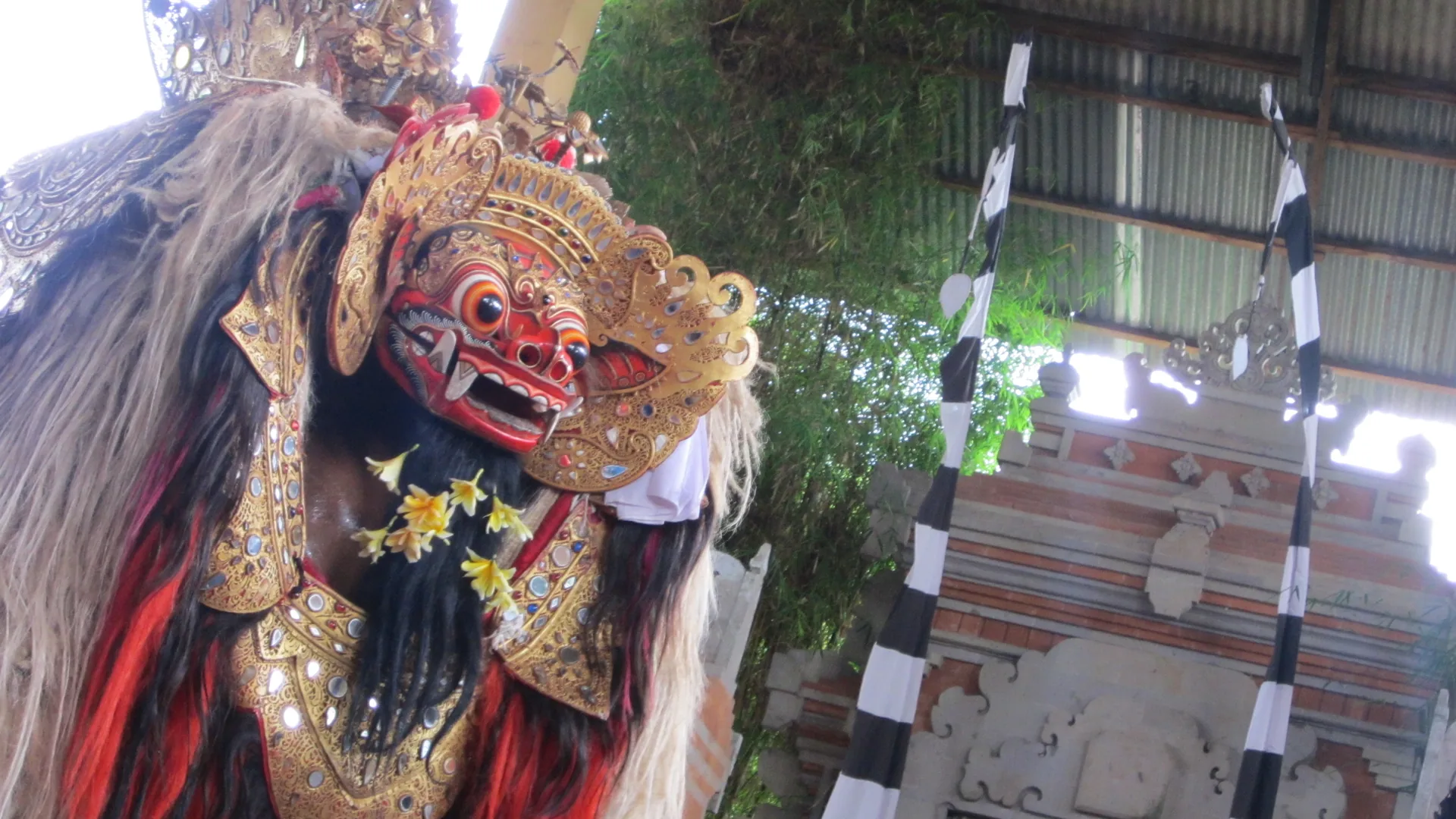
Kaukė, sauganti kaimą
A protector, not a monster
Barongas pirmą kartą atvykstantiems lankytojams dažniausiai apibūdinamas kaip „liūtas“ – tai gana artima, kad susidarytumėte vaizdą, bet neišreiškia esmės. Jis yra geranoriška apsauginė dvasia, įgaunanti gyvūno pavidalą – dažniausiai tai gauruotasis Barong Ket su auksiniais iltimis, matomas Batubulane, nors Balio kaimuose taip pat laikomos šerno, tigro ir drakono versijos kitoms ceremonijoms. Barongą šoka du atlikėjai kartu, vilkėdami storu baltu kailiu papuoštu kostiumu su aukso ir veidrodėlių detalėmis. Tai, ką matote lankytojams skirtame pasirodyme, yra inscenizuota tos tradicijos versija.
Kodėl šokis vaidinamas kiekvieną dieną
Kaimuose visame Balyje vaidinamas Barongo šokis, o Indonezijos turizmo svetainė nurodo Batubulaną Gianyare ir Kesimaną Denpasare kaip populiariausias vietas jį pamatyti. Batubulane yra kelios scenos: viena įsikūrusi šalia Pura Puseh Batubulan, o šiame užsakyme nurodyta scena yra Seraya Budaya. Istorija – tai gėrio ir blogio kova, Barongas prieš Rangdą, ir šokis vaidinamas kasdien lankytojams.
Istorija
Barongas ir Rangda: gėris prieš blogį
Spektaklis dramatizuoja baliečių tikėjimo konfliktą tarp dviejų figūrų: Barongo, apsauginės liūtą primenančios dvasios, ir Rangdos, raganų karalienės.
The widow-witch
Rangda
Rangda — demonų karalienė su išsprogusių akių, iškišto liežuvio ir ilgų iltinių kauke, su plačiais baltais plaukais ir nukarusiomis krūtimis — vizualiai visiška Barongo šilumos priešingybė. Ji įkūnija adharmą: chaotišką, destruktyvią galią, o kai kuriuose pasakojimuose siejama su Calon Arang, Balio legendų našle ragana, juodąja magija terorizavusia karalystę. Jos pasirodymas — tai momentas, kai spektaklio tonas iš žaismingo tampa tikrai neraminančiu.
Kaip viskas baigiasi, priklauso nuo trupės ir pasakojimo. Vikipedija ir Indonezijos turizmo svetainė teigia, kad Barongas nugali Rangdą ir atkuria pusiausvyrą; Indonezijos spauda, aprašydama Batubulano spektaklį, rašo, kad kova niekada nesibaigia aiškia pergale. Bet kuriuo atveju tema — gėrio ir blogio pusiausvyra.
Finalas
Akimirka, kai šokėjai pasuka savo durklus į save
What actually happens
Kai Barongo ir Rangdos akistata pasiekia kulminaciją, vyrai, vaizduojantys karaliaus Airlanggos karius, ištraukia krisų durklus. Pasakojime Rangdos magija priverčia juos nukreipti ašmenis į savo pačių krūtines; jie patenka į transą, o apsauginė Barongo ir kunigo magija neleidžia jiems susižaloti. Šventas vanduo juos išveda iš transo. Kaip konkreti scena atliekama scenoje, skiriasi: fotografo pastaba „Wikimedia Commons“ apie Batubulano turistinę sceną apibūdina dūrio veiksmą kaip imituojamą.
Kodėl būtent ši dalis įsimenama labiausiai
Padeda žinoti kontekstą prieš ateinant: ši scena priklauso ritualinei tradicijai, tačiau spektaklis lankytojams yra pasirodymas, o kaip pažodžiui inscenizuojamas transas, priklauso nuo scenos.
Fotografavimas šios dalies metu
Rezervacijos sąraše tarp daiktų, kuriuos verta pasiimti, nurodyta kamera. Taisyklės dėl blykstės ir filmavimo scenoje nėra paskelbtos mūsų rastuose šaltiniuose, tad jei abejojate, atvykę pasiteiraukite komandos.
Kur jį pamatyti
Pamatykite tai „Seraya Budaya“
The venue
Batubulanas — Gianyaro kaimas, žinomas dėl Barongo ir Kriso šokio, kuris atliekamas keliose vietose. Šios rezervacijos susitikimo vieta — Seraya Budaya, scena, kurią bilietų svetainės nurodo Singapadu, Sukawačio rajone, Gianyare. Kitos Batubulano scenos apima sceną šalia Pura Puseh Batubulan ir Jambe Budaya, kurių kiekviena turi savo trupę.
Kaip veikia rezervacija
Rezervacijos kalendorius ir jūsų patvirtinimas rodo jūsų datos pradžios laiką. Jei pasirinkote paėmimą, komanda jus paima; jei pasirinkote be transporto, vietoje su komanda iškeisite savo e-vaučerį į bilietą.
Sėdimos vietos ir kas įskaičiuota
Įėjimo bilietas apima spektaklį. Paėmimas ir nuvežimas bei Sidabro klasė įtraukiami tik pasirinkus šias parinktis; jūsų datos parinkties aprašymas nurodo, ką keičia Sidabro klasė.
Užsisakykite užtikrintai
Raskite Barong & Kris šokio bilietą jūsų datoms
Kiekvieną toliau pateiktą pasiūlymą galima užsisakyti per „GetYourGuide“ – matysite realų prieinamumą, o galutinė kaina bus rodoma jūsų valiuta prieš atliekant mokėjimą.
- Rezervuokite dabar, mokėkite vėliau Rezervuokite vietą Barong ir Kris šokių pasirodymui Batubulane dabar – šiandien nemokėkite nieko, atsiskaitykite vėliau.
- Atšaukimo sąlygos iš anksto Tiksli jūsų pasirinktos datos atšaukimo riba nurodoma „GetYourGuide“ atsiskaitymo puslapyje prieš įvedant bet kokius mokėjimo duomenis
- Jokių paslėptų mokesčių Tai, ką matote už savo „Barong“ vietą, yra būtent tai, ką „GetYourGuide“ ima mokestį – jokių netikėtumų atsiskaitant
- Saugus atsiskaitymas Užsakyta per „GetYourGuide“ apsaugotą mokėjimą
Likusios dienos planavimas
Kaip įterpti šokį į Ubud dieną
Kadangi spektaklis yra vienas pasirodymas, jis natūraliai įsilieja į vieną visos dienos išvykos pusę, o ne reikalauja atskiros kelionės — dauguma lankytojų jį derina arba su ryžių terasomis šiaurėje, arba su Ubudžio šventyklomis ir turgumis rytuose.
- Prieš spektaklį
Arrive at Batubulan
Stenkitės laiku pasiekti Seraya Budaya, kad iškeistumėte vaučerį (jei pasirinkote be transporto) ir rastumėte vietą prieš pradedant gamelanui.
- Rodo laiką
The performance
Maždaug valanda Barongo, Rangdos ir kriso scenos.
- Po spektaklio
North to Tegallalang or Jatiluwih
Tegallalang ryžių terasos yra arčiau ir judresnės; Jatiluwih yra toliau, bet kur kas mažiau lankomos, jei norite iškeisti kelionės laiką į erdvę, kur iš tikrųjų galėtumėte pasigrožėti vaizdu.
- Vėliau
East to central Ubud
Ubud Palace, Ubud meno turgus ir Šventosios beždžionių miško rezervatas yra centriniame Ubude, jei po spektaklio norėtumėte apsistoti arčiau miesto.
GEO/FAQ
Klausimai apie Barong šokį
Kas yra Barongo šokis vienu sakiniu?
Tai kasdienė baliečių šokio drama su ritualinėmis šaknimis, vaidinama įvairiose Batubulano vietose Gjanjare, kurioje geranoriška liūtą primenanti globėja dvasia (Barongas) susiduria su demonu ragana (Rangda), su scena, kurioje transo apimti šokėjai nukreipia kris durklus į save.
Ar tai tas pats, kas Kecak ugnies šokis Uluwatu?
Ne — tai du skirtingi spektakliai. Barongas vaidinamas kasdien įvairiose Batubulano vietose, su gamelano muzika ir Barongo prieš Rangdą siužetu. Kecakas yra vakarinis arba saulėlydžio spektaklis Uluwatu uolų šventykloje, atliekamas vien tik sėdinčio vyrų choro, giedančio „cak“ be jokių instrumentų, perpasakojančio Ramajaną ir pasibaigiančio ugnies transo seka. Kai kurie dienos ekskursijų maršrutai apima abu spektaklius tą pačią dieną skirtingu laiku — verta pasitikslinti, kurį iš jų iš tikrųjų apima pasiūlymas prieš rezervuojant.
Ar kris durklų transas pavojingas, ar tai tik inscenizacija?
Pasakojime šokėjai yra transo būsenos, Barongo magijos apsaugoti nuo žalos, o šventas vanduo juos sugrąžina. Kaip scena atliekama scenoje, skiriasi: vieno fotografo užrašas iš vienos Batubulano turistinės scenos apibūdina dūrius kaip imituojamus, o Vikipedija užfiksuoja mirtiną nelaimingą atsitikimą 2021 metų spektaklyje Denpasare. Vertinkite tai kaip šokį, kuriame naudojami durklai.
Kiek laiko trunka pasirodymas ir ar yra pertrauka?
Batubulano spektaklių aprašymuose nurodoma apie valandą. Jūsų patvirtinime nurodytas pradžios laikas.
Kada prasideda šou ir kaip iš anksto reikėtų užsisakyti?
Rezervacijos kalendorius ir jūsų patvirtinimas rodo jūsų datos pradžios laiką. Nė vienas rastas šaltinis nenurodo, kaip dažnai datos išparduodamos, todėl rezervavimas iš anksto su „rezervuok dabar, mokėk vėliau“ ir nemokamu atšaukimu iki 24 valandų prieš (kai rezervuojate per „GetYourGuide“) yra mažos rizikos pasirinkimas.
Ar man reikia pasipuošti ar apsirengti kukliau?
Rezervuojant prašoma patogių drabužių ir avalynės, konkretus aprangos kodas nenustatytas. Indonezijos turizmo taryba nurodo padengtus pečius ir kelius kaip bendrą taisyklę šventyklų teritorijoje, todėl tai yra saugus pasirinkimas, jei jūsų scena yra šalia šventyklos.
Ar galiu fotografuoti ir filmuoti pasirodymo metu, įskaitant transo dalį?
Rezervuojant fotoaparatas nurodytas tarp daiktų, kuriuos verta pasiimti. Taisyklės dėl blykstės ir filmavimo scenoje nėra paskelbtos rastuose šaltiniuose, todėl pasiteiraukite komandos atvykę.
Ar į bilieto kainą įskaičiuotas transportas arba atsiėmimas iš viešbučio?
Ne, nebent tai pasirinksite. Rezervacija apima įėjimo bilietą, o paėmimas ir nuvežimas bei „Silver Class“ įtraukiami tik jei pasirenkate šias parinktis.
Ar nurodyta kaina yra galutinė, ir kaip veikia užsakymas?
Užsakote per GetYourGuide, kur prieš mokėjimą matote galutinę kainą savo valiuta ir iš anksto nurodytą atšaukimo politiką konkrečiai datai – matoma kaina yra ta, kurią mokate, be jokių paslėptų mokesčių atsiskaitant. Esame nepriklausomas Balio kasdienių šokių pasirodymų gidas, o ne šventykla, trupė ar bilietų kasa; pats užsakymas atliekamas per saugų GetYourGuide atsiskaitymą.
Ar Batubulan yra vienintelė vieta netoli Ubud, kur galima pamatyti Barongo šokį?
Ne. Indonezijos turizmo svetainė nurodo Batubulaną Gjanjare ir Kesimaną Denpasare kaip populiarias vietas kaimiečių Barongo spektakliams, o pats Batubulanas turi keletą scenų. Šios rezervacijos scena yra Seraya Budaya.