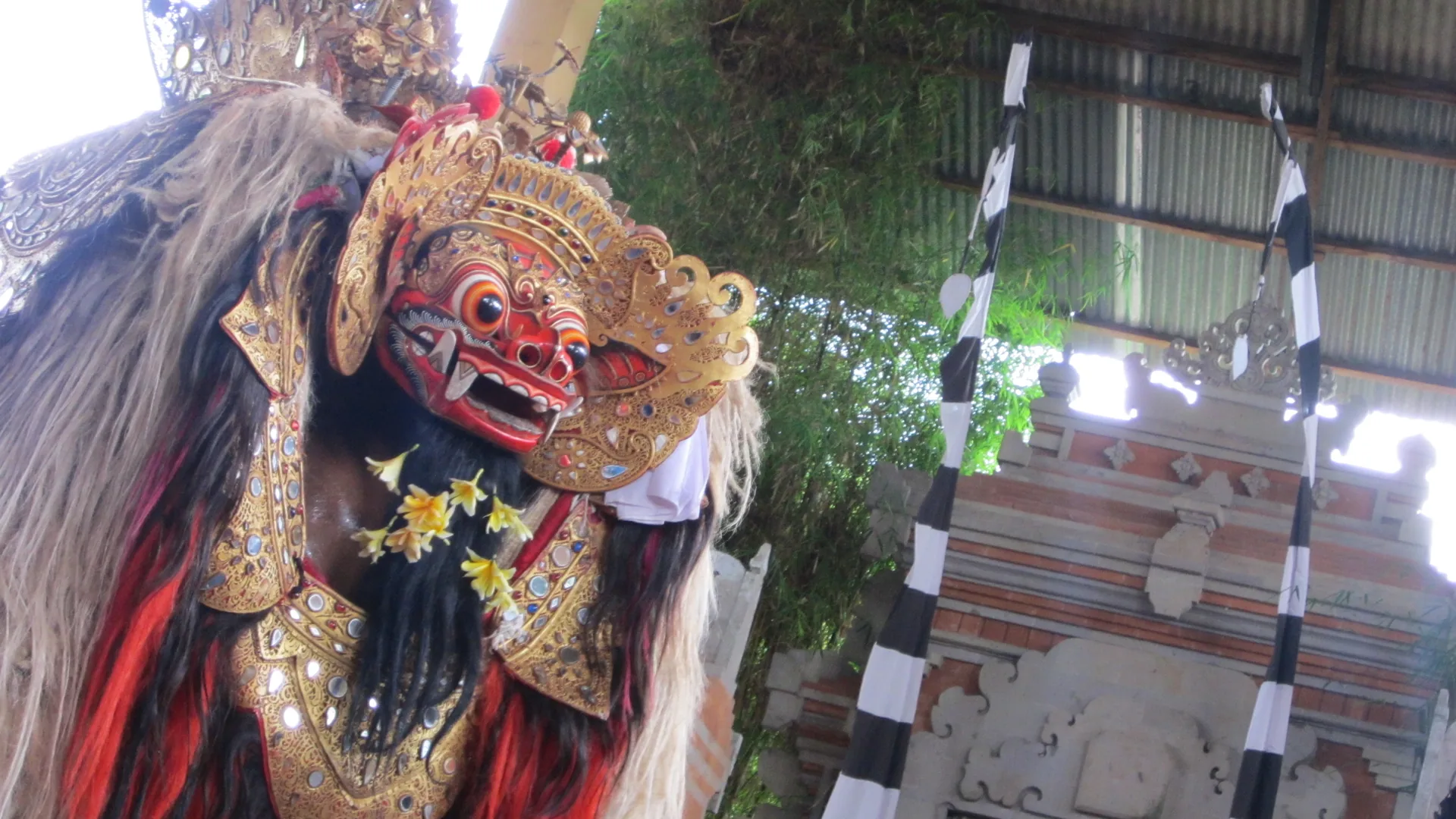
마을을 지키는 가면
괴물이 아니라 수호자
바롱은 보통 발리 첫 방문객들에게 "사자"라고 설명되는데, 상상하기에는 충분히 가깝지만 본질을 놓치는 표현입니다. 바롱은 동물의 모습을 취한 자비로운 수호신으로, 바투불란에서 가장 흔히 볼 수 있는 금빛 송곳니를 지닌 복슬복슬한 바롱 케트가 대표적이지만, 발리의 마을마다 다른 의식용으로 멧돼지, 호랑이, 용 버전도 전해집니다. 바롱은 두 명의 연기자가 함께 추는 춤으로, 두꺼운 흰 털에 금과 거울 조각으로 장식된 의상을 입습니다. 관광객을 위한 공연장에서 보게 되는 것은 이 전통을 무대용으로 재현한 쇼입니다.
왜 이 춤은 매일 공연되는가
발리 곳곳의 마을에서는 바롱 댄스가 공연되며, 인도네시아 관광청 웹사이트는 기안야르의 바투불란과 덴파사르의 케시만을 이 공연을 볼 수 있는 가장 인기 있는 장소로 꼽습니다. 바투불란에는 여러 공연장이 있는데, 그중 하나는 푸라 푸세 바투불란 옆에 자리하고 있으며, 이 예약 상품의 공연장은 세라야 부다야입니다. 이야기는 선과 악의 대결, 즉 바롱과 랑다의 싸움을 담고 있으며, 이 춤은 방문객을 위해 매일 공연됩니다.
이야기
바롱과 랑다: 선과 악의 대결
이 공연은 발리 신앙 속 두 존재, 즉 수호적인 사자 형상의 영령 바롱(Barong)과 마녀들의 여왕 랑다(Rangda) 사이의 갈등을 극적으로 풀어냅니다.
과부 마녀
Rangda
랑다는 튀어나온 눈, 축 늘어진 혀, 긴 송곳니를 가진 가면을 쓰고 흰 머리카락을 길게 늘어뜨린, 처진 가슴을 가진 악귀의 여왕으로, 바롱의 따뜻함과는 정반대의 모습을 하고 있습니다. 그녀는 아다르마, 즉 혼돈과 파괴의 힘을 상징하며, 일부 전승에서는 흑마술로 한 왕국을 공포에 몰아넣었다는 발리 전설 속 과부 마녀 찰론 아랑과 연결되기도 합니다. 그녀가 등장하는 순간, 공연의 분위기는 장난스러움에서 진짜 서늘함으로 바뀝니다.
어떻게 끝나는지는 극단과 이야기에 따라 달라집니다. Wikipedia와 인도네시아 관광청 사이트에서는 Barong이 Rangda를 물리치고 균형을 회복한다고 설명하고, Batubulan 공연을 다룬 인도네시아 언론은 싸움이 명확한 승리로 끝나지 않는다고 전합니다. 어느 쪽이든 주제는 선과 악의 균형입니다.
피날레
무용수들이 칼끝을 자신에게 돌리는 순간
실제로 벌어지는 일
바롱과 랑다의 대결이 절정에 이르면, 아일랑가 왕의 병사들을 상징하는 남성들이 크리스 단검을 뽑아 듭니다. 이야기 속에서 랑다의 마법은 그들로 하여금 자신의 가슴에 칼을 겨누게 만들고, 그들은 무아지경에 빠지지만 바롱과 사제의 보호 마법이 그들을 다치지 않게 합니다. 성수가 그들을 무아지경에서 깨어나게 하지요. 이 장면을 연출하는 방식은 공연장마다 다릅니다. 위키미디어 공용에 올라온 바투불란 관광 공연장에 관한 한 사진작가의 메모에 따르면, 칼로 찌르는 동작은 시뮬레이션으로 묘사됩니다.
사람들이 가장 오래 기억하는 장면인 이유
배경을 미리 알고 보면 이해에 도움이 됩니다. 이 장면은 의례 전통에 속하지만, 관광객을 위한 공연은 어디까지나 쇼이며, 트랜스(무아지경)가 얼마나 사실적으로 연출되는지는 무대에 따라 달라집니다.
이 장면을 촬영해도 될까
예약 안내에는 준비물 중 하나로 카메라가 포함되어 있습니다. 무대에서의 플래시 사용 및 촬영 규정은 저희가 확인한 자료에는 공개되어 있지 않으므로, 확실하지 않으시면 도착 시 팀에 문의해 주세요.
관람 장소
세라야 부다야에서 만나보세요
공연장
바투불란은 바롱과 크리스 댄스로 유명한 기안야르의 마을로, 여러 공연장에서 이 춤을 선보입니다. 이 예약의 만남 장소는 세라야 부다야로, 티켓 사이트에서는 기안야르 수카와티 지역 싱가파두에 위치한 공연장으로 안내하고 있습니다. 바투불란의 다른 공연장으로는 푸라 푸세 바투불란 옆에 있는 곳과 잠베 부다야가 있으며, 각각 고유한 공연단을 보유하고 있습니다.
예약 진행 방법
예약 캘린더와 확인서에는 선택하신 날짜의 시작 시간이 표시됩니다. 픽업을 선택하셨다면 팀이 직접 모시러 가며, 이동 서비스를 선택하지 않으셨다면 현장에서 팀과 함께 e-바우처를 티켓으로 교환하시면 됩니다.
좌석과 포함 사항
입장권에는 공연이 포함되어 있습니다. 픽업 및 드롭오프와 실버 클래스는 해당 옵션을 선택한 경우에만 포함되며, 선택하신 날짜의 옵션 설명에서 실버 클래스가 어떻게 달라지는지 확인하실 수 있습니다.
안심하고 예약하세요
원하는 날짜의 바롱 & 크리스 댄스 티켓 찾기
아래의 모든 옵션은 GetYourGuide를 통해 예약 가능하며, 실시간 예약 가능 여부와 최종 가격은 결제 전에 자국 통화로 확인하실 수 있습니다.
- 지금 예약하고, 나중에 결제하세요 바툴란의 바로옹 & 크리스 댄스 공연 좌석을 지금 예약하고 오늘은 결제 없이 나중에 지불하세요.
- 취소 약관 사전 안내 선택하신 날짜의 정확한 취소 마감 시한은 결제 정보를 입력하시기 전 GetYourGuide 결제 페이지에 명시되어 있습니다.
- 숨은 수수료 없음 바롱 좌석에 대해 보시는 금액이 바로 GetYourGuide가 청구하는 금액이며, 결제 시 추가 요금은 없습니다
- 안전한 결제 GetYourGuide의 안전 결제 시스템을 통해 예약 완료
남은 일정 계획하기
우붓 하루 일정에 공연 끼워 넣기
이 공연은 단 한 회의 무대이기 때문에, 별도의 여행 일정을 잡아야 할 필요 없이 하루 나들이의 한쪽 일정으로 자연스럽게 어울립니다. 대부분의 방문객은 북쪽의 계단식 논이나 동쪽의 우붓 사원과 시장 중 한 곳과 함께 이 공연을 즐깁니다.
- 공연 전
바투불란 도착
세라야 부다야에 여유 있게 도착하여 바우처를 교환하고(픽업 서비스를 선택하지 않은 경우), 가믈란 공연이 시작되기 전에 자리를 잡으세요.
- 공연 시간
공연 관람
바롱과 랑다, 그리고 크리스 장면을 약 한 시간 동안 즐기실 수 있습니다.
- 공연이 끝난 후
북쪽으로 테갈랄랑 또는 자띠루위
테갈랄랑 계단식 논은 가깝지만 사람이 많은 편이고, 자띠루위는 더 멀지만 한산해서, 이동 시간을 조금 더 들이더라도 여유롭게 풍경을 감상하고 싶다면 좋은 선택입니다.
- 나중에
동쪽으로 우붓 중심가
우붓 왕궁, 우붓 아트 마켓, 성스러운 원숭이 숲은 우붓 중심부에 있어, 공연 후에도 시내 가까이에 머물고 싶으시다면 더할 나위 없습니다.
GEO/FAQ
바롱 댄스 Q&A
바롱 춤이란 무엇인가요? 한 문장으로 설명하자면, 선과 악의 대결을 그린 발리 전통 공연입니다.
의례적 뿌리를 지닌 발리 전통 춤극으로, 기안야르 바투불란 일대 공연장에서 매일 상연됩니다. 자비로운 사자 형상의 수호신 바롱(Barong)이 마귀 마녀 랑다(Rangda)와 대결하며, 무아지경에 빠진 무용수들이 자신에게 크리스 단검을 겨누는 장면이 포함됩니다.
이것이 울루와투에서 공연되는 케착 불춤과 같은 것인가요?
아닙니다. 두 공연은 서로 다릅니다. 바롱은 가믈란 음악과 바롱 대 랑다의 이야기로 바투불란 일대 공연장에서 매일 상연됩니다. 케착은 울루와투 절벽 사원에서 저녁 또는 일몰에 열리는 공연으로, 악기 없이 앉은 남성 합창단이 "착"을 외며 라마야나를 재현하고 불의 트랜스 장면으로 마무리됩니다. 일부 당일 투어 일정에는 두 공연이 서로 다른 시간대에 같은 날 포함되기도 하니, 예약 전에 해당 상품이 실제로 어떤 공연을 포함하는지 확인하시는 것이 좋습니다.
크리스 단검 트랜스는 위험한가요, 아니면 연출된 것인가요?
이야기 속에서 무용수들은 무아지경에 빠져 바롱의 마법으로 상처를 입지 않으며, 성수가 그들을 되돌려 놓습니다. 이 장면을 무대에서 어떻게 연출하는지는 공연장마다 다릅니다. 바투불란의 한 관광 공연장에 대한 사진작가의 기록은 찌르는 동작이 모의였다고 전하며, 위키백과에는 2021년 덴파사르 공연에서 사망 사고가 있었다고 기록되어 있습니다. 단검이 등장하는 춤으로 이해하시면 됩니다.
공연 시간은 얼마나 되며, 중간 휴식 시간이 있나요?
바투불란 공연 관련 보고서들은 약 1시간 정도라고 전합니다. 정확한 시작 시간은 예약 확인서에서 확인하실 수 있습니다.
공연은 몇 시에 시작하며, 얼마나 미리 예약해야 하나요?
예약 캘린더와 예약 확인서에서 해당 날짜의 시작 시간을 확인하실 수 있습니다. 저희가 찾아본 자료 중 날짜가 매진되는 빈도를 밝힌 곳은 없으므로, GetYourGuide를 통해 예약하실 경우 지금 예약하고 나중에 결제하기, 이용 24시간 전까지 무료 취소가 가능한 옵션으로 미리 예약하시는 것이 가장 안전한 선택입니다.
옷차림에 격식을 갖추거나 몸을 가려야 하나요?
예약 시 편한 복장과 신발을 권장하며 별도의 복장 규정은 없습니다. 인도네시아 관광청은 사원 경내에서 어깨와 무릎을 가리는 것을 일반 규칙으로 안내하고 있으니, 공연장이 사원 옆에 있다면 그렇게 하시는 것이 안전합니다.
공연 중, 그리고 트랜스 장면을 포함하여 사진과 동영상을 촬영할 수 있나요?
예약 안내에는 준비물로 카메라가 포함되어 있습니다. 공연장의 플래시 및 촬영 규정은 저희가 찾아본 자료에 공개되어 있지 않으므로, 도착하셔서 현장 팀에 문의하시기 바랍니다.
교통편이나 호텔 픽업이 티켓 가격에 포함되어 있나요?
아닙니다. 해당 옵션을 선택하신 경우에만 포함됩니다. 예약에는 입장권이 포함되며, 픽업 및 드롭오프와 실버 클래스는 해당 옵션을 선택하신 경우에만 포함됩니다.
표시된 가격이 최종 가격인가요? 예약은 어떻게 진행되나요?
게트유어가이드를 통해 예약하시면, 결제 전에 자국 통화로 표시된 최종 가격과 해당 날짜의 취소 정책을 미리 확인하실 수 있습니다. 표시된 가격이 실제 결제 금액이며, 체크아웃 시 숨겨진 수수료가 추가되지 않습니다. 저희는 발리 일일 무용 공연에 대한 독립 가이드일 뿐, 사원이나 공연단, 티켓 판매처가 아닙니다. 예약 자체는 게트유어가이드의 안전한 결제 시스템을 통해 처리됩니다.
우붓 근처에서 바롱 춤을 보려면 바투불란만 가능한가요?
아닙니다. 인도네시아 관광청 웹사이트는 기안야르의 바투불란과 덴파사르의 케시만을 주민들의 바롱 공연이 열리는 인기 장소로 소개하고 있으며, 바투불란 자체에도 여러 공연장이 있습니다. 이 예약의 공연장은 세라야 부다야(Seraya Budaya)입니다.