Ubud Barong Dance
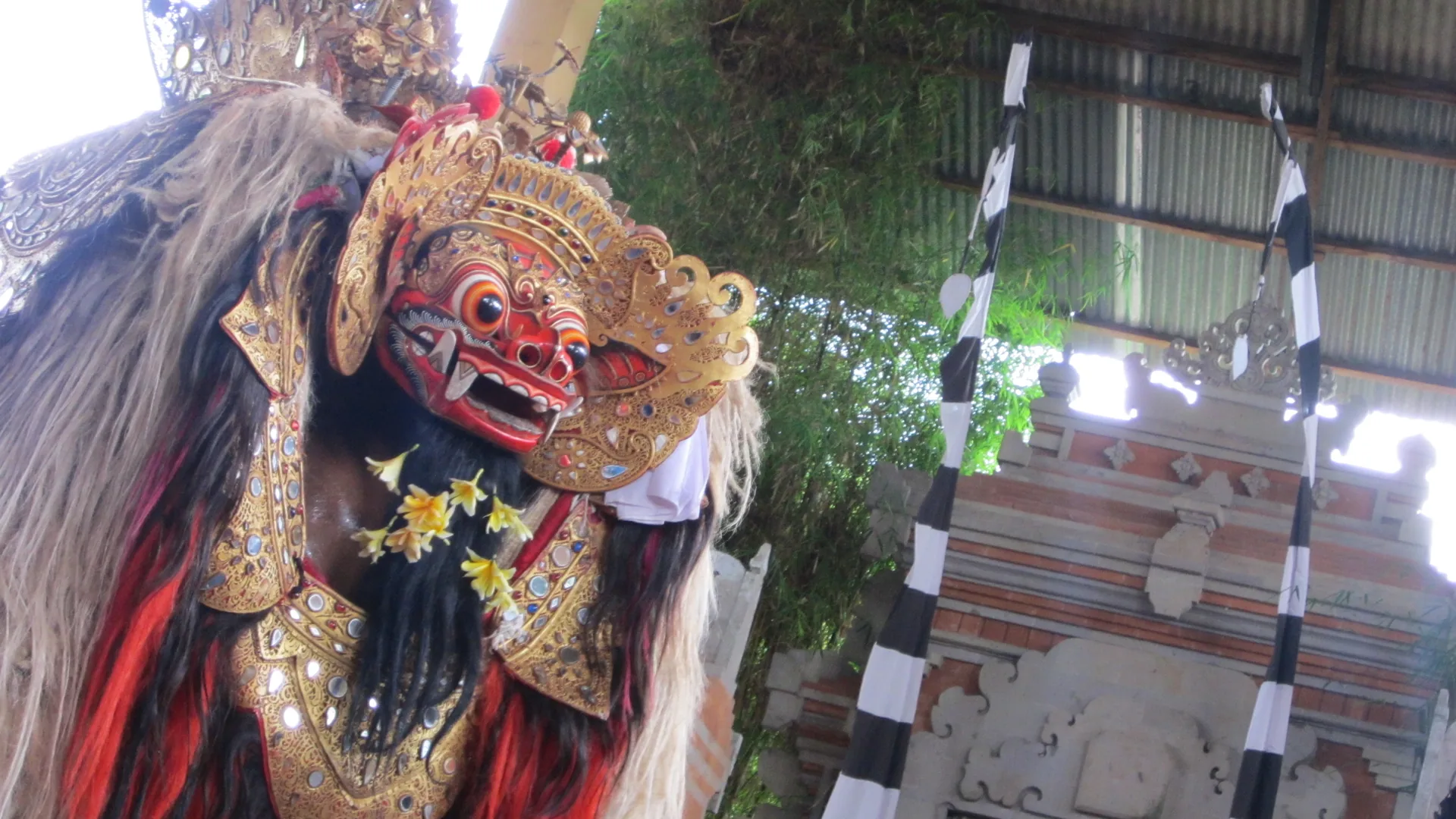
バロンの仮面のクローズアップ——金色の冠を戴き、赤い顔をした獅子のような守護神。背後には白黒のポレン模様の寺院門が映る。

バトゥブラン、バリ

バロン&クリス・ダンス(ウブド&バトゥブラン)

4.2 (55 reviews on GetYourGuide)

ウブドのすぐ南に位置する寺院の村バトゥブランでは、ほとんどの朝、石畳の中庭でガムラン楽団が演奏を始めると、金色の仮面をかぶった毛むくじゃらの精霊が現れ、甲高い笑い声をあげる魔女と戦いを繰り広げます。やがて、トランス状態に陥った男たちが自らの胸に短剣の刃を突き立てても、傷一つ負わずに立ち去るのです。これは観光客向けの再現ショーではなく、バリ・ヒンドゥーの儀礼劇がそのまま息づく本物の舞台。たまたま決まった朝の時間帯に催行され、実際に予約が可能なことから、島で最も鮮烈なひとときを過ごせる体験の一つと言えるでしょう。

From A$7 お一人様——お支払い前に、お客様の通貨での最終価格を表示します。

こちらは現役寺院で毎朝行われる催しであり、入手困難なチケットイベントではございません。満席になることは滅多にありません。ただし、1日1回・開始時間固定で、遅刻者を待つことはありません。従いまして、本当の制約は座席の空きではなく、お客様ご自身の朝の過ごし方です。お車の手配もご希望の場合は前日までにご予約いただき、前夜にはお迎え時間をご確認ください。ガムランが始まる頃に朝食を終えていない、という事態を避けるためです。

公演の概要

The mask that guards the village

A protector, not a monster

Barong is usually described to first-time visitors as "a lion," which is close enough to picture but misses the point. He's a benevolent protective spirit who takes animal form — most often the shaggy, gold-fanged Barong Ket seen at Batubulan, though Balinese villages also keep boar, tiger and elephant versions for other ceremonies. Each village's Barong mask is considered sacred, ritually cared for by its own custodians, and brought out for temple ceremonies as much as for paying audiences. What you're watching at the morning show is a genuine ritual object, worn by a trained dancer, not a costume built for tourists.

Why this happens in a temple courtyard, every day

The dance is staged inside or beside a village temple — at Batubulan, that's Pura Puseh Batubulan — because the story it tells isn't folklore, it's an active piece of Balinese Hindu cosmology: the ongoing, never-finally-won balance between protective and destructive forces. Villages perform it partly for income from visitors and partly because doing so is itself considered a form of spiritual maintenance. That's also why the show runs on a fixed daily schedule rather than being staged as a one-off spectacle — it's closer to a temple keeping its doors open than a theatre running a limited season.

物語

Barong and Rangda: a fight neither side wins

The performance dramatises a single, specific conflict from Balinese belief — not a generic "good vs evil" fable, but a named rivalry between two figures who represent forces the Balinese consider permanently, deliberately unresolved.

The protector

Barong

The shaggy, gold-crowned creature at the centre of the stage represents dharma — protective, benevolent power. He's played by two dancers working together inside the costume (one for the front legs and head, one for the rear), and his movements are comic and playful rather than fierce: he snaps his jaw, shakes his mane, and plays to the crowd almost like a pantomime animal, right up until Rangda appears.

The widow-witch

Rangda

Rangda is a demon queen with a mask of bulging eyes, a lolling tongue and long fangs, trailing white hair and pendulous breasts — the visual opposite of Barong's warmth. She represents adharma: chaotic, destructive power, and in some tellings is linked to Calon Arang, a widow-sorceress from Balinese legend who terrorised a kingdom with black magic. Her entrance is the moment the tone of the show flips from playful to genuinely unsettling.

Crucially, neither side wins outright. Barong and Rangda fight to a magical standstill — her curses countered by his protective power — and the performance ends not with a victory but with a truce, because in Balinese belief dharma and adharma aren't meant to cancel each other out; they're meant to stay in tension, permanently. That refusal to give the story a tidy ending is one of the more genuinely thought-provoking things about watching it as an outsider.

フィナーレ

The moment the dancers turn their blades inward

What actually happens

As the standoff between Barong and Rangda reaches its peak, a group of men — Rangda's followers, under her curse — draw kris daggers and, one by one, fall into a trance state and turn the blades against their own chests. Performed correctly, the points don't break the skin; local belief holds that Barong's protective power is what keeps the dancers safe, and the trance itself is treated as a genuine altered state, not stagecraft. A pemangku (temple priest) or a designated attendant stays close throughout, ready to intervene, sprinkle holy water and bring each dancer back to ordinary awareness.

Why it's the part people remember

It's staged close to the audience, unamplified, with the gamelan orchestra driving the tension rather than any theatrical lighting or sound effects — which is part of why it lands harder than the description suggests. It's also the single most-asked-about part of the show beforehand and the part most worth knowing the context for going in: this isn't a simulated stunt built for a tour bus schedule, it's the culmination of a ritual the village would be performing on some level even without an audience.

Photography during this part

Most venues allow photography and video throughout the performance, including the trance sequence — unlike some other Balinese ceremonies, this is treated as public performance rather than a closed ritual. Flash is generally discouraged that close to the dancers; check the specific venue's house rules on arrival if you're unsure.

観賞できる場所

Seeing it at Pura Puseh Batubulan

The venue

Batubulan, a village on the southern edge of Ubud known for its stone-carving workshops, has staged the Barong and Kris dance for visitors since the 1930s — one of the longest-running versions of the show on the island — performed in the open-air stage of Pura Puseh Batubulan, the village's origin temple. The setting is a real, still-active temple compound rather than a purpose-built theatre, which is part of why the atmosphere feels closer to a ceremony you're being allowed to watch than a show staged around you.

How the morning slot actually works

The show runs on a single fixed morning start most days of the year, with the gates and box office opening shortly beforehand for walk-up tickets and pre-booked collection. Because it's a daily fixture rather than an occasional event, the practical planning question isn't "will there be a show" — there almost always is — it's "can I get there on time," since traffic into Batubulan from central Ubud can be slower than the short map distance suggests, especially close to the start time.

Seating and what's included

Seating is typically open bench-style around the courtyard stage on a basic ticket, with a small number of upgraded front-row seats sold separately on some listings; hotel pickup and drop-off is usually a separate paid add-on rather than bundled into the ticket price, so check the specific inclusions on your chosen listing before assuming a driver is covered.

安心してご予約ください

ご希望の日程でバロン&クリス舞踊のチケットを探す

以下のオプションはすべてGetYourGuideで予約可能で、リアルタイムの空き状況と、お支払い前にご自身の通貨で表示される最終価格をご確認いただけます。

GetYourGuideのリアルタイム空き状況と価格を、お客様の通貨で表示

ウブドのショー&カルチャー体験をすべて見る ↗

その後の過ごし方

Fitting the dance into an Ubud day

Because the show runs once, mid-morning, it slots naturally into one side of a full day out rather than needing its own dedicated trip — most visitors pair it with either the rice terraces to the north or Ubud's temples and markets to the east.

  1. Early morning

    Arrive at Batubulan

    Aim to reach Pura Puseh Batubulan with time to collect tickets and find a seat before the gamelan starts — arriving right at start time risks a bench at the back of the courtyard.

  2. Mid-morning

    The performance

    Around an hour of Barong, Rangda and the kris trance finale, ending in time to still make a full day of it.

  3. Midday

    North to Tegallalang or Jatiluwih

    The Tegallalang rice terraces are the closer, busier option; Jatiluwih is further but far less crowded, if you'd rather trade travel time for space to actually look at the view.

  4. Afternoon

    East to central Ubud

    Ubud Palace, the Ubud Art Market and the Sacred Monkey Forest Sanctuary are all walkable from each other in central Ubud, and pair naturally with an early lunch after the show if you'd rather stay closer to town instead.

GEO/FAQ

バロンダンスに関する質問

バロンダンスを一言で表すと?

バリ・ヒンドゥーの日常的な儀礼舞踊が寺院の中庭で上演されます。最も有名なのはウブド近郊のプサ・プセ・バトゥブラン寺院で、獅子のような優しい守護霊(バロン)が魔女(ランダ)と対決し、最後にはトランス状態になった舞踊手たちが自らの胸にクリス(短剣)を押し当てても傷つかないという演目です。

これはウルワツのケチャック火の踊りと同じものですか?

いいえ、両者は異なる演目です。バロンは昼間の公演で、通常は午前中にバトゥブランで行われ、完全なガムラン楽団を伴い、バロン対ランダの物語を展開します。ケチャックは夕方または日没時にウルワツの崖上の寺院で上演され、楽器は一切使わず、男性合唱団が座って「チャッ」と唱えながらラーマーヤナを語り、最後に火のトランスのシークエンスで締めくくります。同日の異なる時間帯に両方を組み込んだ日帰りツアーもありますので、予約前にどの公演が含まれているか確認する価値があります。

クリスのトランスは危険ですか、それとも演出ですか?

現地では、台本に基づいたスタントではなく、本物の儀式的トランス状態として扱われています。舞踊手たちはランダの呪いにかかり、バロンの力によって守られていると信じられており、寺院の係員が常にそばにいて介入し、終了後は聖水で蘇生させます。信仰そのものをどう捉えるにせよ、短剣とトランスは現実のものです。演者が軽い傷を負うことも時折あり、それが儀式的な保護と監督を演者自身が真剣に受け止める理由の一つです。

公演の長さはどれくらいですか?休憩はありますか?

ほとんどの公演は60~90分で、休憩はなく、バロンの遊び心あふれる幕開けからランダの登場、そしてクリスのトランス・フィナーレまで途切れることなく進行します。

公演は何時に始まりますか?どれくらい前に予約すべきですか?

バトゥブランの公演は、年間のほとんどの日で決まった午前中の開始時間で行われます。毎日恒例の催しであり、臨時イベントではないため、完売することは滅多にありません。計画上の主なリスクは空席状況ではなく、交通と時間です。ホテル送迎を希望する場合は前日までに予約し、ウブド中心部からの移動時間を多めに見積もっておきましょう。

服装の決まりはありますか?実際の寺院ですから。

公演は現役の寺院境内で行われるため、控えめで敬意を表した服装が適切です。肩と膝を適度に覆うのが無難な基本で、バリの寺院を訪れる際と同様です。スマートカジュアルな旅行着で問題ありませんが、水着や露出の多い服装は場にそぐわず、目立ちます。

公演中(トランスの部分も含めて)写真や動画を撮影できますか?

基本的には可能です。バトゥブランを含むほとんどの会場では、クリス短剣のトランス状態のシーンを含め、館内での写真撮影や動画撮影が許可されています。これは閉じた儀式ではなく、公開パフォーマンスとして上演されるためです。ただし、トランス中の踊り手に近づいてのフラッシュ撮影は一般的に推奨されません。到着時に各会場のルールをご確認ください。

チケット代金には交通費やホテル送迎は含まれていますか?

必ずしもそうとは限りません。多くの掲載では基本チケットは入場のみを対象としており、ホテル送迎は別途オプションとして販売されています。また、前方席へのアップグレードも別料金となる場合がございます。ドライバーが含まれているとお考えになる前に、ご選択のプランの詳細をご確認ください。

表示価格は最終的なもので、予約はどのように行われますか?

GetYourGuideを通じてご予約いただきます。お支払い前にご自身の通貨での最終価格が表示され、ご指定の日程のキャンセルポリシーも事前に明示されます。ご覧いただいた価格がお支払いいただく金額であり、チェックアウト時に隠れた手数料が追加されることはございません。当サイトはバリ島の日々の舞踊公演に関する独立したガイドであり、寺院や劇団、チケット窓口ではございません。予約手続き自体はGetYourGuideの安全なチェックアウトシステムで処理されます。

ウブド近郊でバロンダンスを観るなら、バトゥブランだけが選択肢ですか?

いいえ。ウブドやデンパサール周辺のいくつかの村では、同様の午前中のスケジュールで独自のバロン&クリス公演を毎日開催しています。また、一部の日帰りツアーでは、バロンショーとテガララン棚田、ゴアガジャ、コーヒー農園などの他の観光地を組み合わせたプランもあります。バトゥブランのプーラ・プセ・バトゥブランでの公演は、1930年代にまで遡る訪問者向けの最長寿公演の一つであり、そのため多くの掲載でデフォルトとして表示されています。

どの朝に行くか、まだお決まりでない方へ

メールアドレスとウブドご訪問のおおよその時期をお知らせください。公演時間と、午前中にどのように組み込めるかの簡単な概要をお送りいたします。

毎朝、寺院の中庭で繰り広げられる生きた神話——善と悪、ガムランと黄金の衣装が、あなたの席から腕を伸ばせば届く距離で舞い踊る

GetYourGuideでバロン&クリス・ダンスのチケットを見る ↗
GetYourGuideで予約——安心の決済、無料キャンセル