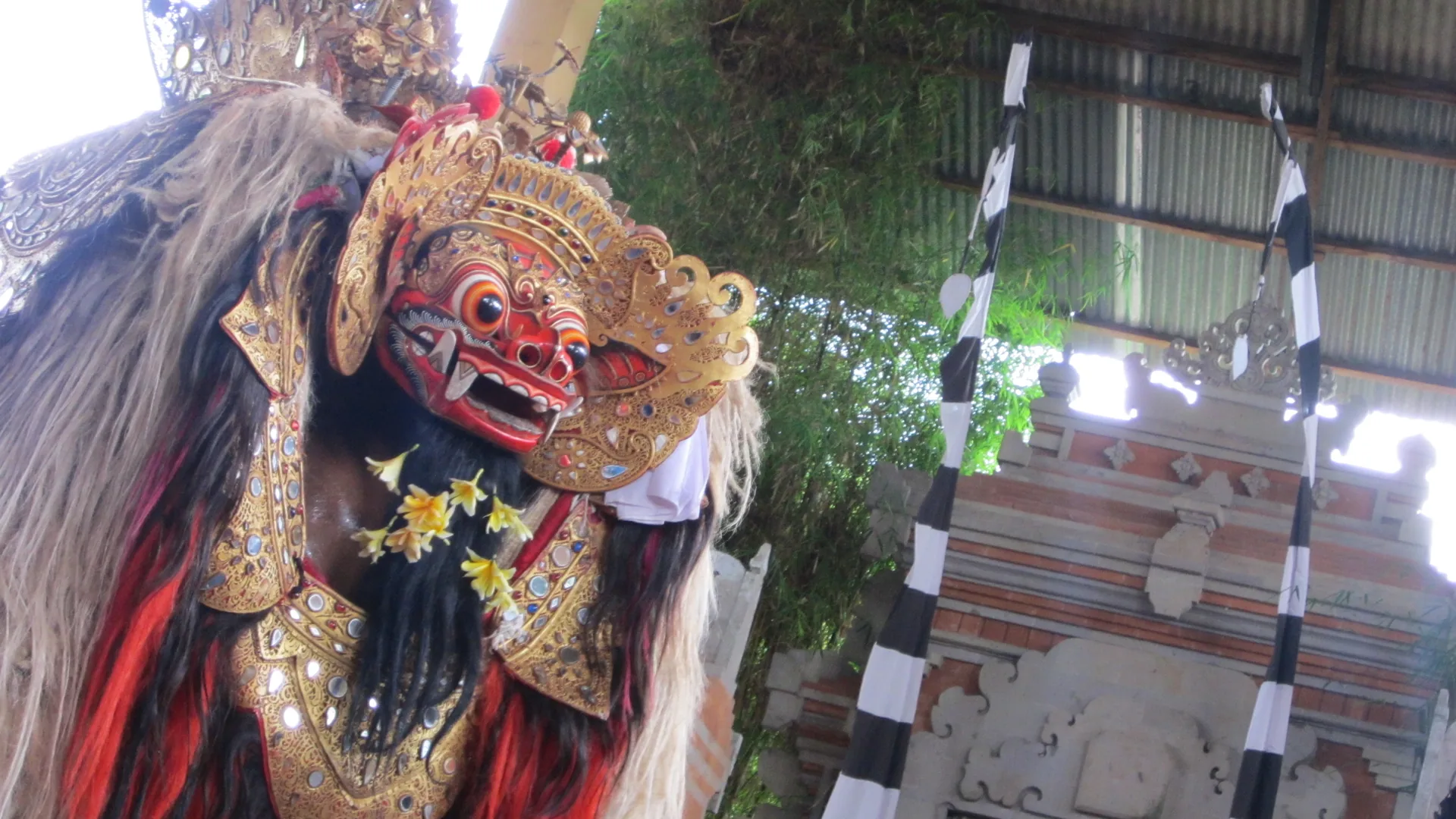
La maschera che protegge il villaggio
Un protettore, non un mostro
Il Barong viene di solito descritto ai visitatori alla prima esperienza come "un leone", il che è abbastanza vicino per immaginarlo ma manca il punto. È uno spirito protettore benevolo che assume forma animale — molto spesso il Barong Ket irsuto dalle zanne dorate che si vede a Batubulan, anche se i villaggi balinesi custodiscono anche versioni cinghiale, tigre e drago per altre cerimonie. Il Barong è danzato da due performer che lavorano insieme, in un costume di folto pelo bianco decorato con oro e specchietti. Quello che vedi in uno spettacolo per visitatori è una rappresentazione scenica di quella tradizione.
Perché la danza viene messa in scena ogni giorno
I villaggi di tutta Bali mettono in scena la danza Barong, e il sito turistico dell'Indonesia indica Batubulan a Gianyar e Kesiman a Denpasar come i luoghi più popolari per vederla. Batubulan ha diversi palchi: uno si trova accanto a Pura Puseh Batubulan, e il palco di questa prenotazione è Seraya Budaya. La storia è una battaglia tra il bene e il male, il Barong contro Rangda, e la danza viene messa in scena ogni giorno per i visitatori.
La storia
Barong e Rangda: il bene contro il male
Lo spettacolo drammatizza un conflitto della credenza balinese tra due figure: il Barong, uno spirito protettivo simile a un leone, e Rangda, la regina delle streghe.
La strega vedova
Rangda
Rangda è una regina demone con una maschera dagli occhi sporgenti, la lingua penzolante e lunghe zanne, capelli bianchi scomposti e seni cadenti — l'opposto visivo del calore di Barong. Rappresenta l'adharma: il potere caotico e distruttivo, e in alcune versioni è collegata a Calon Arang, una vedova-strega della leggenda balinese che terrorizzò un regno con la magia nera. Il suo ingresso è il momento in cui il tono dello spettacolo passa dal giocoso al genuinamente inquietante.
Il finale dipende dalla compagnia e dalla storia. Wikipedia e il sito turistico dell'Indonesia vedono il Barong sconfiggere Rangda e ristabilire l'equilibrio; la stampa indonesiana che descrive uno spettacolo a Batubulan afferma che la lotta non termina mai con una vittoria netta. In ogni caso, il tema è l'equilibrio tra bene e male.
Il finale
Il momento in cui i danzatori rivolgono le lame contro se stessi
Cosa succede davvero
Quando lo scontro tra Barong e Rangda raggiunge il suo apice, gli uomini che rappresentano i soldati del re Airlangga estraggono i pugnali kris. Nella storia, la magia di Rangda li spinge a rivolgere le lame contro il proprio petto; cadono in trance, e la magia protettiva del Barong e di un sacerdote li lascia illesi. L'acqua santa li risveglia dalla trance. Il modo in cui un dato palcoscenico mette in scena la scena varia: una nota di un fotografo su Wikimedia Commons da un palcoscenico turistico di Batubulan descrive l'accoltellamento come simulato.
Perché è la parte che resta impressa
Aiuta conoscere il contesto in anticipo: la scena appartiene a una tradizione rituale, ma uno spettacolo per i visitatori è una rappresentazione, e quanto letteralmente sia messa in scena la trance dipende dal palcoscenico.
Fotografie durante questa parte
La prenotazione elenca una macchina fotografica tra le cose da portare. Le regole su flash e riprese presso un palcoscenico non sono pubblicate nelle fonti che abbiamo trovato, quindi chiedi al team all'arrivo se hai dubbi.
Dove vederlo
Vederlo al Seraya Budaya
La sede
Batubulan è un villaggio a Gianyar noto per la sua danza Barong e Kris, che viene messa in scena in diverse sedi. Il punto d'incontro di questa prenotazione è Seraya Budaya, un palcoscenico che i siti di biglietti elencano a Singapadu, distretto di Sukawati, Gianyar. Altri palcoscenici di Batubulan includono uno accanto a Pura Puseh Batubulan e Jambe Budaya, ciascuno con la propria compagnia.
Come funziona la prenotazione
Il calendario di prenotazione e la tua conferma mostrano l'orario di inizio per la tua data. Se hai scelto il prelievo, il team viene a prenderti; se hai scelto senza transfer, scambi il tuo e-voucher con un biglietto insieme al team presso la sede.
Posti a sedere e cosa è incluso
Il biglietto d'ingresso include lo spettacolo. Prelievo e rientro, e la Silver Class, sono inclusi solo se selezioni quelle opzioni; la descrizione dell'opzione per la tua data indica cosa cambia la Silver Class.
Prenota con fiducia
Trova un biglietto per la danza Barong & Kris per le tue date
Ogni opzione qui sotto è prenotabile tramite GetYourGuide, con disponibilità in tempo reale e il prezzo finale visualizzato nella tua valuta prima di pagare.
- Prenota ora, paga dopo Prenota ora il tuo posto per lo spettacolo di danza Barong & Kris a Batubulan e non pagare nulla oggi, salderai in seguito.
- Termini di cancellazione indicati in anticipo L'orario esatto entro cui è possibile cancellare per la data scelta è indicato sulla pagina di checkout di GetYourGuide prima di inserire qualsiasi dato di pagamento
- Nessun costo nascosto Quello che vedi per il tuo posto Barong è esattamente ciò che ti addebita GetYourGuide, nessuna sorpresa al momento del pagamento
- Pagamento sicuro Prenotato tramite il pagamento protetto di GetYourGuide
Organizzare il resto della giornata
Come inserire la danza in una giornata a Ubud
Poiché lo spettacolo è una singola rappresentazione, si inserisce naturalmente in una parte di una giornata intera anziché richiedere un viaggio dedicato — la maggior parte dei visitatori lo abbina alle risaie a nord o ai templi e ai mercati di Ubud a est.
- Prima dello spettacolo
Arrivo a Batubulan
Cerca di raggiungere Seraya Budaya con buon anticipo per scambiare il voucher (se hai scelto senza transfer) e trovare un posto prima che inizi il gamelan.
- Orario dello spettacolo
Lo spettacolo
Circa un'ora di Barong, Rangda e la scena del kris.
- Dopo lo spettacolo
A nord verso Tegallalang o Jatiluwih
Le terrazze di riso di Tegallalang sono l'opzione più vicina ma anche più affollata; Jatiluwih è più lontana ma molto meno frequentata, se preferisci scambiare più tempo di viaggio con lo spazio per goderti davvero la vista.
- Più tardi
A est verso il centro di Ubud
Il Palazzo di Ubud, il Mercato dell'Arte di Ubud e il Sacro Santuario della Foresta delle Scimmie si trovano nel centro di Ubud, se preferite restare più vicini al centro dopo lo spettacolo.
GEO/FAQ
Domande sulla danza Barong
Cos’è la danza Barong, in una frase?
È un dramma danzato balinese rappresentato quotidianamente con radici rituali, messo in scena in varie sedi intorno a Batubulan, nel Gianyar, in cui uno spirito guardiano benevolo simile a un leone (Barong) affronta una strega-demone (Rangda), con una scena in cui i danzatori in trance rivolgono i pugnali kris contro se stessi.
È la stessa cosa della danza del fuoco Kecak a Uluwatu?
No — sono due spettacoli diversi. Il Barong viene messo in scena ogni giorno in varie sedi intorno a Batubulan, con musica gamelan e una trama Barong contro Rangda. Il Kecak è uno spettacolo serale o al tramonto presso il tempio sulla scogliera di Uluwatu, eseguito interamente da un coro maschile seduto che intona "cak" senza strumenti, che narra il Ramayana e si conclude con una sequenza di trance e fuoco. Alcuni itinerari di tour giornalieri includono entrambi nella stessa giornata in orari diversi — vale la pena verificare quale dei due sia effettivamente incluso in un'annuncio prima di prenotare.
Il trance con i kris è pericoloso o è messo in scena?
Nella storia, i danzatori sono in trance, protetti dal male dalla magia del Barong, e l'acqua santa li riporta alla coscienza. Il modo in cui un palcoscenico mette in scena la scena varia: la nota di un fotografo da un palco turistico di Batubulan descrive la pugnalata come simulata, e Wikipedia registra un incidente mortale durante uno spettacolo del 2021 a Denpasar. Consideratela una danza che coinvolge pugnali.
Quanto dura lo spettacolo e c’è un intervallo?
Le testimonianze degli spettacoli di Batubulan indicano circa un'ora. La vostra conferma mostra l'orario di inizio.
A che ora inizia lo spettacolo e con quanto anticipo devo prenotare?
Il calendario di prenotazione e la vostra conferma mostrano l'orario di inizio per la vostra data. Nessuna fonte che abbiamo consultato indica con quale frequenza le date si esauriscano, quindi prenotare in anticipo con l'opzione prenota ora, paga dopo e cancellazione gratuita fino a 24 ore prima (quando prenotate tramite GetYourGuide) è la scelta a basso rischio.
Devo vestirmi in modo elegante o coprirmi?
La prenotazione richiede abbigliamento e calzature comode e non impone alcun codice di abbigliamento. L'ente del turismo indonesiano indica di coprire spalle e ginocchia come regola generale nei terreni dei templi, quindi è la scelta sicura se il vostro palco si trova accanto a un tempio.
Posso scattare foto e fare video durante lo spettacolo, inclusa la parte del trance?
La prenotazione elenca una macchina fotografica tra le cose da portare. Le regole su flash e riprese presso un palco non sono pubblicate nelle fonti che abbiamo consultato, quindi chiedete allo staff all'arrivo.
Il prezzo del biglietto include il trasporto o il servizio di prelievo in hotel?
No, non a meno che non lo selezioniate. La prenotazione include il biglietto d'ingresso, con pick-up e drop-off e Silver Class inclusi solo se selezionate tali opzioni.
Il prezzo indicato è definitivo? Come funziona la prenotazione?
Prenoti tramite GetYourGuide, che mostra il prezzo finale nella tua valuta prima del pagamento e indica in anticipo la politica di cancellazione per la data specifica: il prezzo che vedi è quello che paghi, senza costi nascosti al momento del checkout. Siamo una guida indipendente agli spettacoli di danza quotidiani di Bali, non il tempio, la compagnia o la biglietteria; la prenotazione è gestita dal sistema sicuro di GetYourGuide.
Batubulan è l’unico posto dove vedere la danza Barong vicino a Ubud?
No. Il sito turistico dell'Indonesia indica Batubulan nel Gianyar e Kesiman a Denpasar come luoghi popolari per le rappresentazioni Barong dei villaggi, e Batubulan stessa ospita diverse sedi. Il palco di questa prenotazione è il Seraya Budaya.