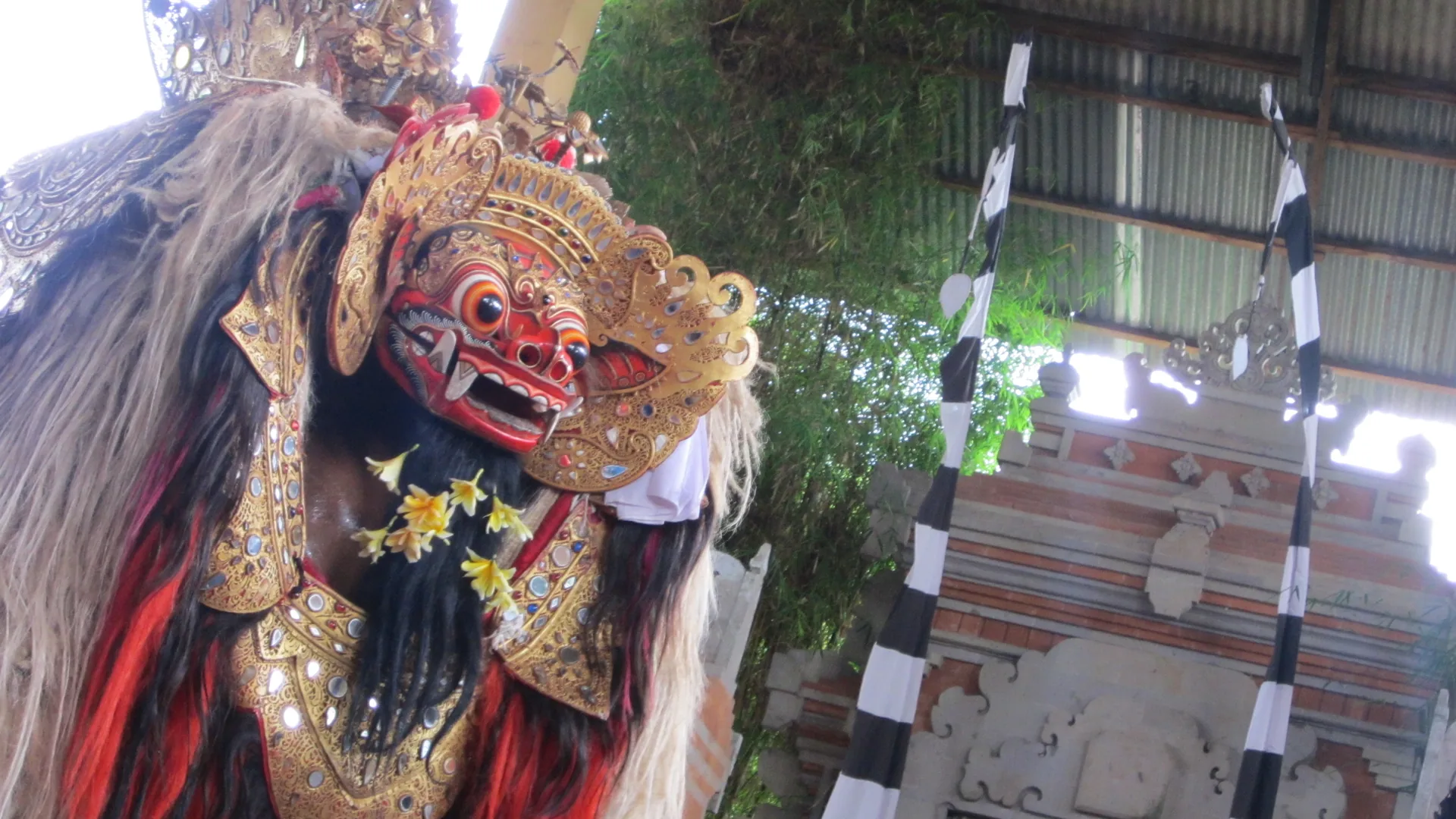
Topeng yang menjaga desa
A protector, not a monster
Barong biasanya digambarkan kepada pengunjung baru sebagai "singa," yang cukup mendekati untuk membayangkan tetapi meleset dari intinya. Ia adalah roh pelindung yang baik hati yang mengambil wujud hewan — paling sering Barong Ket yang berbulu lebat dan bertaring emas yang terlihat di Batubulan, meskipun desa-desa Bali juga menyimpan versi babi hutan, harimau, dan naga untuk upacara lainnya. Barong ditarikan oleh dua penari yang bekerja bersama, dalam kostum bulu putih tebal yang dihiasi emas dan pecahan cermin. Apa yang Anda saksikan di pertunjukan untuk pengunjung adalah pementasan dari tradisi tersebut.
Mengapa tarian ini dipentaskan setiap hari
Desa-desa di seluruh Bali mementaskan tari Barong, dan situs pariwisata Indonesia menyebut Batubulan di Gianyar dan Kesiman di Denpasar sebagai tempat paling populer untuk menyaksikannya. Batubulan memiliki beberapa panggung: satu berada di samping Pura Puseh Batubulan, dan panggung pada pemesanan ini adalah Seraya Budaya. Kisahnya adalah pertarungan antara kebaikan dan kejahatan, Barong melawan Rangda, dan tarian ini dipentaskan setiap hari untuk pengunjung.
Ceritanya
Barong dan Rangda: kebaikan melawan kejahatan
Pertunjukan ini mendramatisasi konflik dari kepercayaan Bali antara dua tokoh: Barong, roh pelindung mirip singa, dan Rangda, ratu para penyihir.
The widow-witch
Rangda
Rangda adalah ratu iblis dengan topeng bermata melotot, lidah terjulur, dan taring panjang, berambut putih terurai serta payudara menggantung — kebalikan visual dari kehangatan Barong. Ia mewakili adharma: kekuatan kacau yang merusak, dan dalam beberapa versi cerita dikaitkan dengan Calon Arang, seorang janda penyihir dari legenda Bali yang meneror sebuah kerajaan dengan ilmu hitam. Kemunculannya adalah momen ketika nada pertunjukan berbalik dari playful menjadi benar-benar meresahkan.
Bagaimana ceritanya berakhir bergantung pada grup penari dan kisahnya. Wikipedia dan situs pariwisata Indonesia menampilkan Barong yang mengalahkan Rangda dan memulihkan keseimbangan; pers Indonesia yang menggambarkan pertunjukan di Batubulan menyatakan pertarungan itu tidak pernah berakhir dengan kemenangan yang jelas. Bagaimanapun, temanya adalah keseimbangan antara kebaikan dan kejahatan.
Babak akhir
Momen ketika para penari membalikkan bilah keris ke dalam
What actually happens
Saat ketegangan antara Barong dan Rangda mencapai puncaknya, para pria yang mewakili prajurit Raja Airlangga menghunus keris. Dalam kisahnya, sihir Rangda mendorong mereka untuk menusukkan bilah keris ke dada mereka sendiri; mereka jatuh ke dalam trance, dan sihir pelindung dari Barong serta seorang pemangku membuat mereka tidak terluka. Air suci membangunkan mereka dari trance. Bagaimana sebuah panggung menampilkan adegan ini bervariasi: catatan seorang fotografer di Wikimedia Commons dari panggung wisata Batubulan menggambarkan adegan penusukan itu sebagai simulasi.
Mengapa bagian inilah yang paling diingat orang
Akan membantu untuk mengetahui konteksnya sejak awal: adegan ini berasal dari tradisi ritual, tetapi pertunjukan untuk pengunjung adalah sebuah pementasan, dan seberapa literal trance itu dipentaskan bergantung pada panggungnya.
Fotografi selama bagian ini
Daftar pemesanan mencantumkan kamera sebagai salah satu barang yang perlu dibawa. Aturan tentang flash dan perekaman video di suatu panggung tidak dipublikasikan dalam sumber yang kami temukan, jadi tanyakan kepada tim saat tiba jika Anda ragu.
Tempat menontonnya
Melihatnya di Seraya Budaya
The venue
Batubulan adalah desa di Gianyar yang terkenal dengan tari Barong dan Kris, yang dipentaskan di beberapa tempat. Titik pertemuan dalam pemesanan ini adalah Seraya Budaya, sebuah panggung yang terdaftar di situs tiket di Singapadu, kecamatan Sukawati, Gianyar. Panggung Batubulan lainnya termasuk satu di samping Pura Puseh Batubulan dan Jambe Budaya, masing-masing dengan grup penarinya sendiri.
Cara pemesanan bekerja
Kalender pemesanan dan konfirmasi Anda menunjukkan waktu mulai untuk tanggal Anda. Jika Anda memilih penjemputan, tim akan menjemput Anda; jika Anda memilih tanpa transfer, Anda menukarkan e-voucher Anda dengan tiket bersama tim di lokasi.
Tempat duduk dan apa yang termasuk
Tiket masuk sudah termasuk pertunjukan. Penjemputan dan pengantaran, serta Silver Class, hanya termasuk jika Anda memilih opsi tersebut; deskripsi opsi pada tanggal Anda menjelaskan apa yang berubah dengan Silver Class.
Pesan dengan percaya diri
Temukan tiket tari Barong & Kris untuk tanggal Anda
Setiap opsi di bawah dapat dipesan melalui GetYourGuide, dengan ketersediaan langsung dan harga akhir yang ditampilkan dalam mata uang Anda sendiri sebelum Anda membayar.
- Pesan sekarang, bayar nanti Pesan tempat Anda untuk pertunjukan tari Barong & Kris di Batubulan sekarang dan bayar nanti, tanpa biaya hari ini.
- Syarat pembatalan diinformasikan sejak awal Batas waktu pembatalan yang tepat untuk tanggal pilihan Anda tercantum di halaman checkout GetYourGuide sebelum Anda memasukkan detail pembayaran apa pun
- Tanpa biaya tersembunyi Yang Anda lihat untuk kursi Barong Anda persis seperti yang ditagih GetYourGuide, tanpa kejutan saat pembayaran
- Pembayaran aman Dipesan melalui pembayaran terlindungi GetYourGuide
Merencanakan sisa hari Anda
Memasukkan tarian ini ke dalam satu hari di Ubud
Karena pertunjukan ini hanya satu pementasan, acara ini cocok disisipkan ke salah satu bagian dari sehari penuh wisata daripada memerlukan perjalanan khusus tersendiri — sebagian besar pengunjung memadukannya dengan sawah terasering di utara atau pura dan pasar Ubud di timur.
- Sebelum pertunjukan
Arrive at Batubulan
Usahakan tiba di Seraya Budaya tepat waktu untuk menukarkan voucher Anda (jika Anda memilih tanpa transfer) dan menemukan tempat duduk sebelum gamelan dimulai.
- Waktu pertunjukan
The performance
Sekitar satu jam pertunjukan Barong, Rangda, dan adegan keris.
- Setelah pertunjukan
North to Tegallalang or Jatiluwih
Terasering Tegallalang adalah pilihan yang lebih dekat dan lebih ramai; Jatiluwih lebih jauh tetapi jauh lebih sepi, jika Anda lebih memilih menukar waktu perjalanan demi ruang untuk benar-benar menikmati pemandangannya.
- Nanti
East to central Ubud
Ubud Palace, Ubud Art Market, dan Sacred Monkey Forest Sanctuary berada di pusat Ubud, jika Anda lebih memilih menginap dekat pusat kota setelah pertunjukan.
GEO/FAQ
Pertanyaan seputar tari Barong
Apa itu Tari Barong dalam satu kalimat?
Ini adalah drama tari Bali harian dengan akar ritual, dipentaskan di berbagai venue di sekitar Batubulan di Gianyar, di mana roh penjaga baik hati mirip singa (Barong) menghadapi iblis-penyihir (Rangda), dengan adegan di mana penari yang kerasukan mengarahkan keris ke tubuh mereka sendiri.
Apakah ini sama dengan tari api Kecak di Uluwatu?
Bukan — keduanya adalah dua pertunjukan yang berbeda. Barong dipentaskan setiap hari di berbagai venue di sekitar Batubulan, dengan musik gamelan dan alur cerita Barong vs Rangda. Kecak adalah pertunjukan malam atau saat matahari terbenam di pura tebing Uluwatu, dibawakan sepenuhnya oleh paduan suara pria yang duduk melantunkan "cak" tanpa instrumen, menceritakan kembali Ramayana dan diakhiri dengan adegan api-trance. Beberapa itinerary tur sehari menyertakan keduanya pada hari yang sama di waktu berbeda — ada baiknya memeriksa pertunjukan mana yang sebenarnya tercakup dalam listing sebelum memesan.
Apakah trance keris itu berbahaya, atau hanya panggung?
Dalam ceritanya, para penari berada dalam kondisi trance, dilindungi dari bahaya oleh kekuatan magis Barong, dan air suci mengembalikan kesadaran mereka. Bagaimana sebuah panggung menampilkan adegan ini bervariasi: catatan seorang fotografer dari salah satu panggung turis di Batubulan menggambarkan adegan penikaman sebagai simulasi, dan Wikipedia mencatat kecelakaan fatal pada pertunjukan tahun 2021 di Denpasar. Anggap saja ini sebagai tarian yang melibatkan keris.
Berapa lama pertunjukan berlangsung, dan apakah ada jeda?
Laporan pertunjukan Batubulan menyebutkan durasi sekitar satu jam. Konfirmasi Anda menunjukkan waktu mulai.
Jam berapa pertunjukan dimulai, dan seberapa jauh sebelumnya saya harus memesan?
Kalender pemesanan dan konfirmasi Anda menunjukkan waktu mulai untuk tanggal Anda. Tidak ada sumber yang kami temukan yang menyebutkan seberapa sering tanggal terjual habis, jadi memesan lebih awal dengan reserve now, pay later dan pembatalan gratis hingga 24 jam sebelumnya (bila Anda memesan melalui GetYourGuide) adalah pilihan berisiko rendah.
Apakah saya perlu berpakaian rapi atau menutup tubuh?
Pemesanan meminta pakaian dan sepatu yang nyaman dan tidak menetapkan kode berpakaian. Badan pariwisata Indonesia memberikan aturan umum untuk menutupi bahu dan lutut di area pura, jadi itu pilihan yang aman jika panggung Anda berada di samping pura.
Bolehkah saya mengambil foto dan video selama pertunjukan, termasuk bagian trance?
Pemesanan mencantumkan kamera sebagai salah satu barang yang perlu dibawa. Aturan tentang flash dan perekaman video di panggung tidak dipublikasikan dalam sumber yang kami temukan, jadi tanyakan kepada tim saat tiba.
Apakah tiket sudah termasuk transportasi atau penjemputan dari hotel?
Tidak, kecuali Anda memilihnya. Pemesanan mencakup tiket masuk, dengan penjemputan dan pengantaran serta Silver Class hanya disertakan jika Anda memilih opsi tersebut.
Apakah harga yang ditampilkan sudah final, dan bagaimana cara pemesanan?
Anda memesan melalui GetYourGuide, yang menampilkan harga final dalam mata uang Anda sebelum pembayaran dan menyatakan kebijakan pembatalan untuk tanggal spesifik Anda di awal — harga yang Anda lihat adalah harga yang Anda bayar, tanpa biaya tersembunyi saat checkout. Kami adalah panduan independen untuk pertunjukan tari harian di Bali, bukan kuil, grup tari, atau loket tiket; pemesanan ditangani oleh sistem checkout aman GetYourGuide.
Apakah Batubulan satu-satunya tempat untuk melihat Tari Barong di dekat Ubud?
Tidak. Situs pariwisata Indonesia menyebut Batubulan di Gianyar dan Kesiman di Denpasar sebagai tempat populer untuk pertunjukan Barong oleh penduduk desa, dan Batubulan sendiri memiliki beberapa panggung. Panggung pada pemesanan ini adalah Seraya Budaya.