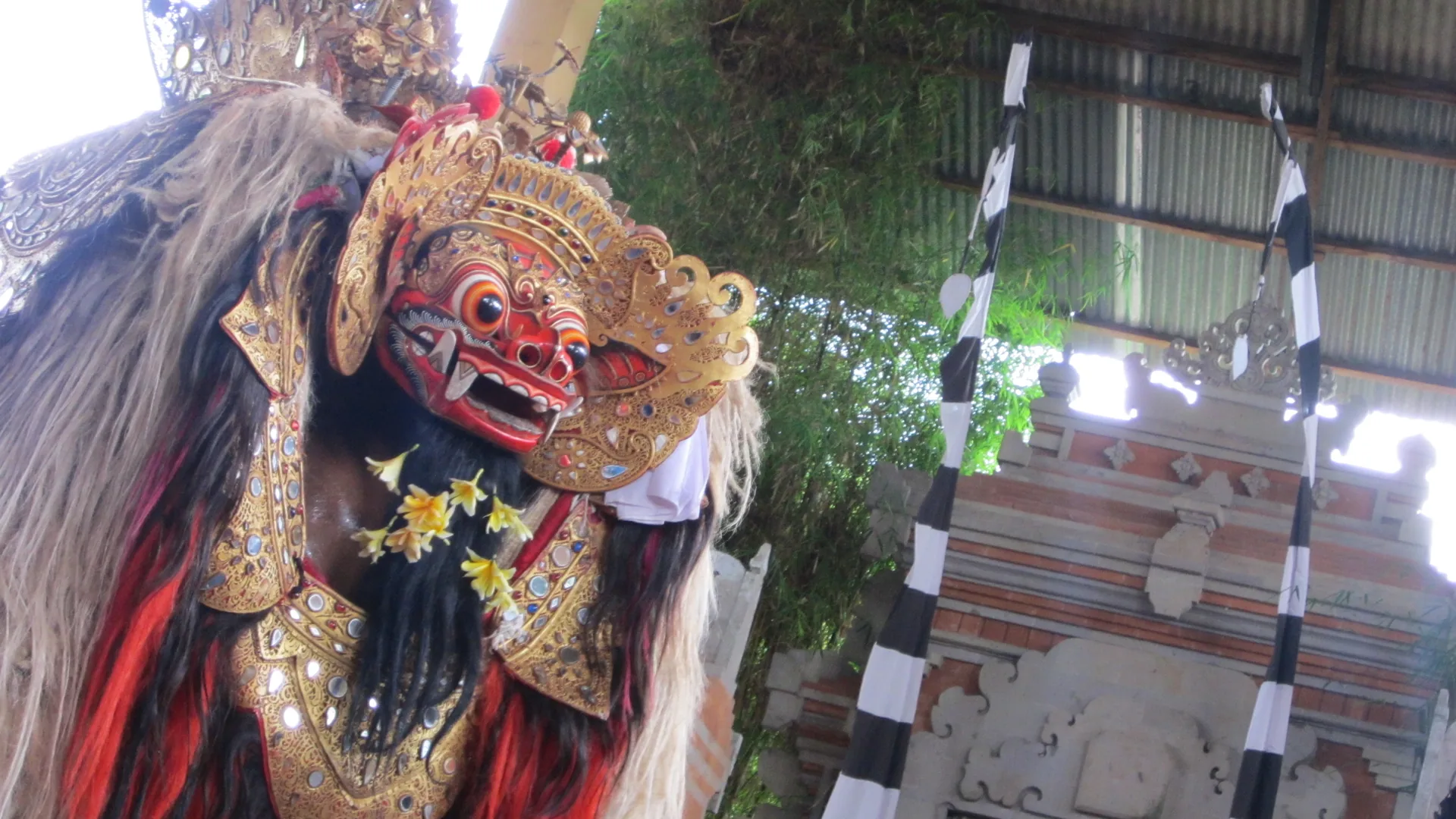
Az álarc, amely őrzi a falut
A protector, not a monster
A Barongot a első alkalommal látogatóknak általában „oroszlánként” írják le, ami elég közel áll ahhoz, hogy elképzeljék, de nem ragadja meg a lényeget. Ő egy jóindulatú, védelmező szellem, aki állati formát ölt – leggyakrabban a bozontos, aranyagyarú Barong Ket, amely Batubulanban látható, bár a balinéz falvak más szertartásokhoz vaddisznó-, tigris- és sárkányváltozatokat is tartanak. A Barongot két előadó táncolja együtt, vastag fehér szőrből készült jelmezben, amelyet arany és tükördíszek ékesítenek. Amit a látogatóknak szóló műsorban lát, az e hagyomány színpadra vitt előadása.
Miért rendezik meg a táncot minden nap
Bali-szerte a falvak rendeznek Barong táncot, és Indonézia turisztikai oldala Batubulant Gianyarban és Kesimant Denpaszárban nevezi meg a legnépszerűbb helyekként, ahol megtekinthető. Batubulanban több színpad is működik: az egyik a Pura Puseh Batubulan mellett található, és ezen a foglaláson a Seraya Budaya színpada szerepel. A történet a jó és a rossz harca, a Barong Rangda ellen, és a táncot naponta adják elő a látogatóknak.
A történet
Barong és Rangda: a jó a rossz ellen
A Barong és Rangda küzdelme: a produkció a balinéz hitvilág egyik konfliktusát viszi színpadra – a Barong, az oltalmazó, oroszlánszerű szellem és Rangda, a boszorkányok királynőjének összecsapását.
The widow-witch
Rangda
Rangda egy démonkirálynő, akinek álarcát dülledt szemek, kilógó nyelv és hosszú agyarak jellemzik, hosszú fehér haj és lógó mellek kíséretében — Barong melegségének vizuális ellentéte. Ő képviseli az adharmát: a kaotikus, pusztító erőt, és egyes változatokban Calon Aranghoz, a balinéz legendák özvegy boszorkányához kapcsolódik, aki fekete mágiával terrorizált egy királyságot. A belépése az a pillanat, amikor az előadás hangulata a játékosból valóban nyugtalanítóba fordul.
A végkifejlet a társulattól és az előadott történettől függ. A Wikipédia és Indonézia turisztikai oldala szerint a Barong legyőzi Rangdát, és helyreáll a rend; az indonéz sajtó viszont arról számol be, hogy egy batubulani előadásban a harc sosem végződik egyértelmű győzelemmel. Akárhogy is, a téma a jó és a rossz közötti egyensúly.
A finálé
Az a pillanat, amikor a táncosok befelé fordítják a pengéket
What actually happens
Amikor a Barong és Rangda szembenállása a csúcsára hág, az Airlangga király katonáit megtestesítő férfiak krisz tőrt rántanak. A történet szerint Rangda varázslata arra készteti őket, hogy a pengéket a saját mellüknek fordítsák; transzba esnek, és a Barong védelmező mágiája, valamint egy pap közbenjárása révén sértetlenek maradnak. Szentelt víz hozza ki őket a transzból. Hogy egy-egy színpad hogyan viszi színre a jelenetet, változó: a Wikimedia Commonson egy batubulani turistaszínpadról származó fotós megjegyzés a szúrást imitáltként írja le.
Miért ez az a rész, amire az emberek a leginkább emlékeznek
Érdemes előzetesen ismerni a kontextust: a jelenet egy rituális hagyomány része, de a látogatóknak szóló előadás produkció, és hogy a transz mennyire szó szerint jelenik meg a színpadon, az adott helyszíntől függ.
Fényképezés ez alatt a rész alatt
A foglalás felsorolása szerint a fényképezőgép is a magával viendő dolgok között van. A vaku és a filmezés szabályairól egy színpadon nem találtunk publikált információt a forrásainkban, ezért ha bizonytalan, érkezéskor kérdezze meg a csapatot.
Hol nézheti meg
Látni a Seraya Budaya eseményen
The venue
Batubulan Gianyar egyik falva, amely a Barong- és krisz-táncáról ismert, amelyet több helyszínen is előadnak. A foglalás találkozási pontja a Seraya Budaya, egy színpad, amelyet a jegypénztárak Singapaduban, Sukawati járásban, Gianyarban tartanak nyilván. További batubulani színpadok közé tartozik a Pura Puseh Batubulan melletti helyszín és a Jambe Budaya, mindegyik saját társulattal.
Így működik a foglalás
A foglalási naptár és a visszaigazolása mutatja az Ön dátumára érvényes kezdési időpontot. Ha transzfert választott, a csapat felveszi Önt; ha nem kért transzfert, az e-utalványát jegyre váltja a csapattal a helyszínen.
Ülőhelyek és mi van benne az árban
A belépőjegy tartalmazza az előadást. A fel- és leszállítás, valamint a Silver Class csak akkor tartalmazott, ha ezeket a lehetőségeket választja; az Ön dátumára vonatkozó opcióleírás elmondja, mit változtat a Silver Class.
Foglaljon bizalommal
Keressen Barong & Kris táncjegyet az Ön időpontjaira
Az alábbi lehetőségek mindegyike közvetlenül lefoglalható a GetYourGuide-on, élő elérhetőséggel és a végső árral a saját pénznemedben, még a fizetés előtt.
- Foglaljon most, fizessen később Foglalja le helyét most a Barong & Kris táncelőadásra Batubulanban, és ma még semmit sem kell fizetnie – a rendezést később intézheti.
- Lemondási feltételek előre, egyértelműen A választott dátum pontos lemondási határideje a GetYourGuide fizetési oldalán szerepel, mielőtt bármilyen fizetési adatot megadna.
- Nincsenek rejtett díjak Amit a Barong helyére lát, pontosan az, amit a GetYourGuide felszámít, semmilyen meglepetés a fizetésnél
- Biztonságos fizetés A GetYourGuide védett fizetési rendszerén keresztül foglalva
A nap további részének megtervezése
A tánc beillesztése egy ubudi napba
Mivel az előadás egyetlen produkció, természetesen illeszkedik egy egész napos kirándulás egyik felébe, nem igényel külön kirándulást – a legtöbb látogató vagy az északi rizsteraszokkal, vagy a keleti Ubud templomaival és piacaival köti össze.
- Az előadás előtt
Arrive at Batubulan
Törekedjen arra, hogy jó időben érkezzen meg a Seraya Budayába, hogy beváltja az utalványát (ha nem kért transzfert), és helyet találjon, mielőtt a gamelan elkezdődik.
- Kezdés időpontja
The performance
Körülbelül egy óra Barong, Rangda és a krisz-jelenet.
- Az előadás után
North to Tegallalang or Jatiluwih
A Tegallalang rizsteraszok a közelebbi, zsúfoltabb lehetőség; Jatiluwih távolabb van, de sokkal kevésbé zsúfolt, ha inkább az utazási időt cserélnéd térre, hogy tényleg legyen helyed gyönyörködni a kilátásban.
- Később
East to central Ubud
Az Ubud Palota, az Ubud Művészeti Piac és a Szent Majomerdő Szentély Ubud központjában található, ha az előadás után inkább a városhoz közelebb szeretne maradni.
GEO/FAQ
Barong-tánccal kapcsolatos kérdések
Mi az a Barong-tánc egy mondatban?
Ez egy mindennapos balinéz táncdráma, amelynek rituális gyökerei vannak, és Batubulan környéki helyszíneken adják elő Gianyarában: egy jóindulatú, oroszlánszerű őrszellem (Barong) száll szembe egy démon-boszorkánnyal (Rangda), és az egyik jelenetben transzba esett táncosok kris tőrt fordítanak magukra.
Ez ugyanaz, mint a kecak-tűztánc Uluwatuban?
Nem — ez két különböző előadás. A Barongot mindennap adják Batubulan környéki helyszíneken, gamelan zenével és Barong kontra Rangda történettel. A Kecak esti vagy naplementei előadás az Uluwatu sziklatemplomnál, amelyet teljes egészében egy ülő férfikórus ad elő „cak" szótagot kántálva, hangszerek nélkül, a Ramayana történetét meséli el, és egy tűz-transz jelenettel zárul. Egyes egynapos túrák útvonalai mindkettőt tartalmazzák ugyanazon a napon, különböző időpontokban — érdemes ellenőrizni, hogy egy adott ajánlat valójában melyiket foglalja magában, mielőtt lefoglalja.
A kris-tőrös transz veszélyes, vagy csak megrendezett?
A történet szerint a táncosok transzban vannak, a Barong mágiája védi őket a sérülésektől, és a szentelt víz hozza vissza őket. Az, hogy egy színpad hogyan adja elő a jelenetet, változó: egy batubulani turistaszínpadról származó fotós feljegyzés a szúrást szimuláltként írja le, a Wikipedia pedig egy halálos balesetet jegyez fel egy 2021-es denpasari előadásról. Tekintse ezt egy tőröket felvonultató táncnak.
Mennyi ideig tart a show, és van szünet?
A batubulani előadásokról szóló beszámolók körülbelül egy órát említenek. A visszaigazolásán szerepel a kezdési időpont.
Mikor kezdődik a show, és mennyivel előre érdemes foglalni?
A foglalási naptár és a visszaigazolása mutatja a választott dátum kezdési időpontját. Egyetlen általunk talált forrás sem mondja meg, milyen gyakran telnek be a dátumok, ezért a előre foglalás a „foglaljon most, fizessen később" lehetőséggel és ingyenes lemondással legfeljebb 24 órával előtte (ha a GetYourGuide-on keresztül foglal) az alacsony kockázatú választás.
Kell-e elegánsan öltöznöm, vagy el kell takarnom magam?
A foglalás kényelmes ruházatot és cipőt kér, és nem ír elő öltözködési szabályt. Indonézia turisztikai hivatala a vállak és térd elfedését adja meg általános szabályként a templomterületeken, tehát ez a biztonságos választás, ha a színpada egy templom mellett található.
Készíthetek fényképeket és videót az előadás alatt, beleértve a transz részt is?
A foglalás a fényképezőgépet is felsorolja a magával viendő dolgok között. A vakuval és a filmezéssel kapcsolatos szabályok egy színpadon nem szerepelnek az általunk talált forrásokban, ezért érdeklődjön a csapatnál érkezéskor.
Az ár tartalmazza a szállítást vagy a szállodai átvételt?
Nem, kivéve, ha kiválasztja. A foglalás tartalmazza a belépőjegyet, a felvétel és lerakás, valamint az Ezüst osztály csak akkor, ha ezeket a lehetőségeket kiválasztja.
Végleges a feltüntetett ár, és hogyan működik a foglalás?
A GetYourGuide-on keresztül foglalhat, amely a fizetés előtt a saját pénznemében mutatja a végleges árat, és előre közli az adott dátumra vonatkozó lemondási feltételeket – a látott ár a fizetendő ár, rejtett költségek nélkül. Független útmutatóként szolgálunk Bali napi táncelőadásaihoz, nem vagyunk sem a templom, sem a társulat, sem a jegypénztár; a foglalást a GetYourGuide biztonságos pénztára kezeli.
Batubulan az egyetlen hely Ubud közelében, ahol Barong-táncot lehet látni?
Nem. Indonézia turisztikai oldala Batubulant Gianyarában és Kesimant Denpasarban nevezi meg a falusiak Barong-előadásainak népszerű helyszíneiként, és Batubulannak magának több színpada is van. Az ezen a foglaláson szereplő színpad a Seraya Budaya.