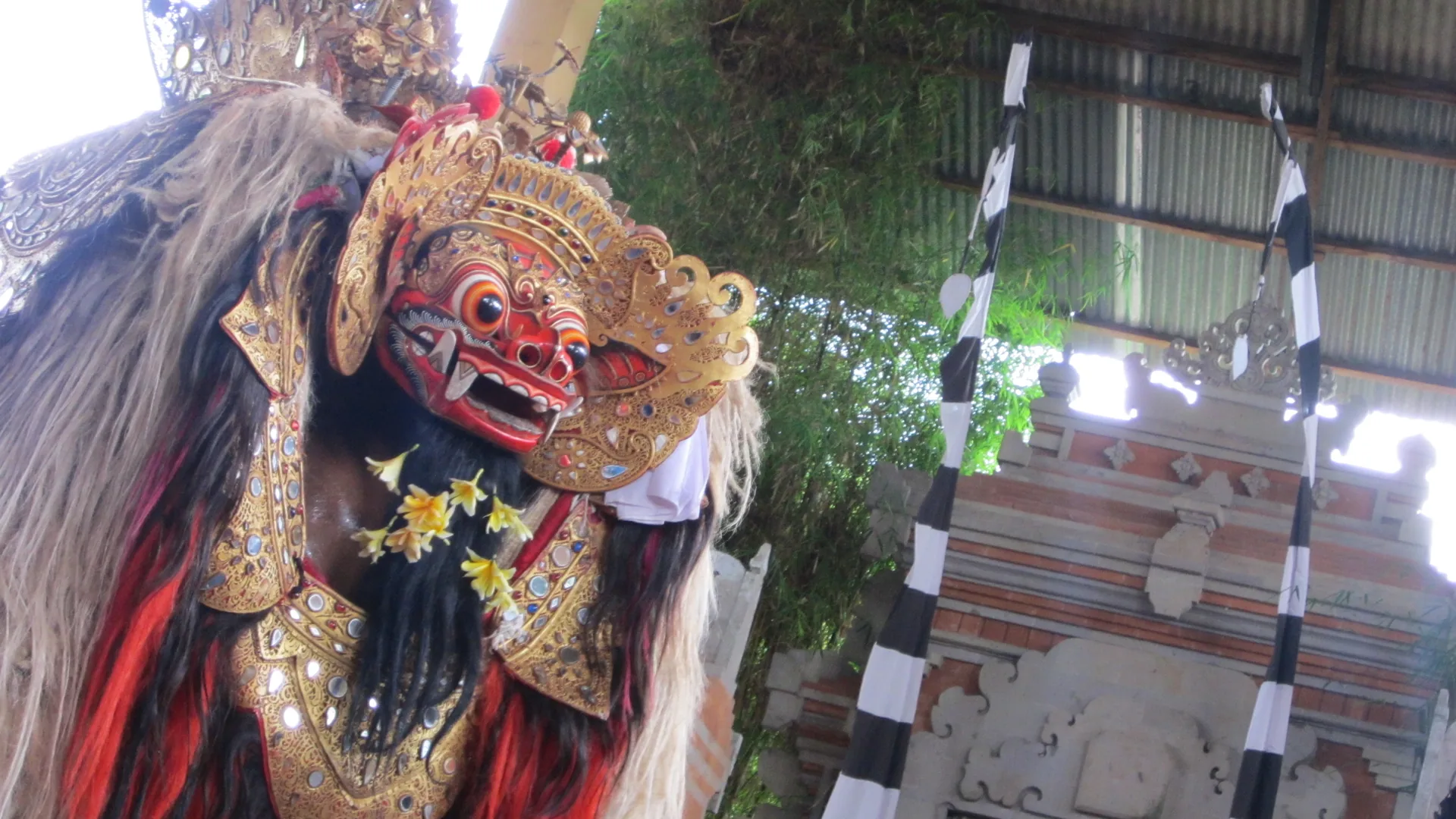
Maska koja čuva selo
A protector, not a monster
Barong se posjetiteljima koji dolaze prvi put obično opisuje kao "lav", što je dovoljno blizu da biste ga zamislili, ali promašuje poantu. On je dobronamjerni zaštitnički duh koji poprima životinjski oblik — najčešće čupavi Barong Ket sa zlatnim očnjacima kakav se viđa u Batubulanu, iako balijska sela čuvaju i verzije vepra, tigra i zmaja za druge ceremonije. Baronga plešu dva izvođača zajedno, u kostimu od debele bijele dlake ukrašenom zlatom i zrcalnim komadićima. Ono što gledate na predstavi za posjetitelje scenska je izvedba te tradicije.
Zašto se ples izvodi svakoga dana
Sela diljem Balija izvode ples Barong, a indonezijska turistička stranica navodi Batubulan u Gianyaru i Kesiman u Denpasaru kao najpopularnija mjesta za njegovo gledanje. Batubulan ima nekoliko pozornica: jedna se nalazi uz Pura Puseh Batubulan, a pozornica na ovoj rezervaciji je Seraya Budaya. Priča je bitka između dobra i zla, Baronga protiv Rangde, a ples se izvodi svakodnevno za posjetitelje.
Priča
Barong i Rangda: dobro protiv zla
Predstava dramatizira sukob iz balijskog vjerovanja između dvaju likova: Baronga, zaštitničkog duha nalik lavu, i Rangde, kraljice vještica.
The widow-witch
Rangda
Rangda je kraljica demona s maskom ispupčenih očiju, isplaženog jezika i dugih očnjaka, s raspletenom bijelom kosom i visećim grudima — vizualna suprotnost Barongovoj toplini. Ona predstavlja adharmu: kaotičnu, razornu moć, a u nekim se verzijama povezuje s Calon Arang, udovicom-vješticom iz balijske legende koja je crnom magijom terorizirala kraljevstvo. Njezin ulazak trenutak je u kojem ton predstave prelazi iz razigranog u istinski uznemirujuće.
Kako završava, ovisi o trupi i priči. Wikipedia i indonezijska turistička stranica navode da Barong pobjeđuje Rangdu i uspostavlja ravnotežu; indonezijski mediji koji opisuju predstavu u Batubulanu kažu da borba nikada ne završava jasnom pobjedom. U svakom slučaju, tema je ravnoteža između dobra i zla.
Finale
Trenutak kada plesači okrenu oštrice prema sebi
What actually happens
Dok sukob između Baronga i Rangde doseže vrhunac, muškarci koji predstavljaju vojnike kralja Airlangge vade kris bodeže. U priči, Rangdina magija tjera ih da okrenu oštrice prema vlastitim prsima; padaju u trans, a zaštitna magija Baronga i svećenika ostavlja ih neozlijeđenima. Sveta voda izvlači ih iz transa. Kako će pojedina pozornica izvesti taj prizor, varira: fotografova bilješka na Wikimedia Commonsu s turističke pozornice u Batubulanu opisuje ubadanje kao simulirano.
Zašto je to dio kojeg se ljudi sjećaju
Pomaže znati kontekst prije dolaska: prizor pripada ritualnoj tradiciji, ali predstava za posjetitelje je izvedba, a koliko će se doslovno trans uprizoriti ovisi o pozornici.
Fotografiranje tijekom ovog dijela
U rezervaciji je kamera navedena među stvarima koje treba ponijeti. Pravila o bljeskalici i snimanju na pozornici nisu objavljena u izvorima koje smo pronašli, pa pitajte tim po dolasku ako niste sigurni.
Gdje je pogledati
Vidjeti to u Seraya Budaya
The venue
Batubulan je selo u Gianyaru poznato po plesu Barong i Kris, koji se izvodi na nekoliko lokacija. Mjesto sastanka u ovoj rezervaciji je Seraya Budaya, pozornica koju stranice za prodaju ulaznica navode u Singapadu, okrug Sukawati, Gianyar. Ostale pozornice u Batubulanu uključuju onu pokraj Pura Puseh Batubulan i Jambe Budaya, svaka sa svojom trupom.
Kako funkcionira rezervacija
Kalendar rezervacije i vaša potvrda prikazuju vrijeme početka za vaš datum. Ako ste odabrali preuzimanje, tim vas dolazi pokupiti; ako ste odabrali bez transfera, svoj e-voucher zamjenjujete za ulaznicu s timom na lokaciji.
Sjedenje i što je uključeno
Ulaznica uključuje predstavu. Preuzimanje i povratak te Silver Class uključeni su samo ako odaberete te opcije; opis opcije za vaš datum navodi što Silver Class mijenja.
Rezervirajte s povjerenjem
Pronađite ulaznicu za ples Barong & Kris za vaše datume
Svaka od navedenih opcija može se rezervirati putem GetYourGuidea, uz prikaz trenutne dostupnosti i konačne cijene u vašoj valuti prije plaćanja.
- Rezervirajte sada, platite kasnije Rezervirajte svoje mjesto za ples Barong & Kris u Batubulanu odmah i ne plaćajte ništa danas, već kasnije.
- Uvjeti otkazivanja unaprijed Točan rok za otkazivanje za odabrani datum naveden je na GetYourGuideovoj stranici za plaćanje prije nego što unesete bilo kakve podatke o plaćanju
- Bez skrivenih troškova Ono što vidite za svoje Barong mjesto točno je ono što GetYourGuide naplaćuje, bez iznenađenja pri plaćanju
- Sigurna naplata Rezervirano putem GetYourGuideovog zaštićenog plaćanja
Planiranje ostatka dana
Kako uklopiti ples u dan u Ubudu
Budući da je predstava jedna izvedba, prirodno se uklapa u jedan dio cjelodnevnog izleta, bez potrebe za zasebnim putovanjem — većina posjetitelja kombinira je ili s rižinim terasama na sjeveru ili s Ubudovim hramovima i tržnicama na istoku.
- Prije predstave
Arrive at Batubulan
Ciljajte stići u Seraya Budaya na vrijeme kako biste zamijenili voucher (ako ste odabrali bez transfera) i pronašli mjesto prije nego što počne gamelan.
- Vrijeme početka
The performance
Otprilike sat vremena Baronga, Rangde i prizora s krisom.
- Nakon predstave
North to Tegallalang or Jatiluwih
Tegallalang rižine terase su bliža i prometnija opcija; Jatiluwih je dalje, ali znatno manje posjećen, ako biste radije zamijenili vrijeme putovanja za prostor da doista uživate u pogledu.
- Kasnije
East to central Ubud
Ubudska palača, Ubudska umjetnička tržnica i Svetište svetog majmuna nalaze se u središtu Ubuda, ako nakon predstave radije želite ostati bliže gradu.
GEO/FAQ
Pitanja o plesu Barong
Što je ples Barong, u jednoj rečenici?
Riječ je o svakodnevnoj balijskoj plesnoj drami s ritualnim korijenima, koja se izvodi na lokacijama diljem Batubulana u Gianyaru, u kojoj se dobronamjerni duh-zaštitnik nalik lavu (Barong) suočava s demonskom vješticom (Rangda), uz scenu u kojoj plesači u transu okreću kris-bodeže na sebe.
Je li to isto što i Kecak vatreni ples kod Uluwatua?
Ne — to su dvije različite predstave. Barong se izvodi svakodnevno na lokacijama diljem Batubulana, uz gamelan glazbu i priču o Barongu protiv Rangde. Kecak je večernja predstava ili predstava u sumrak u hramu na litici Uluwatu, koju u cijelosti izvodi zbor muškaraca koji sjede i pjevaju "cak" bez instrumenata, prepričavajući Ramayanu i završavajući sekvencom vatrenog transa. Neki itinerari jednodnevnih izleta uključuju obje predstave istog dana u različito vrijeme — vrijedi provjeriti koju ponuda zapravo pokriva prije rezervacije.
Je li kris trans opasan ili je režiran?
U priči su plesači u transu, zaštićeni od ozljeda Barongovom magijom, a sveta voda ih vraća. Kako pozornica izvodi tu scenu varira: fotografova bilješka s jedne turističke pozornice u Batubulanu opisuje ubadanje kao simulirano, a Wikipedia bilježi smrtonosnu nesreću na predstavi 2021. u Denpasaru. Tretirajte to kao ples koji uključuje bodeže.
Koliko traje predstava i ima li stanke?
Izvješća o predstavama u Batubulanu navode oko sat vremena. Vaša potvrda prikazuje vrijeme početka.
U koliko sati počinje predstava i koliko unaprijed trebam rezervirati?
Kalendar rezervacija i vaša potvrda prikazuju vrijeme početka za vaš datum. Nijedan izvor koji smo pronašli ne navodi koliko se često datumi rasprodaju, pa je rezervacija unaprijed uz rezerviraj sada, plati kasnije i besplatno otkazivanje do 24 sata prije (kada rezervirate putem GetYourGuidea) izbor s najmanjim rizikom.
Trebam li se dotjerati ili pokriti?
Rezervacija traži udobnu odjeću i obuću te ne propisuje dress code. Indonezijski turistički odbor navodi pokrivena ramena i koljena kao opće pravilo na hramskim prostorima, pa je to siguran izbor ako se vaša pozornica nalazi uz hram.
Mogu li fotografirati i snimati video tijekom predstave, uključujući i dio s transom?
Rezervacija navodi kameru među stvarima koje treba ponijeti. Pravila o bljeskalici i snimanju na pozornici nisu objavljena u izvorima koje smo pronašli, pa pitajte tim po dolasku.
Je li prijevoz ili hotel uključen u cijenu ulaznice?
Ne, osim ako to ne odaberete. Rezervacija uključuje ulaznicu, a preuzimanje i odvoženje te Silver Class uključeni su samo ako odaberete te opcije.
Je li prikazana cijena konačna i kako funkcionira rezervacija?
Rezervirate putem GetYourGuidea, koji prikazuje konačnu cijenu u vašoj valuti prije plaćanja i unaprijed navodi politiku otkazivanja za vaš konkretan datum — cijena koju vidite jest cijena koju plaćate, bez skrivenih naknada na blagajni. Mi smo neovisni vodič za balijske dnevne plesne izvedbe, a ne hram, trupa ili blagajna; sama rezervacija obrađuje se putem sigurnog sustava GetYourGuidea.
Je li Batubulan jedino mjesto za gledanje plesa Barong u blizini Ubuda?
Ne. Indonezijska turistička stranica navodi Batubulan u Gianyaru i Kesiman u Denpasaru kao popularna mjesta za Barong predstave mještana, a sam Batubulan ima nekoliko pozornica. Pozornica na ovoj rezervaciji je Seraya Budaya.