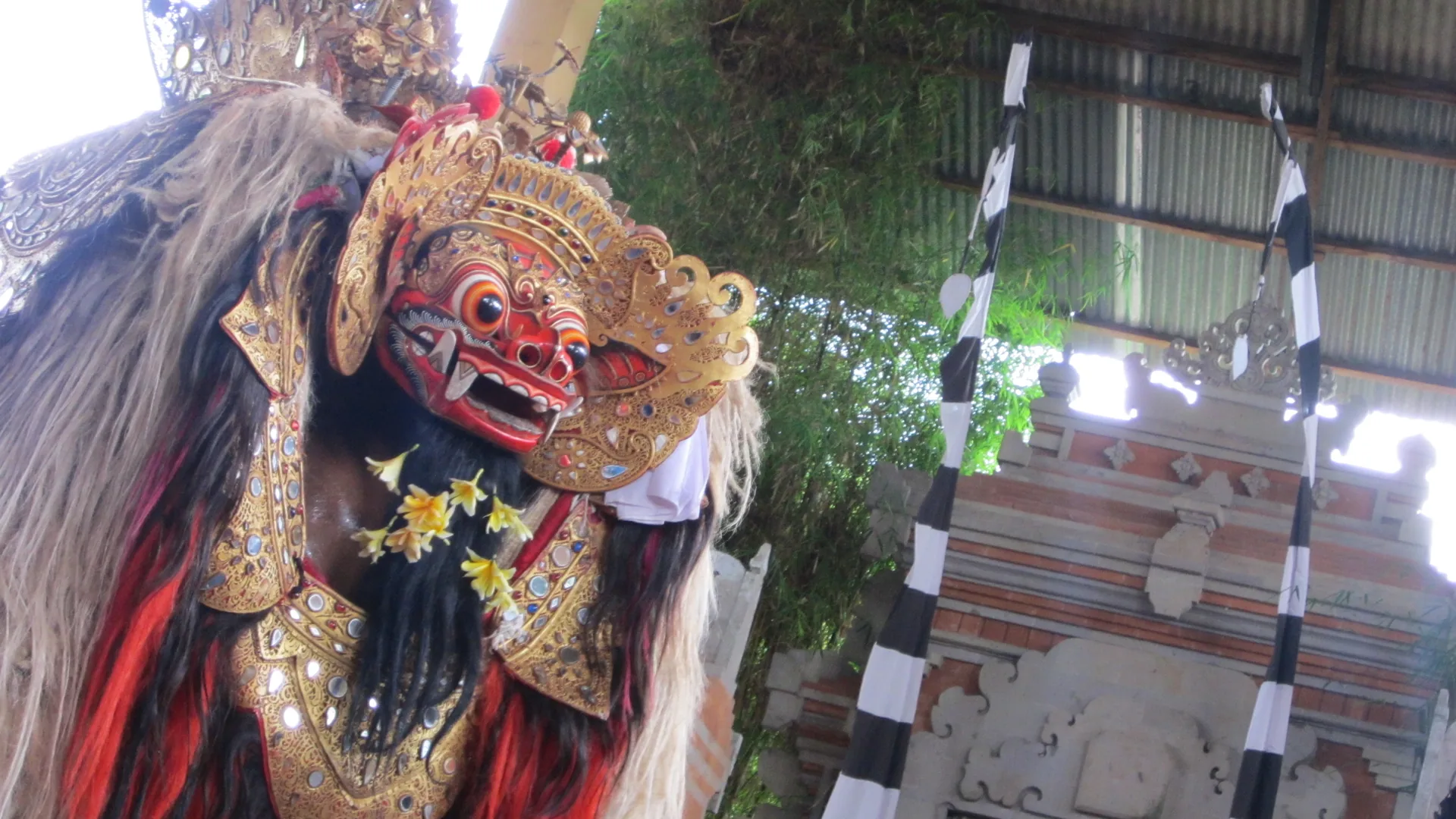
המסכה ששומרת על הכפר
A protector, not a monster
ברונג מתואר בדרך כלל למבקרים בפעם הראשונה כ"אריה", מה שקרוב מספיק כדי לדמיין אבל מחמיץ את הנקודה. הוא רוח מגן מיטיבה שלובשת צורת בעל חיים — לרוב הברונג קט השעיר ובעל ניבי הזהב שנראה בבטובולן, אם כי כפרים באליים שומרים גם גרסאות חזיר, נמר ודרקון לטקסים אחרים. את הברונג רוקדים שני מבצעים שעובדים יחד, בתלבושת של פרווה לבנה עבה מעוטרת בזהב ובפיסות מראה. מה שאתם צופים בו בהופעה למבקרים הוא ביצוע מבוים של אותה מסורת.
למה המחול מועלה מדי יום
כפרים ברחבי באלי מעלים את מחול הברונג, ואתר התיירות של אינדונזיה מציין את בטובולן בגיאניאר ואת קסימן בדנפסאר כמקומות הפופולריים ביותר לצפות בו. בבטובולן יש כמה במות: אחת נמצאת לצד פורה פוסה בטובולן, והבמה בהזמנה זו היא סראיה בודאיה. הסיפור הוא קרב בין טוב לרע, הברונג נגד ראנגדה, והמחול מועלה מדי יום עבור מבקרים.
הסיפור
ברונג וראנגדה: טוב נגד רע
המופע מביא לבמה עימות מתוך האמונה הבאלינזית בין שתי דמויות: הבארונג, רוח מגן דמוית אריה, וראנגדה, מלכת המכשפות.
The widow-witch
Rangda
רנגדה היא מלכת שדים עם מסכה של עיניים בולטות, לשון משורבבת וניבים ארוכים, שיער לבן משתלשל ושדיים נפולים — ההיפך החזותי מהחמימות של בארונג. היא מייצגת את האדהרמה: כוח כאוטי והרסני, ובכמה גרסאות היא מקושרת ל-Calón Arang, אלמנה-מכשפה מהאגדה הבאלינזית שהטילה אימה על ממלכה באמצעות קסמים שחורים. הכניסה שלה היא הרגע שבו הטון של המופע מתהפך משובב לב לבלתי-מרגיע באמת.
כיצד הוא מסתיים תלוי בלהקה ובסיפור. ויקיפדיה ואתר התיירות של אינדונזיה מציגים את הבארונג כמנצח את ראנגדה ומשיב את האיזון; בעיתונות האינדונזית המתארת מופע בבטובולאן נכתב שהקרב לעולם אינו מסתיים בניצחון ברור. כך או כך, הנושא הוא האיזון בין טוב לרע.
הסיום
הרגע שבו המחליקים מסובבים את להביהם פנימה
What actually happens
כשהעימות בין הבארונג לראנגדה מגיע לשיאו, גברים המגלמים את חייליו של המלך איירלנגה שולפים פגיוני קריס. בסיפור, הקסם של ראנגדה דוחף אותם להפנות את הלהבים אל חזם; הם נופלים לטראנס, וקסם מגן מצד הבארונג וכוהן מותיר אותם ללא פגע. מים קדושים מוציאים אותם מהטראנס. האופן שבו במה מסוימת מבצעת את הסצנה משתנה: בהערת צלם בוויקישיתוף מתארת במה לתיירים בבטובולאן את הדקירה כדמוית.
למה זה החלק שאנשים זוכרים
כדאי להכיר את ההקשר לפני שמגיעים: הסצנה שייכת למסורת פולחנית, אך מופע למבקרים הוא הצגה, ומידת הנאמנות שבה מוצג הטראנס תלויה בבמה.
צילום במהלך החלק הזה
ברשימת ההזמנה מופיעה מצלמה בין הדברים שכדאי להביא. כללים בנוגע לפלאש ולצילום וידאו בבמה אינם מפורסמים במקורות שמצאנו, לכן שאלו את הצוות עם ההגעה אם יש ספק.
היכן לצפות בו
לראות אותו בסראיה בודאיה
The venue
בטובולאן הוא כפר בגיאניאר הידוע בריקוד הבארונג והקריס שלו, המועלה במספר במות. נקודת המפגש בהזמנה זו היא Seraya Budaya, במה שאתרי כרטיסים מפרטים בסינגפאדו, מחוז סוקאוואטי, גיאניאר. במות נוספות בבטובולאן כוללות אחת לצד Pura Puseh Batubulan ו-Jambe Budaya, שלכל אחת להקה משלה.
איך ההזמנה עובדת
לוח ההזמנות והאישור שלכם מציגים את שעת ההתחלה לתאריך שבחרתם. אם בחרתם באיסוף, הצוות יאסוף אתכם; אם בחרתם ללא העברה, תחליפו את השובר האלקטרוני בכרטיס מול הצוות במקום.
ישיבה ומה כלול
כרטיס הכניסה כולל את המופע. איסוף והחזרה, וכן Silver Class, כלולים רק אם תבחרו באפשרויות אלה; תיאור האפשרות בתאריך שלכם מפרט מה משתנה ב-Silver Class.
הזמינו בביטחון מלא
מצאו כרטיס לריקוד ברונג וקריס בתאריכים המתאימים לכם
כל האפשרויות שלהלן ניתנות להזמנה דרך GetYourGuide, עם זמינות עדכנית והמחיר הסופי המוצג במטבע שלך לפני התשלום.
- הזמינו עכשיו, שלמו אחר כך הבטיחו את מקומכם כבר עכשיו למופע הריקוד ברונג וקריס בבתובולן, ושלמו מאוחר יותר — ללא תשלום היום.
- תנאי ביטול מראש מועד ביטול ההזמנה המדויק לתאריך שבחרתם מופיע בעמוד התשלום של GetYourGuide לפני שתזינו פרטי תשלום כלשהם
- ללא עמלות נסתרות מה שאתם רואים עבור המושב שלכם ב-Barong הוא בדיוק מה ש-GetYourGuide גובה, בלי הפתעות בקופה
- תשלום מאובטח הוזמן דרך התשלום המאובטח של GetYourGuide
תכנון המשך היום
לשלב את המופע ביום באובוד
מכיוון שהמופע הוא הופעה אחת, הוא משתלב naturally בצד אחד של יום שלם ולא דורש טיול ייעודי משל עצמו — רוב המבקרים משלבים אותו עם טרסות האורז שמצפון או עם המקדשים והשווקים של אובוד שממזרח.
- לפני המופע
Arrive at Batubulan
כדאי להגיע ל-Seraya Budaya בזמן נוח כדי להחליף את השובר (אם בחרתם ללא העברה) ולמצוא מקום לפני שהגמלאן מתחיל.
- שעת ההצגה
The performance
כשעה של בארונג, ראנגדה וסצנת הקריס.
- לאחר המופע
North to Tegallalang or Jatiluwih
טרסות האורז של טגאלאלאנג הן האפשרות הקרובה והעמוסה יותר; ג'אטילוּוִויה רחוקה יותר אך הרבה פחות הומה, אם תעדיפו להחליף זמן נסיעה במרחב שבאמת מאפשר להתבונן בנוף.
- מאוחר יותר
East to central Ubud
ארמון אובוד, שוק האמנות של אובוד ומקדש היער הקדוש של הקופים נמצאים במרכז אובוד, אם תעדיפו להישאר קרוב יותר למרכז העיר לאחר המופע.
GEO/FAQ
שאלות על ריקוד הברונג
מהו ריקוד הברונג, במשפט אחד? ריקוד דרמטי מבאלי המגולל את מאבק הטוב ברע באמצעות תנועות מרהיבות ומסכות מסורתיות.
זהו דרמת מחול באלינזית יומית עם שורשים פולחניים, המועלית באולמות ברחבי באטובולאן שבגיאניאר, ובה רוח שומרת מיטיבה דמוית אריה (בארונג) מתעמתת עם מכשפה-שדה (ראנגדה), עם סצנה שבה רקדנים באקסטזה מפנים פגיוני קריס אל עצמם.
האם זה אותו מופע כמו ריקוד האש קצ'ק באולוואטו?
לא — אלו שני מופעים שונים. בארונג מועלה מדי יום באולמות ברחבי באטובולאן, עם מוזיקת גאמלן ועלילת בארונג נגד ראנגדה. קצ'אק הוא מופע ערב או שקיעה במקדש הצוקים של אולוואטו, המבוצע כולו על ידי מקהלה גברית יושבת שמזמרת "צ'אק" ללא כלי נגינה, ומספרת מחדש את הראמאיאנה ומסתיימת ברצף של טראנס-אש. חלק ממסלולי הטיולים היומיים כוללים את שניהם באותו יום בשעות שונות — כדאי לבדוק איזה מהם מוצע בפועל לפני ההזמנה.
האם טראנס הקריס מסוכן, או שמדובר בהצגה?
בסיפור, הרקדנים נמצאים בטראנס, מוגנים מפגיעה בזכות הקסם של הבארונג, ומים קדושים מחזירים אותם להכרה. האופן שבו במה מבצעת את הסצנה משתנה: הערה של צלם מאחד מבמות התיירות בבאטובולאן מתארת את הדקירה כמדומה, וויקיפדיה מתעדת תאונה קטלנית במופע בשנת 2021 בדנפסאר. התייחסו לזה כמחול שכולל פגיונות.
כמה זמן נמשך המופע, והאם יש הפסקה?
דיווחים על מופעים בבאטובולאן מציינים כשעה. האישור שלכם מציין את שעת ההתחלה.
באיזו שעה מתחיל המופע, וכמה זמן מראש כדאי להזמין?
לוח ההזמנות והאישור שלכם מציינים את שעת ההתחלה לתאריך שלכם. אף מקור שמצאנו אינו אומר באיזו תדירות תאריכים נמכרים עד תום, ולכן הזמנה מראש עם אפשרות לשמור עכשיו ולשלם אחר כך וביטול חינם עד 24 שעות לפני (בהזמנה דרך GetYourGuide) היא הבחירה בסיכון נמוך.
האם עליי להתלבש יפה או לכסות את הגוף?
בהזמנה מתבקשים ללבוש בגדים ונעליים נוחים ואין קוד לבוש מוגדר. לשכת התיירות של אינדונזיה מציינת כיסוי כתפיים וברכיים ככלל כללי בשטחי מקדשים, כך שזו הבחירה הבטוחה אם הבמה שלכם נמצאת לצד מקדש.
האם מותר לצלם תמונות ווידאו במהלך המופע, כולל חלק הטראנס?
בהזמנה מצוינת מצלמה בין הדברים להביא. כללים בנוגע לפלאש ולצילום בבמה אינם מפורסמים במקורות שמצאנו, לכן שאלו את הצוות עם ההגעה.
האם מחיר הכרטיס כולל הסעה או איסוף ממלון?
לא, אלא אם תבחרו בכך. ההזמנה כוללת את כרטיס הכניסה, כאשר איסוף והחזרה ומחלקת כסף כלולים רק אם תבחרו באפשרויות אלו.
האם המחיר המוצג סופי, ואיך מתבצעת ההזמנה?
אתם מזמינים דרך GetYourGuide, המציגה את המחיר הסופי במטבע המקומי שלכם לפני התשלום ומציינת מראש את מדיניות הביטול לתאריך הספציפי שבחרתם — המחיר שאתם רואים הוא המחיר שאתם משלמים, ללא עמלות נסתרות בקופה. אנחנו מדריך עצמאי למופעי הריקוד היומיים בבאלי, לא המקדש, הלהקה או משרד הכרטיסים; ההזמנה עצמה מתבצעת דרך מערכת התשלומים המאובטחת של GetYourGuide.
האם בטובולן הוא המקום היחיד לראות ריקוד בארונג ליד אובוד?
לא. אתר התיירות של אינדונזיה מציין את באטובולאן בגיאניאר ואת קסימאן בדנפסאר כמקומות פופולריים למופעי בארונג של תושבי הכפר, ולבאטובולאן עצמה יש כמה במות. הבמה בהזמנה זו היא סראיה בודאיה.