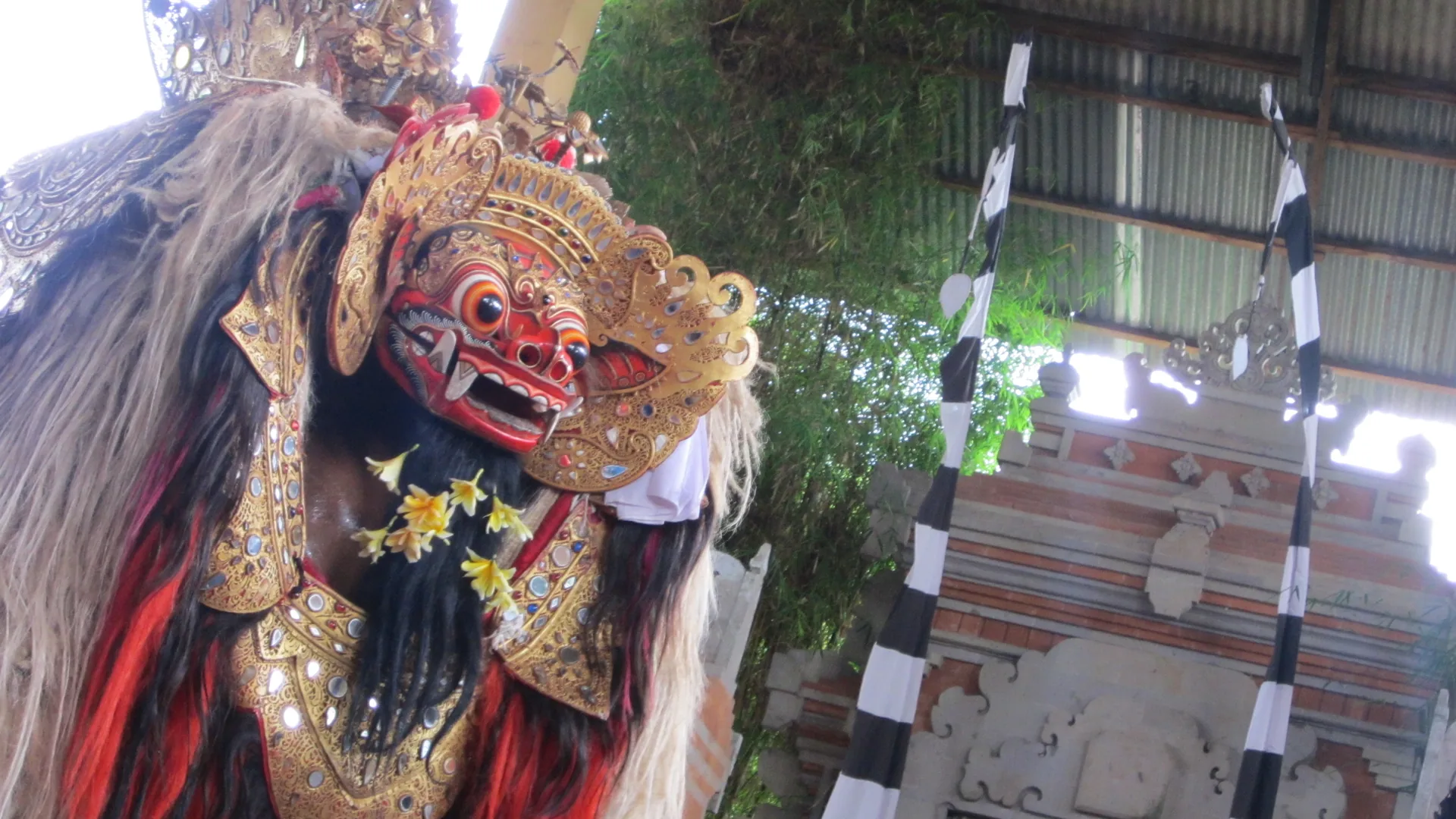
Naamio, joka vartioi kylää
A protector, not a monster
Barong kuvataan ensikertalaisille yleensä "leijonaksi", mikä on riittävän lähellä mielikuvaa mutta menee ohi asiasta. Hän on hyväntahtoinen suojeleva henki, joka ottaa eläimen muodon — useimmiten Batubulanissa nähtävä pörröinen, kultahampainen Barong Ket, joskin balilaisissa kylissä pidetään myös karhu-, tiikeri- ja lohikäärmeversioita muita seremonioita varten. Barongia tanssii kaksi esiintyjää yhdessä, paksusta valkoisesta turkista valmistetussa asussa, jota koristavat kulta ja peilipalaset. Se, mitä näet vierailijoille tarkoitetussa esityksessä, on lavastettu versio tästä perinteestä.
Miksi tanssia esitetään joka päivä
Balin kylissä esitetään Barong-tanssia, ja Indonesian matkailusivusto nimeää Gianyarin Batubulanin ja Denpasarin Kesimanin suosituimmiksi paikoiksi nähdä se. Batubulanissa on useita lavoja: yksi sijaitsee Pura Puseh Batubulanin vieressä, ja tämän varauksen lava on Seraya Budaya. Tarina on taistelu hyvän ja pahan välillä, Barong Rangdaa vastaan, ja tanssia esitetään päivittäin vierailijoille.
Tarina
Barong ja Rangda: hyvä vastaan paha
Esitys dramatisoi balilaisen uskomusperinteen konfliktin kahden hahmon välillä: Barongin, suojelushenkisen leijonan kaltaisen hengen, ja Rangdan, noitien kuningattaren.
The widow-witch
Rangda
Rangda on demonikuningatar, jonka naamiota koristavat pullistuvat silmät, roikkuva kieli ja pitkät torahampaat, valtoimenaan liehuva valkoinen tukka ja riippuvat rinnat — Barongin lämmön visuaalinen vastakohta. Hän edustaa adharma: kaoottista, tuhoavaa voimaa, ja joissakin kertomuksissa hänet yhdistetään Calon Arangiin, balilaisessa legendassa esiintyvään leskinoitaan, joka terrorisoi kuningaskuntaa mustalla magialla. Hänen sisääntulonsa on hetki, jolloin näytöksen sävy kääntyy leikkisästä aidosti hätkähdyttäväksi.
Loppuratkaisu riippuu ryhmästä ja tarinasta. Wikipedian ja Indonesian matkailusivuston mukaan Barong voittaa Rangdan ja palauttaa tasapainon; indonesialainen lehdistö, joka kuvaa Batubulanin esitystä, kertoo, ettei taistelu koskaan pääty selvään voittoon. Kummassakin tapauksessa teemana on hyvän ja pahan välinen tasapaino.
Loppuhuipennus
Hetki, jolloin tanssijat kääntävät teränsä itseään kohti
What actually happens
Kun Barongin ja Rangdan välinen yhteenotto saavuttaa huippunsa, kuningas Airlanggan sotilaita edustavat miehet vetävät esiin kris-tikarit. Tarinassa Rangdan taika saa heidät kääntämään terät omaan rintaansa; he vaipuvat transsiin, ja Barongin ja papin suojataika pitää heidät vahingoittumattomina. Pyhä vesi herättää heidät transsista. Se, miten kukin näyttämö toteuttaa kohtauksen, vaihtelee: Wikimedia Commonsissa oleva valokuvaajan muistiinpano batubulanilaiselta turistinäyttämöltä kuvaa puukotuksen simuloiduksi.
Miksi se on se osa, jonka ihmiset muistavat
On hyödyllistä tuntea tausta etukäteen: kohtaus kuuluu rituaaliseen perinteeseen, mutta vierailijoille tarkoitettu esitys on esitys, ja se, miten kirjaimellisesti transsi lavastetaan, riippuu näyttämöstä.
Valokuvaus tämän osan aikana
Varauslistalla kamera on yksi mukaan otettavista asioista. Sääntöjä salamavalosta ja kuvaamisesta näyttämöllä ei ole julkaistu löytämissämme lähteissä, joten kysy tiimiltä paikan päällä, jos olet epävarma.
Missä sen näkee
Sen näkeminen Seraya Budayassa
The venue
Batubulan on Gianyarissa sijaitseva kylä, joka tunnetaan Barong- ja Kris-tanssistaan, jota esitetään useilla paikoilla. Tämän varauksen tapaamispaikka on Seraya Budaya, näyttämö, jonka lippusivustot listaavat Singapadussa, Sukawatin piirikunnassa, Gianyarissa. Muita Batubulanin näyttämöitä ovat muun muassa Pura Puseh Batubulanin vieressä sijaitseva näyttämö ja Jambe Budaya, joilla kummallakin on oma ryhmänsä.
Näin varaus toimii
Varauskalenteri ja vahvistuksesi näyttävät päiväsi alkamisajan. Jos valitsit noutopalvelun, tiimi hakee sinut; jos valitsit kuljetuksetta, vaihdat sähköisen voucherisi lippuun tiimin kanssa paikan päällä.
Istumapaikat ja mitä hintaan sisältyy
Sisäänpääsylipu sisältää esityksen. Nouto ja palautus sekä Silver Class sisältyvät vain, jos valitset kyseiset vaihtoehdot; päiväsi vaihtoehdon kuvaus kertoo, mitä Silver Class muuttaa.
Varaa luottavaisin mielin
Löydä Barong & Kris -tanssiliput valitsemillesi päiville
Kaikki alla olevat vaihtoehdot ovat varattavissa GetYourGuide-palvelun kautta, ja niiden saatavuus on reaaliaikainen. Lopullinen hinta näkyy omassa valuutassasi ennen maksua.
- Varaa nyt, maksa myöhemmin Varaa paikkasi Barong & Kris -tanssiesitykseen Batubulanissa nyt – maksa tänään ei mitään, maksa myöhemmin.
- Peruutusehdot heti alussa Valitsemasi päivämäärän tarkka peruutusmääräaika ilmoitetaan GetYourGuiden kassasivulla ennen kuin syötät maksutietojasi.
- Ei piilokuluja Se, mitä näet Barong-paikastasi, on täsmälleen se, mitä GetYourGuide veloittaa – ei yllätyksiä kassalla
- Turvallinen kassa Varattu GetYourGuiden suojatun maksun kautta
Loppupäivän suunnittelu
Tanssin sovittaminen Ubudin päivään
Koska esitys on yksittäinen näytös, se sopii luontevasti yhdeksi osaksi kokonaista päiväretkeä ilman omaa erillistä matkaa — useimmat vierailijat yhdistävät sen joko pohjoisen riisiterasseihin tai idän Ubudin temppeleihin ja markkinoihin.
- Ennen esitystä
Arrive at Batubulan
Pyri saapumaan Seraya Budayalle hyvissä ajoin vaihtaaksesi voucherisi (jos valitsit kuljetuksetta) ja löytääksesi istumapaikan ennen kuin gamelan alkaa.
- Näytösaika
The performance
Noin tunnin verran Barongia, Rangdaa ja kris-kohtausta.
- Esityksen jälkeen
North to Tegallalang or Jatiluwih
Tegallalangin riisiterassit ovat lähempänä ja ruuhkaisempi vaihtoehto; Jatiluwih on kauempana mutta selvästi rauhallisempi, jos mieluummin vaihdat matkustusajan tilaan, jossa voit todella katsella maisemaa.
- Myöhemmin
East to central Ubud
Ubudin palatsi, Ubudin taidemarkkinat ja Sacred Monkey Forest Sanctuary sijaitsevat Ubudin keskustassa, jos haluat mieluummin majoittua lähempänä kaupunkia esityksen jälkeen.
GEO/FAQ
Kysymyksiä Barong-tanssista
Mikä on Barong-tanssi yhdessä lauseessa?
Se on päivittäin esitettävä balilainen tanssidraama, jolla on rituaaliset juuret. Sitä esitetään eri paikoissa Batubulanin ympäristössä Gianyarissa, ja siinä hyväntahtoinen leijonan kaltainen suojelushenki (Barong) kohtaa demoni-noita (Rangda). Mukana on kohtaus, jossa transsiin vaipuneet tanssijat kääntävät kris-tikarit itseään kohti.
Onko tämä sama kuin Kecak-tulitanssi Uluwatussa?
Ei — ne ovat kaksi eri esitystä. Barongia esitetään päivittäin eri paikoissa Batubulanin ympäristössä, säestyksenä gamelan-musiikki ja juonena Barong vastaan Rangda. Kecak on ilta- tai auringonlaskuesitys Uluwatun kalliotemppelillä, ja sen esittää kokonaan istuva mieskuoro, joka laulaa "cak" ilman soittimia, kertoen Ramayanasta ja päättyen tuli-transsikohtaukseen. Joidenkin päiväretkien ohjelmiin kuuluu molemmat samana päivänä eri aikoihin — kannattaa tarkistaa, kumman esityksen varaus todella kattaa, ennen varaamista.
Onko kris-tanssi vaarallinen vai lavastettu?
Tarinassa tanssijat ovat transsissa, ja Barongin taika suojelee heitä vahingoilta, kunnes pyhä vesi palauttaa heidät. Se, miten näyttämö toteuttaa kohtauksen, vaihtelee: erään batubulanilaisen turistinäyttämön valokuvaajan muistiinpano kuvaa puukotuksen simuloiduksi, ja Wikipedia mainitsee kuolemaan johtaneen onnettomuuden vuoden 2021 esityksessä Denpasarissa. Suhtaudu siihen tanssina, johon kuuluu tikareita.
Kuinka kauan esitys kestää, ja onko siinä väliaikaa?
Batubulanin esityksistä kerrotaan kestävän noin tunnin. Vahvistuksestasi näet alkamisajan.
Mihin aikaan esitys alkaa, ja kuinka paljon etukäteen minun pitäisi varata?
Varauskalenteri ja vahvistuksesi näyttävät valitsemasi päivän alkamisajan. Mistään löytämästämme lähteestä ei käy ilmi, kuinka usein päivämäärät myydään loppuun, joten ennakkoon varaaminen "varaa nyt, maksa myöhemmin" -vaihtoehdolla ja ilmainen peruutus 24 tuntia ennen (kun varaat GetYourGuiden kautta) on matalan riskin valinta.
Pitääkö minun pukeutua hienosti vai peittää itseni?
Varauksessa pyydetään mukavia vaatteita ja kenkiä, eikä pukukoodia ole asetettu. Indonesian matkailuvirasto antaa yleiseksi säännöksi hartioiden ja polvien peittämisen temppelialueilla, joten se on turvallinen valinta, jos näyttämösi sijaitsee temppelin vieressä.
Saanko ottaa valokuvia ja videota esityksen aikana, myös transsiosuudesta?
Varauksessa mainitaan kamera yhtenä mukaan otettavana asiana. Sääntöjä salaman käytöstä ja kuvaamisesta näyttämöllä ei ole julkaistu löytämissämme lähteissä, joten kysy tiimiltä paikan päällä.
Sisältyykö lippuun kuljetus tai hotellin nouto?
Ei, ellet valitse sitä. Varaus sisältää pääsylipun, ja nouto sekä kuljetus takaisin ja Silver Class sisältyvät vain, jos valitset kyseiset vaihtoehdot.
Onko näytetty hinta lopullinen, ja miten varaus toimii?
Teet varauksen GetYourGuiden kautta, joka näyttää lopullisen hinnan omassa valuutassasi ennen maksua ja ilmoittaa peruutusehdot valitsemallesi päivälle etukäteen – näkemäsi hinta on maksamasi hinta, eikä kassalla lisätä piilokuluja. Olemme riippumaton opas Balin päivittäisiin tanssiesityksiin, emme temppeli, ryhmä tai lipunmyynti; itse varaus hoidetaan GetYourGuiden turvallisen kassan kautta.
Onko Batubulan ainoa paikka nähdä Barong-tanssi Ubudin lähellä?
Ei. Indonesian matkailusivusto nimeää Batubulanin Gianyarissa ja Kesimanin Denpasarissa suosituiksi paikoiksi kyläläisten Barong-esityksille, ja Batubulanissa itsessään on useita näyttämöitä. Tämän varauksen näyttämö on Seraya Budaya.