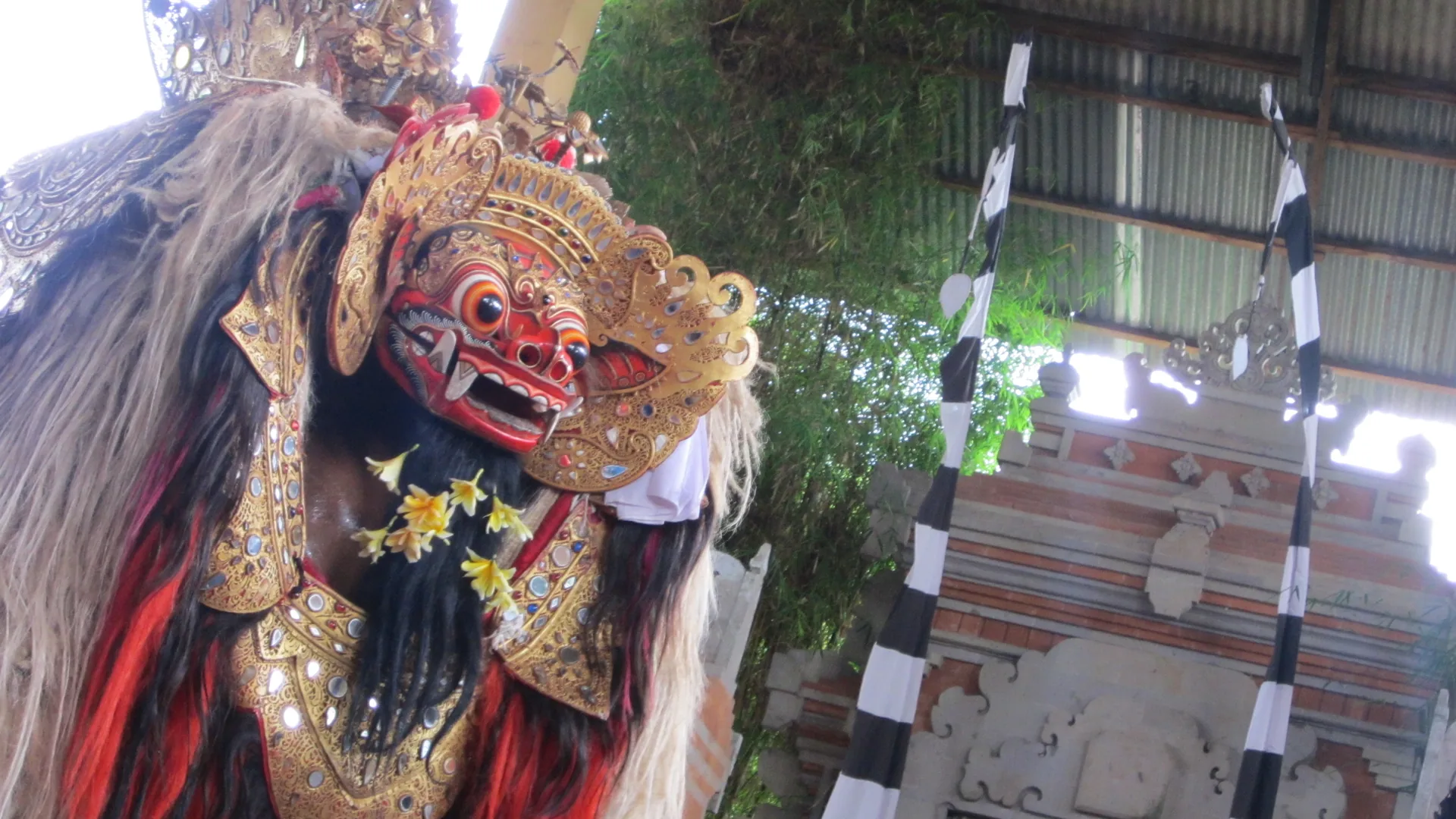
Mask, mis valvab küla
A protector, not a monster
Barongi kirjeldatakse esmakordsetele külastajatele tavaliselt kui "lõvi", mis on piisavalt lähedane, et ette kujutada, kuid tabab olemust valesti. Ta on heatahtlik kaitsvaim vaim, kes võtab loomse kuju — kõige sagedamini pulstunud, kullast hammastega Barong Ket, keda Batubulanis näha võib, kuigi Bali külad hoiavad ka metssiga, tiigri ja draakoni versioone teiste tseremooniate jaoks. Barongi tantsivad kaks esinejat koos, paksust valgest karusnahast kostüümis, mida kaunistavad kuld ja peeglitükid. See, mida külastajatele mõeldud etendusel vaatate, on selle traditsiooni lavastatud etteaste.
Miks tantsu iga päev lavastatakse
Külad üle Bali lavastavad Barongi tantsu ning Indonesia turismisait nimetab Batubulani Gianyaris ja Kesimani Denpasaris kõige populaarsemateks kohtadeks seda näha. Batubulanis on mitu lava: üks asub Pura Puseh Batubulani kõrval ning selle broneeringu lava on Seraya Budaya. Lugu on võitlus hea ja kurja vahel, Barong Rangda vastu, ning tantsu lavastatakse iga päev külastajatele.
Lugu
Barong ja Rangda: hea kurja vastu
Etendus dramatiseerib Bali uskumustes peituvat konflikti kahe tegelase vahel: Barong, kaitsva lõvitaolise vaimu, ja Rangda, nõidade kuninganna vahel.
The widow-witch
Rangda
Rangda on deemonlik kuninganna, kelle maskil on pungis silmad, ripakil keel ja pikad kihvad, taustaks valgevooluline juus ja rippuvad rinnad — Barongi soojuse visuaalne vastand. Ta esindab adharmat: kaootilist, hävitavat jõudu, ja mõnede jutustuste kohaselt on ta seotud Calon Arangiga, Bali legendi lesest nõid-naisest, kes terroriseeris kuningriiki musta maagiaga. Tema sisenemine on hetk, mil etenduse toon pöördub mängulisest tõeliselt häirivaks.
See, kuidas lugu lõpeb, sõltub trupist ja jutust. Wikipedia ja Indoneesia turismisait kirjeldavad, et Barong võidab Rangda ja taastab tasakaalu; Indoneesia ajakirjandus, mis kirjeldab Batubulani etendust, väidab, et võitlus ei lõpe kunagi selge võiduga. Igal juhul on teemaks hea ja kurja vaheline tasakaal.
Finaal
Hetk, mil tantsijad pööravad terad enda poole
What actually happens
Kui Barongi ja Rangda vastasseis haripunkti jõuab, tõmbavad kuningas Airlangga sõdureid kehastavad mehed välja kris-pistodad. Loo järgi ajab Rangda maagia neid teri omaenda rinnale pöörama; nad langevad transsi ning Barongi ja preestri kaitsemaagia jätab nad vigastamata. Püha vesi toob nad transist välja. See, kuidas konkreetne lavastus seda stseeni esitab, varieerub: ühe fotograafi märkus Wikimedia Commonsis Batubulani turismilavast räägib, et pussitamine on simuleeritud.
Miks see on osa, mille inimesed meelde jätavad
Kasuks tuleb konteksti tundmine juba enne algust: stseen kuulub rituaalsesse traditsiooni, kuid külastajatele mõeldud etendus on lavastus ning see, kui sõna-sõnalt transsi lavastatakse, sõltub lavast.
Pildistamine selle osa ajal
Broneeringu nimekirjas on kaamera üks asjadest, mida kaasa võtta. Reeglid välgu ja filmimise kohta laval ei ole meie leitud allikates avaldatud, seega küsige saabudes meeskonnalt, kui te pole kindel.
Kus seda näha
Nähes seda Seraya Budaya laval
The venue
Batubulan on küla Gianyaris, mis on tuntud oma Barongi ja Krisi tantsu poolest, mida lavastatakse mitmel laval. Selle broneeringu kohtumispaik on Seraya Budaya, lava, mille piletisaidid loetlevad Singapadus, Sukawati piirkonnas, Gianyaris. Teiste Batubulani lavade hulka kuulub üks Pura Puseh Batubulani kõrval ja Jambe Budaya, kummalgi oma trupp.
Kuidas broneering toimib
Broneeringukalender ja teie kinnitus näitavad teie kuupäeva algusaega. Kui valisite transpordi, tuleb meeskond teile järele; kui valisite transpordita, vahetate oma e-vautšeri meeskonnaga kohapeal pileti vastu.
Istekohad ja mis on hinna sees
Pääsepilet sisaldab etendust. Järeletoomine ja äraviimine ning Silver Class on hinna sees ainult siis, kui need valikud valite; teie kuupäeva valiku kirjeldus ütleb, mida Silver Class muudab.
Broneeri julgelt
Leia Barong & Kris tantsu pilet oma kuupäevadele
Kõik allpool olevad valikud on broneeritavad GetYourGuide kaudu, reaalajas saadavusega ja lõplik hind kuvatakse teie enda valuutas enne maksmist.
- Broneeri kohe, maksa hiljem Broneeri koht Barong & Kris tantsuetendusele Batubulanis juba praegu, maksa täna mitte midagi ja tasu hiljem.
- Tühistamistingimused ette Teie valitud kuupäeva täpne tühistamistähtaeg on märgitud GetYourGuide'i ostulehele enne, kui sisestate mis tahes makseandmeid
- Varjatud tasusid ei ole See, mida näed oma Barongi istekoha eest, on täpselt see, mida GetYourGuide küsib – mingit üllatust kassas
- Turvaline ostmine Broneeritud GetYourGuide'i kaitstud makse kaudu
Ülejäänud päeva planeerimine
Tantsu sobitamine Ubudu päeva
Kuna etendus on üksik etteaste, sobib see loomulikult üheks osaks tervest päevast, mitte ei nõua eraldi reisi — enamik külastajaid ühendab selle kas põhja pool asuvate riisiterrassidega või ida pool asuvate Ubudu templite ja turgudega.
- Enne etendust
Arrive at Batubulan
Püüdke jõuda Seraya Budayasse õigel ajal, et vahetada oma vautšer (kui valisite transpordita) ja leida istekoht enne, kui gamelan algab.
- Algusaeg
The performance
Umbes tund Barongi, Rangdat ja kris-stseeni.
- Pärast etendust
North to Tegallalang or Jatiluwih
Tegallalangi riisiterrassid on lähem ja rahvarohkem valik; Jatiluwih on kaugemal, kuid tunduvalt vähem rahvastatud, kui eelistate reisiaega vahetada ruumi vastu, et vaadet tegelikult nautida.
- Hiljem
East to central Ubud
Ubud Palace, Ubud Art Market ja Sacred Monkey Forest Sanctuary asuvad Ubud keskmes, kui eelistate pärast etendust linna lähedale jääda.
GEO/FAQ
Küsimused Barong-tantsu kohta
Mis on Barong-tants ühe lausega?
See on igapäevane Bali tantsudraama rituaalsete juurtega, mida lavastatakse Gianyaris Batubulani ümbruse paikades, kus heatahtlik lõvitaoline kaitsevaim (Barong) astub vastu deemon-nõiale (Rangda), sisaldades stseeni, kus transsi viidud tantsijad pööravad kris-pistodad enda vastu.
Kas see on sama mis Kecaki tuleetendus Uluwatus?
Ei — need on kaks erinevat etendust. Barongi lavastatakse iga päev Batubulani ümbruse paikades, gamelanimuusika ja Barongi vs Rangda süžeega. Kecak on õhtune või päikeseloojangul toimuv etendus Uluwatu kaljutemplis, mida esitab täielikult istuv meeskoor, mis kordab "cak" ilma instrumentideta, jutustades Ramayanat ja lõppedes tule-transsi stseeniga. Mõned päevareisi marsruudid sisaldavad mõlemat samal päeval erinevatel aegadel — tasub enne broneerimist kontrollida, millist neist pakkumine tegelikult hõlmab.
Kas kris-transtrance on ohtlik või lavastatud?
Loos on tantsijad transis, Barongi maagia kaitseb neid vigastuste eest, ja püha vesi toob nad tagasi. See, kuidas lavastus seda stseeni esitab, varieerub: ühe Batubulani turismilava fotograafi märkmed kirjeldavad torkamist simuleerituna ja Wikipedia dokumenteerib surmaga lõppenud õnnetuse 2021. aasta etendusel Denpasaris. Käsitlege seda tantsuna, mis hõlmab pistodasid.
Kui kaua etendus kestab ja kas seal on vaheaeg?
Batubulani etenduste kohta antud aruanded näitavad umbes tundi. Teie kinnitus näitab algusaega.
Mis kell etendus algab ja kui kaua ette peaksin broneerima?
Broneerimiskalender ja teie kinnitus näitavad teie kuupäeva algusaega. Ükski allikas, mille me leidsime, ei ütle, kui tihti kuupäevad välja müüakse, seega on madala riskiga valik broneerida ette, kasutades "reserveeri nüüd, maksa hiljem" ja tasuta tühistamist kuni 24 tundi varem (kui broneerite GetYourGuide'i kaudu).
Kas pean riietuma pidulikult või end katma?
Broneerimine palub mugavaid riideid ja jalanõusid ega sea riietusnormi. Indoneesia turismiamet annab üldreeglina templi territooriumil õlgade ja põlvede katmise, seega on see turvaline valik, kui teie lava asub templi kõrval.
Kas ma võin etenduse ajal, sealhulgas transsiosa ajal, pildistada ja filmida?
Broneerimine loetleb kaamera asjade hulgas, mida kaasa võtta. Reeglid välgu ja filmimise kohta laval ei ole meie leitud allikates avaldatud, seega küsige saabumisel meeskonnalt.
Kas pileti hind sisaldab transporti või hotelli vastuvõttu?
Ei, mitte enne, kui te selle valite. Broneering sisaldab sissepääsupiletit, kusjuures järeletoomine ja äraviimine ning Silver Class on kaasatud ainult siis, kui valite need valikud.
Kas kuvatud hind on lõplik ja kuidas broneerimine toimub?
Broneerite läbi GetYourGuide, mis kuvab lõpliku hinna teie enda vääringus enne maksmist ja näitab teie konkreetse kuupäeva tühistamispoliitikat ette – hind, mida näete, on hind, mida maksate, ilma peidetud tasudeta kassas. Oleme sõltumatu juhend Bali igapäevaste tantsuetenduste kohta, mitte tempel, trupp ega piletikassa; broneeringu teostab GetYourGuide'i turvaline kassa.
Kas Batubulan on ainus koht Ubudist Barongi tantsu nägemiseks?
Ei. Indoneesia turismiveebileht nimetab Batubulani Gianyaris ja Kesimani Denpasaris populaarsete kohtadena külaliste Barongi etendusteks ning Batubulanil endal on mitu lava. Selle broneeringu lava on Seraya Budaya.