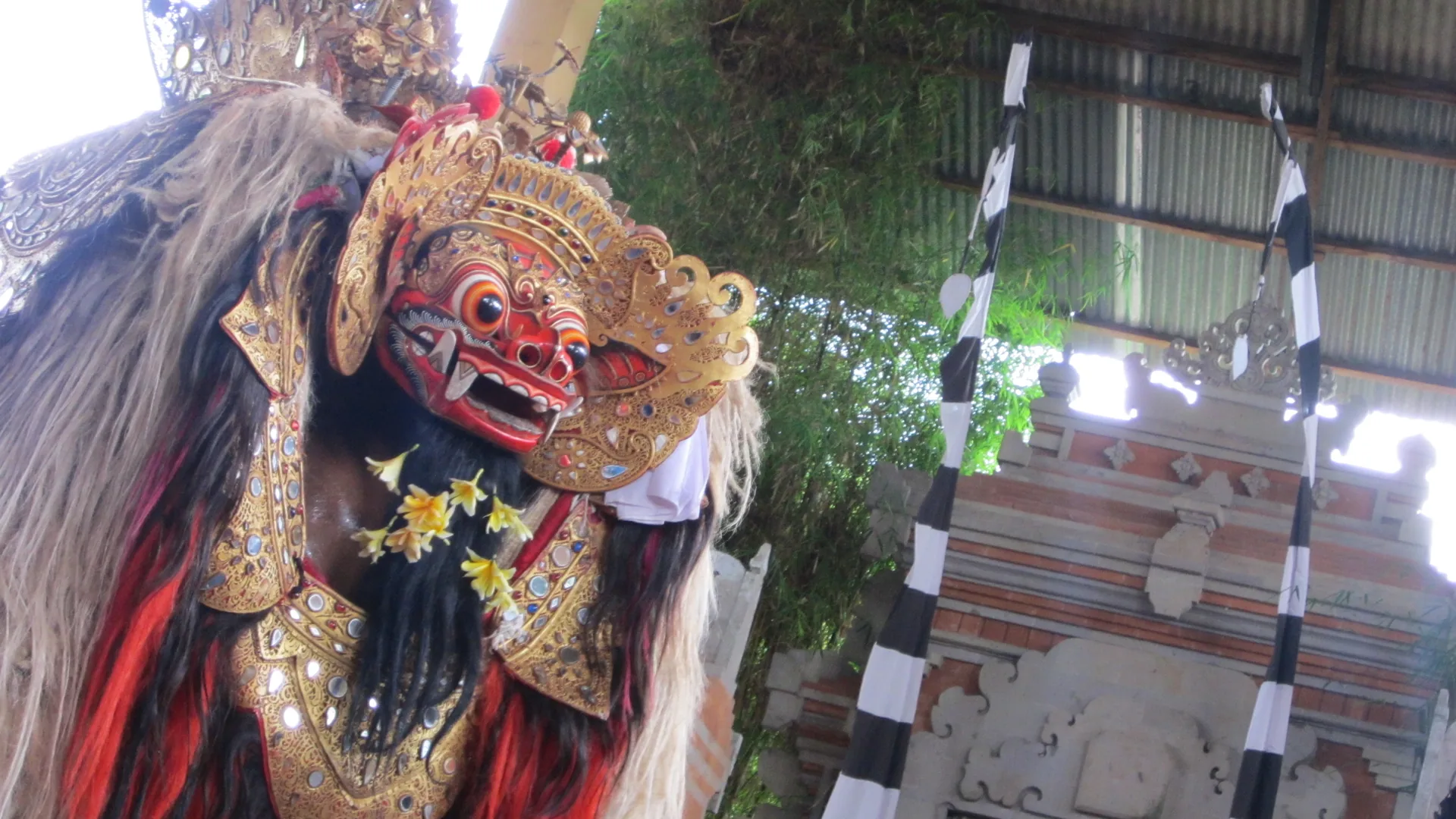
La máscara que protege al pueblo
Un protector, no un monstruo
Al Barong se lo suele describir ante quienes visitan por primera vez como "un león", lo cual basta para imaginárselo, pero no capta lo esencial. Es un espíritu protector benévolo que adopta forma animal, casi siempre el peludo Barong Ket de colmillos dorados que se ve en Batubulan, aunque las aldeas balinesas también conservan versiones de jabalí, tigre y dragón para otras ceremonias. El Barong lo bailan dos intérpretes que trabajan juntos, con un vestuario de espeso pelaje blanco decorado con oro y espejos. Lo que ves en un espectáculo para visitantes es una representación escenificada de esa tradición.
Por qué la danza se representa cada día
Las aldeas de toda Bali representan la danza Barong, y el sitio de turismo de Indonesia señala Batubulan, en Gianyar, y Kesiman, en Denpasar, como los lugares más populares para verla. Batubulan tiene varios escenarios: uno está junto a Pura Puseh Batubulan, y el escenario de esta reserva es Seraya Budaya. La historia es una batalla entre el bien y el mal, el Barong contra Rangda, y la danza se representa a diario para los visitantes.
La historia
Barong y Rangda: el bien contra el mal
La representación dramatiza un conflicto de la creencia balinesa entre dos figuras: el Barong, un espíritu protector con forma de león, y Rangda, la reina de las brujas.
La bruja viuda
Rangda
Rangda es una reina demonio con una máscara de ojos saltones, lengua colgante y largos colmillos, cabello blanco suelto y pechos caídos: el opuesto visual de la calidez de Barong. Representa el adharma, el poder caótico y destructivo, y en algunas versiones se la vincula con Calon Arang, una viuda hechicera de la leyenda balinesa que aterrorizó a un reino con magia negra. Su entrada es el momento en que el tono del espectáculo pasa de lo juguetón a lo genuinamente inquietante.
Cómo termina depende de la compañía y de la historia. Wikipedia y el sitio de turismo de Indonesia presentan al Barong venciendo a Rangda y restaurando el equilibrio; la prensa indonesia que describe un espectáculo en Batubulan afirma que la lucha nunca termina con una victoria clara. En cualquier caso, el tema es el equilibrio entre el bien y el mal.
El gran final
El momento en que los bailarines vuelven sus dagas contra sí mismos
Qué ocurre realmente
Cuando el enfrentamiento entre el Barong y Rangda llega a su punto álgido, los hombres que representan a los soldados del rey Airlangga desenvainan dagas kris. En la historia, la magia de Rangda los impulsa a volver las hojas contra sus propios pechos; caen en trance, y la magia protectora del Barong y de un sacerdote los deja ilesos. El agua bendita los saca del trance. Cómo representa la escena cada escenario varía: una nota de un fotógrafo en Wikimedia Commons sobre un escenario turístico de Batubulan describe el apuñalamiento como simulado.
Por qué es la parte que la gente recuerda
Ayuda conocer el contexto de antemano: la escena pertenece a una tradición ritual, pero un espectáculo para visitantes es una representación, y cuán literalmente se escenifica el trance depende del escenario.
Fotografía durante esta parte
La reserva incluye una cámara entre las cosas que hay que llevar. Las normas sobre flash y filmación en un escenario no se publican en las fuentes que encontramos, así que pregunta al equipo a tu llegada si tienes dudas.
Dónde verlo
Verlo en Seraya Budaya
El recinto
Batubulan es un pueblo de Gianyar conocido por su danza Barong y Kris, que se escenifica en varios locales. El punto de encuentro de esta reserva es Seraya Budaya, un escenario que los sitios de entradas listan en Singapadu, distrito de Sukawati, Gianyar. Otros escenarios de Batubulan incluyen uno junto a Pura Puseh Batubulan y Jambe Budaya, cada uno con su propia compañía.
Cómo funciona la reserva
El calendario de reservas y tu confirmación muestran la hora de inicio para tu fecha. Si elegiste recogida, el equipo te recoge; si elegiste sin traslado, canjeas tu bono electrónico por una entrada con el equipo en el local.
Asientos y qué incluye
La entrada incluye el espectáculo. La recogida y el regreso, y la Silver Class, se incluyen solo si seleccionas esas opciones; la descripción de la opción en tu fecha indica qué cambia la Silver Class.
Reserva con total confianza
Encuentra una entrada para la danza Barong y Kris en tus fechas
Todas las opciones que aparecen a continuación se pueden reservar a través de GetYourGuide, con disponibilidad en tiempo real y el precio final mostrado en tu propia moneda antes de pagar.
- Reserva ahora, paga después Reserva ya tu asiento para la danza Barong y Kris en Batubulan y no pagues nada hoy, paga después.
- Términos de cancelación por adelantado La hora límite exacta de cancelación para la fecha que elijas aparece en la página de pago de GetYourGuide antes de que introduzcas ningún dato de pago
- Sin cargos ocultos Lo que ves por tu asiento Barong es exactamente lo que cobra GetYourGuide, sin sorpresas al finalizar la compra
- Pago seguro Reservado a través del pago protegido de GetYourGuide
Planifica el resto del día
Cómo encajar la danza en un día en Ubud
Como el espectáculo es una única representación, encaja de forma natural en una parte de un día completo en lugar de necesitar su propio viaje dedicado: la mayoría de los visitantes lo combina con los arrozales del norte o con los templos y mercados de Ubud, al este.
- Antes del espectáculo
Llegada a Batubulan
Procura llegar a Seraya Budaya con tiempo suficiente para canjear tu bono (si elegiste sin traslado) y encontrar asiento antes de que empiece el gamelán.
- Hora de la función
La representación
Alrededor de una hora de Barong, Rangda y la escena del kris.
- Después del espectáculo
Hacia el norte: Tegallalang o Jatiluwih
Las terrazas de arroz de Tegallalang son la opción más cercana y concurrida; Jatiluwih queda más lejos, pero con mucha menos afluencia, por si prefieres cambiar tiempo de trayecto por espacio para contemplar el paisaje con calma.
- Más tarde
Hacia el este: el centro de Ubud
El Palacio de Ubud, el Mercado de Arte de Ubud y el Santuario del Bosque Sagrado de los Monos se encuentran en el centro de Ubud, por si prefieres alojarte más cerca del pueblo después del espectáculo.
GEO/FAQ
Preguntas sobre la danza Barong
¿Qué es la danza Barong, en una frase?
Es un drama de danza balinesa diario con raíces rituales, representado en escenarios de los alrededores de Batubulan, en Gianyar, en el que un espíritu guardián benévolo con forma de león (Barong) se enfrenta a una bruja demoníaca (Rangda), con una escena en la que bailarines en trance vuelven sus dagas kris contra sí mismos.
¿Es lo mismo que la danza del fuego Kecak en Uluwatu?
No: son dos espectáculos diferentes. El Barong se representa a diario en escenarios de los alrededores de Batubulan, con música de gamelán y una trama de Barong contra Rangda. El Kecak es un espectáculo nocturno o al atardecer en el templo del acantilado de Uluwatu, interpretado íntegramente por un coro masculino sentado que entona «cak» sin instrumentos, que recrea el Ramayana y termina con una secuencia de trance con fuego. Algunos itinerarios de excursiones de un día incluyen ambos el mismo día a distintas horas; conviene comprobar cuál cubre realmente cada anuncio antes de reservar.
¿El trance del kris es peligroso o está montado?
En la historia, los bailarines están en trance, protegidos de todo daño por la magia del Barong, y el agua sagrada los devuelve a la realidad. La forma en que cada escenario representa la escena varía: la nota de un fotógrafo sobre un escenario turístico de Batubulan describe la puñalada como simulada, y Wikipedia registra un accidente mortal en una representación de 2021 en Denpasar. Trátalo como una danza en la que hay dagas.
¿Cuánto dura el espectáculo y tiene descanso?
Los informes sobre los espectáculos de Batubulan indican alrededor de una hora. Tu confirmación muestra la hora de inicio.
¿A qué hora empieza el espectáculo y con cuánta antelación debo reservar?
El calendario de reservas y tu confirmación muestran la hora de inicio para tu fecha. Ninguna fuente que hayamos encontrado indica con qué frecuencia se agotan las fechas, así que reservar con antelación con la opción de reserva ahora y pago después y cancelación gratuita hasta 24 horas antes (cuando reservas a través de GetYourGuide) es la opción de bajo riesgo.
¿Necesito vestirme elegante o cubrirme?
La reserva pide ropa y calzado cómodos y no establece ningún código de vestimenta. La oficina de turismo de Indonesia indica cubrir hombros y rodillas como norma general en recintos de templos, así que esa es la opción segura si tu escenario está junto a un templo.
¿Puedo hacer fotos y grabar vídeo durante la actuación, incluida la parte del trance?
La reserva incluye una cámara entre las cosas que llevar. Las normas sobre flash y grabación en un escenario no se publican en las fuentes que hemos encontrado, así que pregunta al equipo a tu llegada.
¿El precio de la entrada incluye transporte o recogida en el hotel?
No, salvo que lo selecciones. La reserva incluye la entrada, con recogida y regreso incluidos, y la Clase Silver solo si seleccionas esas opciones.
¿El precio que se muestra es el final y cómo funciona la reserva?
La reserva se realiza a través de GetYourGuide, que muestra el precio final en su moneda local antes del pago e indica claramente la política de cancelación para su fecha concreta. El precio que ve es el que paga, sin cargos ocultos al finalizar la compra. Somos una guía independiente de los espectáculos de danza diarios de Bali, no el templo, la compañía ni la taquilla; la reserva se gestiona mediante el sistema seguro de pago de GetYourGuide.
¿Es Batubulan el único lugar para ver la danza Barong cerca de Ubud?
No. La web de turismo de Indonesia señala Batubulan, en Gianyar, y Kesiman, en Denpasar, como lugares populares para las representaciones de Barong de los aldeanos, y Batubulan cuenta con varios escenarios. El escenario de esta reserva es Seraya Budaya.