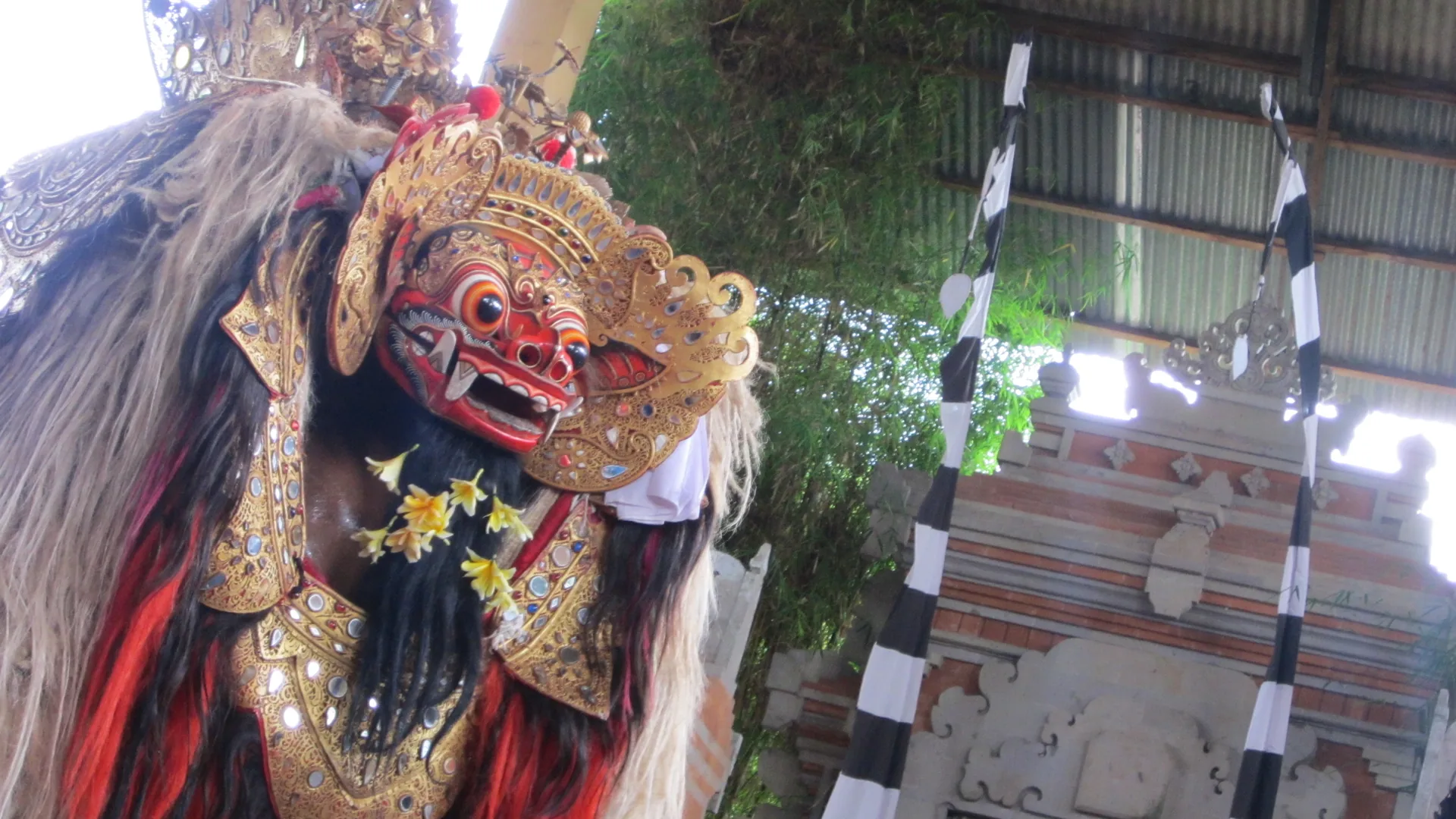
Die Maske, die das Dorf beschützt
Ein Beschützer, kein Monster
Barong wird Erstbesuchern meist als „ein Löwe" beschrieben, was zum Vorstellen nah genug herankommt, aber den Kern verfehlt. Er ist ein wohlwollender Schutzgeist in Tiergestalt – am häufigsten der zottelige Barong Ket mit Goldzähnen, den man in Batubulan sieht, doch balinesische Dörfer halten für andere Zeremonien auch Eber-, Tiger- und Drachenversionen. Der Barong wird von zwei Darstellern gemeinsam getanzt, in einem Kostüm aus dichtem weißem Fell, verziert mit Gold- und Spiegelstücken. Was Sie bei einer Show für Besucher sehen, ist eine inszenierte Aufführung dieser Tradition.
Warum der Tanz jeden Tag aufgeführt wird
In Dörfern auf ganz Bali wird der Barong-Tanz aufgeführt, und Indonesiens Tourismusseite nennt Batubulan in Gianyar und Kesiman in Denpasar als die beliebtesten Orte, um ihn zu sehen. Batubulan hat mehrere Bühnen: Eine liegt neben Pura Puseh Batubulan, und die Bühne dieser Buchung ist Seraya Budaya. Die Geschichte ist ein Kampf zwischen Gut und Böse, der Barong gegen Rangda, und der Tanz wird täglich für Besucher aufgeführt.
Die Geschichte
Barong und Rangda: Gut gegen Böse
Die Aufführung dramatisiert einen Konflikt aus dem balinesischen Glauben zwischen zwei Figuren: dem Barong, einem schützenden löwenartigen Geist, und Rangda, der Königin der Hexen.
Die Witwen-Hexe
Rangda
Rangda ist eine Dämonenkönigin mit einer Maske aus hervortretenden Augen, heraushängender Zunge und langen Fangzähnen, mit wallendem weißem Haar und hängenden Brüsten – das optische Gegenteil von Barongs Wärme. Sie verkörpert Adharma: chaotische, zerstörerische Kraft, und wird in manchen Erzählungen mit Calon Arang verbunden, einer Witwen-Zauberin aus der balinesischen Legende, die ein Königreich mit schwarzer Magie terrorisierte. Ihr Auftritt ist der Moment, in dem der Ton der Vorstellung von verspielt zu wirklich beunruhigend umschlägt.
Wie sie endet, hängt von der Truppe und der Geschichte ab. Wikipedia und die Tourismusseite Indonesiens lassen den Barong Rangda besiegen und das Gleichgewicht wiederherstellen; die indonesische Presse, die eine Show in Batubulan beschreibt, berichtet, dass der Kampf nie mit einem klaren Sieg endet. So oder so ist das Thema das Gleichgewicht zwischen Gut und Böse.
Das Finale
Der Moment, in dem die Tänzer ihre Klingen nach innen richten
Was tatsächlich passiert
Als der Schlagabtausch zwischen Barong und Rangda seinen Höhepunkt erreicht, ziehen Männer, die die Soldaten von König Airlangga darstellen, Kris-Dolche. In der Geschichte treibt Rangdas Magie sie dazu, die Klingen gegen die eigene Brust zu richten; sie fallen in Trance, und schützende Magie des Barong und eines Priesters lässt sie unverletzt bleiben. Weihwasser holt sie aus der Trance zurück. Wie eine bestimmte Bühne die Szene aufführt, ist unterschiedlich: Eine Fotografennotiz auf Wikimedia Commons von einer Touristenbühne in Batubulan beschreibt den Stich als simuliert.
Warum sich Besucher an diesen Teil am meisten erinnern
Es hilft, den Kontext im Voraus zu kennen: Die Szene gehört zu einer rituellen Tradition, aber eine Show für Besucher ist eine Aufführung, und wie wörtlich die Trance inszeniert wird, hängt von der Bühne ab.
Fotografieren während dieses Teils
Die Buchung listet eine Kamera unter den Dingen auf, die man mitbringen sollte. Regeln zu Blitzlicht und Filmen an einer Bühne sind in den von uns gefundenen Quellen nicht veröffentlicht, fragen Sie also bei der Ankunft das Team, wenn Sie unsicher sind.
Wo Sie es sehen können
Bei Seraya Budaya erleben
Der Veranstaltungsort
Batubulan ist ein Dorf in Gianyar, das für seinen Barong- und Kris-Tanz bekannt ist, der an mehreren Orten aufgeführt wird. Der Treffpunkt bei dieser Buchung ist Seraya Budaya, eine Bühne, die Ticketseiten in Singapadu, Bezirk Sukawati, Gianyar, auflisten. Weitere Bühnen in Batubulan sind eine neben Pura Puseh Batubulan und Jambe Budaya, jede mit ihrer eigenen Truppe.
So funktioniert die Buchung
Der Buchungskalender und Ihre Bestätigung zeigen die Startzeit für Ihr Datum. Wenn Sie den Abholservice gewählt haben, holt das Team Sie ab; wenn Sie keinen Transfer gewählt haben, tauschen Sie Ihren E-Gutschein am Veranstaltungsort gegen ein Ticket beim Team.
Sitzplätze und was inbegriffen ist
Das Eintrittsticket beinhaltet die Show. Abholung und Rückbringung sowie die Silver Class sind nur enthalten, wenn Sie diese Optionen auswählen; die Optionsbeschreibung für Ihr Datum sagt, was die Silver Class ändert.
Buchen Sie mit Vertrauen
Finden Sie ein Ticket für den Barong-&-Kris-Tanz für Ihre Reisedaten
Jede der untenstehenden Optionen ist über GetYourGuide buchbar, mit aktueller Verfügbarkeit und dem endgültigen Preis in Ihrer eigenen Währung, bevor Sie bezahlen.
- Jetzt reservieren, später bezahlen Reservieren Sie jetzt Ihren Platz für den Barong-&-Kris-Tanz in Batubulan und zahlen Sie heute nichts – bezahlen Sie später.
- Stornierungsbedingungen von Anfang an transparent Der genaue Stornierungsschluss für Ihr gewähltes Datum wird auf der Checkout-Seite von GetYourGuide angegeben, bevor Sie Zahlungsdaten eingeben.
- Keine versteckten Gebühren Was Sie für Ihren Barong-Platz sehen, ist genau das, was GetYourGuide berechnet – ohne Überraschungen beim Checkout
- Sichere Bezahlung Gebucht über die geschützte Zahlung von GetYourGuide
Planung für den Rest des Tages
Den Tanz in einen Ubud-Tag einbauen
Da die Show eine einzige Aufführung ist, fügt sie sich ganz natürlich in eine Seite eines vollen Tagesausflugs ein, statt eine eigene Reise zu erfordern — die meisten Besucher kombinieren sie entweder mit den Reisterrassen im Norden oder mit Ubuds Tempeln und Märkten im Osten.
- Vor der Vorstellung
Ankunft in Batubulan
Versuchen Sie, Seraya Budaya rechtzeitig zu erreichen, um Ihren Gutschein einzutauschen (falls Sie keinen Transfer gewählt haben) und einen Sitzplatz zu finden, bevor das Gamelan beginnt.
- Vorstellungsbeginn
Die Vorstellung
Etwa eine Stunde Barong, Rangda und die Kris-Szene.
- Nach der Show
Nach Norden nach Tegallalang oder Jatiluwih
Die Reisterrassen von Tegallalang sind die nähere, belebtere Option; Jatiluwih liegt weiter entfernt, ist aber deutlich weniger überlaufen, falls du lieber Reisezeit gegen Ruhe zum Betrachten der Aussicht eintauschst.
- Später
Nach Osten ins Zentrum von Ubud
Der Ubud-Palast, der Ubud-Kunstmarkt und das Heiligtum des heiligen Affenwaldes liegen im Zentrum von Ubud, falls Sie nach der Vorstellung lieber in der Nähe der Stadt bleiben möchten.
GEO/FAQ
Fragen zum Barong-Tanz
Was ist der Barong-Tanz, in einem Satz?
Es ist ein tägliches balinesisches Tanzdrama mit rituellen Wurzeln, das an Spielstätten rund um Batubulan in Gianyar aufgeführt wird, in dem ein wohlwollender löwenartiger Schutzgeist (Barong) einer Dämonenhexe (Rangda) gegenübertritt, mit einer Szene, in der in Trance versetzte Tänzer Kris-Dolche gegen sich selbst richten.
Ist das dasselbe wie der Kecak-Feuertanz in Uluwatu?
Nein — es sind zwei verschiedene Aufführungen. Barong wird täglich an Spielstätten rund um Batubulan aufgeführt, mit Gamelan-Musik und einer Barong-gegen-Rangda-Handlung. Kecak ist eine Abend- oder Sonnenuntergangsvorstellung am Uluwatu-Klippentempel, die ausschließlich von einem sitzenden Männerchor aufgeführt wird, der „cak" chantet, ohne Instrumente, und das Ramayana nacherzählt und in einer Feuer-Trance-Sequenz endet. Manche Tagesausflugsprogramme beinhalten beide am selben Tag zu unterschiedlichen Zeiten — es lohnt sich zu prüfen, welche der beiden ein Angebot tatsächlich abdeckt, bevor Sie buchen.
Ist die Kris-Trance gefährlich oder nur inszeniert?
In der Geschichte befinden sich die Tänzer in Trance, durch die Magie des Barong vor Schaden geschützt, und heiliges Wasser bringt sie zurück. Wie eine Bühne die Szene darstellt, variiert: Eine Fotografennotiz von einer Touristenbühne in Batubulan beschreibt den Stich als simuliert, und Wikipedia verzeichnet einen tödlichen Unfall bei einer Aufführung 2021 in Denpasar. Betrachten Sie es als einen Tanz, bei dem Dolche zum Einsatz kommen.
Wie lange dauert die Show, und gibt es eine Pause?
Berichte über Batubulan-Vorstellungen geben etwa eine Stunde an. Ihre Bestätigung zeigt die Startzeit.
Um wie viel Uhr beginnt die Show, und wie weit im Voraus sollte ich buchen?
Der Buchungskalender und Ihre Bestätigung zeigen die Startzeit für Ihr Datum. Keine von uns gefundene Quelle gibt an, wie oft Termine ausverkauft sind, daher ist eine Vorausbuchung mit „Jetzt reservieren, später zahlen" und kostenloser Stornierung bis 24 Stunden vorher (bei Buchung über GetYourGuide) die risikoarme Wahl.
Muss ich mich schick anziehen oder bedeckt kleiden?
Die Buchung empfiehlt bequeme Kleidung und Schuhe und legt keinen Dresscode fest. Das indonesische Tourismusamt nennt bedeckte Schultern und Knie als allgemeine Regel auf Tempelgeländen, daher ist das die sichere Wahl, wenn Ihre Bühne neben einem Tempel liegt.
Darf ich während der Aufführung fotografieren und filmen, auch während der Trance?
Die Buchung listet eine Kamera unter den Dingen, die mitzubringen sind. Regeln zu Blitzlicht und Filmen an einer Bühne sind in den von uns gefundenen Quellen nicht veröffentlicht, fragen Sie daher das Team bei Ankunft.
Ist der Transfer oder Hotelabholung im Ticketpreis enthalten?
Nein, nicht unless Sie es auswählen. Die Buchung beinhaltet das Eintrittsticket, wobei Abholung und Rückbringung sowie Silver Class nur enthalten sind, wenn Sie diese Optionen auswählen.
Ist der angezeigte Preis endgültig, und wie funktioniert die Buchung?
Sie buchen über GetYourGuide, das Ihnen den Endpreis in Ihrer Landeswährung vor der Zahlung anzeigt und die Stornierungsbedingungen für Ihr konkretes Datum transparent darlegt – der Preis, den Sie sehen, ist der Preis, den Sie zahlen, ohne versteckte Gebühren an der Kasse. Wir sind ein unabhängiger Reiseführer für Balis tägliche Tanzaufführungen, nicht der Tempel, die Tanzgruppe oder die Kasse; die Buchung selbst erfolgt über den sicheren Checkout von GetYourGuide.
Ist Batubulan der einzige Ort, um in der Nähe von Ubud einen Barong-Tanz zu sehen?
Nein. Die Tourismus-Website Indonesiens nennt Batubulan in Gianyar und Kesiman in Denpasar als beliebte Orte für Barong-Aufführungen der Dorfbewohner, und Batubulan selbst hat mehrere Bühnen. Die Bühne dieser Buchung ist Seraya Budaya.