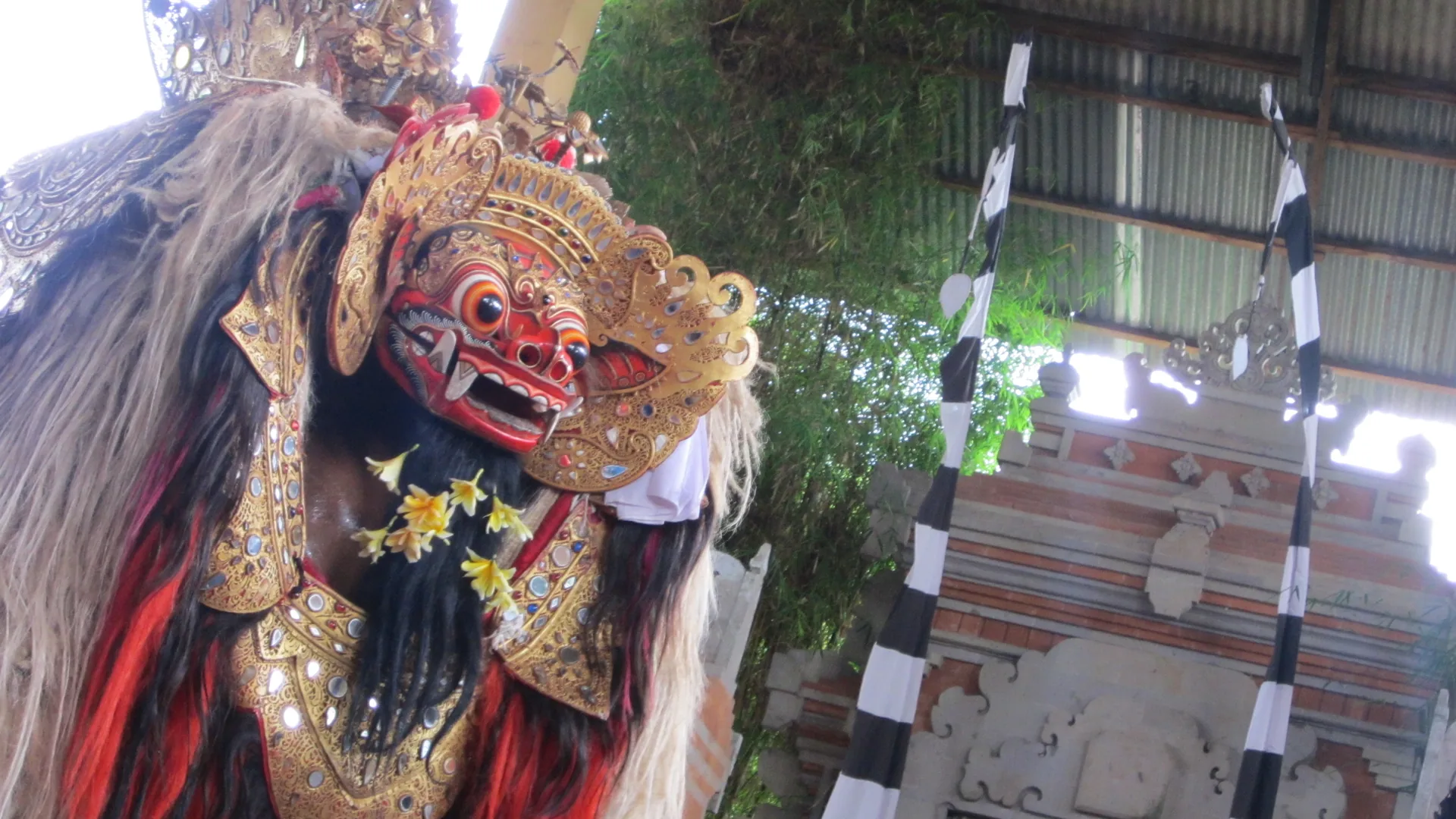
Masken der vogter landsbyen
En beskytter, ikke et monster
Barong beskrives normalt over for førstegangsbesøgende som "en løve", hvilket er tæt nok på til at forestille sig, men rammer ved siden af pointen. Han er en velvillig beskyttende ånd, der antager dyreform — oftest den lodne Barong Ket med guldtænder, som ses i Batubulan, selvom balinesiske landsbyer også holder vildsvin-, tiger- og drageversioner til andre ceremonier. Barong danses af to udøvere, der arbejder sammen, i et kostume af tyk hvid pels dekoreret med guld og spejlstykker. Det, du ser ved et show for besøgende, er en iscenesat opførelse af den tradition.
Hvorfor dansen opføres hver dag
Landsbyer over hele Bali opfører Barong-dansen, og Indonesiens turismesite nævner Batubulan i Gianyar og Kesiman i Denpasar som de mest populære steder at se den. Batubulan har flere scener: en ligger ved siden af Pura Puseh Batubulan, og scenen på denne booking er Seraya Budaya. Historien er en kamp mellem godt og ondt, Barong mod Rangda, og dansen opføres dagligt for besøgende.
Historien
Barong og Rangda: godt mod ondt
Forestillingen dramatiserer en konflikt fra balinesisk tro mellem to skikkelser: Barong, en beskyttende løveagtig ånd, og Rangda, heksenes dronning.
Enkeheksen
Rangda
Rangda er en dæmondronning med en maske med udstående øjne, en hængende tunge og lange hugtænder, slæbende hvidt hår og hængende bryster — den visuelle modsætning til Barongs varme. Hun repræsenterer adharma: kaotisk, destruktiv kraft, og i nogle fortællinger er hun forbundet med Calon Arang, en enkeheks fra balinesisk legende, der terroriserede et kongerige med sort magi. Hendes entré er det øjeblik, hvor forestillingens stemning skifter fra legende til oprigtigt foruroligende.
Hvordan den ender, afhænger af troppen og historien. Wikipedia og Indonesiens turistside lader Barong besejre Rangda og genoprette balancen; indonesisk presse, der beskriver en forestilling i Batubulan, siger, at kampen aldrig ender med en klar sejr. Uanset hvad er temaet balancen mellem godt og ondt.
Finalen
Øjeblikket hvor danserne vender klingerne indad
Hvad der faktisk sker
Da konfrontationen mellem Barong og Rangda når sit højdepunkt, trækker mænd, der repræsenterer Kong Airlanggas soldater, kris-dolke. I historien driver Rangdas magi dem til at vende klingerne mod deres egne brystkasser; de falder i trance, og beskyttende magi fra Barong og en præst efterlader dem uskadte. Helligt vand bringer dem ud af trancen. Hvordan en given scene udfører optrinnet, varierer: en fotografnote på Wikimedia Commons fra en turistscene i Batubulan beskriver stikket som simuleret.
Hvorfor det er den del, folk husker
Det hjælper at kende konteksten på forhånd: scenen tilhører en rituel tradition, men en forestilling for besøgende er en opvisning, og hvor bogstaveligt trancen iscenesættes, afhænger af scenen.
Fotografering under denne del
Bookingen nævner et kamera blandt de ting, du bør medbringe. Regler om flash og filmoptagelse på en scene er ikke offentliggjort i de kilder, vi har fundet, så spørg teamet ved ankomsten, hvis du er i tvivl.
Hvor du kan se den
Oplev det på Seraya Budaya
Stedet
Batubulan er en landsby i Gianyar kendt for sin Barong- og Kris-dans, som opføres på flere spillesteder. Mødestedet for denne booking er Seraya Budaya, en scene som billetsider angiver i Singapadu, Sukawati-distriktet, Gianyar. Andre scener i Batubulan omfatter en ved Pura Puseh Batubulan og Jambe Budaya, hver med sin egen tropp.
Sådan fungerer bookingen
Bookingkalenderen og din bekræftelse viser starttiden for din dato. Hvis du valgte afhentning, henter teamet dig; hvis du valgte ingen transfer, bytter du din e-voucher til en billet med teamet på stedet.
Siddepladser og hvad der er inkluderet
Entrébilletten inkluderer forestillingen. Afhentning og aflevering samt Silver Class er kun inkluderet, hvis du vælger disse tilvalg; beskrivelsen af tilvalget på din dato fortæller, hvad Silver Class ændrer.
Book med tryghed
Find en billet til Barong & Kris-dans til dine datoer
Alle nedenstående muligheder kan bookes via GetYourGuide med live tilgængelighed, og den endelige pris vises i din egen valuta, før du betaler.
- Reservér nu, betal senere Reservér din plads til Barong- og Kris-dansen i Batubulan nu, og betal intet i dag – afregn senere.
- Afbestillingsvilkår oplyst på forhånd Den præcise frist for afbestilling på din valgte dato fremgår af GetYourGuides betalingsside, før du indtaster dine betalingsoplysninger.
- Ingen skjulte gebyrer Det, du ser for din Barong-plads, er præcis, hvad GetYourGuide opkræver – ingen overraskelser ved betalingen
- Sikker betaling Booket gennem GetYourGuides beskyttede betaling
Planlæg resten af dagen
Sådan passer dansen ind i en dag i Ubud
Da forestillingen er en enkelt opvisning, passer den naturligt ind i den ene halvdel af en hel dag ud snarere end at kræve sin egen dedikerede tur — de fleste besøgende kombinerer den med enten risterrasserne mod nord eller Ubeds templer og markeder mod øst.
- Før showet
Ankomst til Batubulan
Sigt mod at nå Seraya Budaya i god tid til at bytte din voucher (hvis du valgte ingen transfer) og finde en siddeplads, før gamelanen begynder.
- Vis tidspunkt
Forestillingen
Omkring en time med Barong, Rangda og kris-scenen.
- Efter showen
Mod nord til Tegallalang eller Jatiluwih
Rismarkerne ved Tegallalang er den nærmeste og mest befolkede mulighed; Jatiluwih ligger længere væk, men er langt mindre overfyldt, hvis du hellere vil bruge lidt mere rejsetid på plads til rent faktisk at nyde udsigten.
- Senere
Mod øst til det centrale Ubud
Ubud Palace, Ubud Art Market og Sacred Monkey Forest Sanctuary ligger i det centrale Ubud, hvis du foretrækker at bo tættere på byen efter forestillingen.
GEO/FAQ
Spørgsmål om Barong-dans
Hvad er Barong-dansen, i én sætning?
Det er et dagligt balinesisk dansedrama med rituelle rødder, opført på spillesteder omkring Batubulan i Gianyar, hvor en velvillig løveagtig skytsånd (Barong) konfronterer en dæmonheks (Rangda), med en scene, hvor dansere i trance vender kris-dolke mod sig selv.
Er det det samme som Kecak-ilddansen ved Uluwatu?
Nej — det er to forskellige forestillinger. Barong opføres dagligt på spillesteder omkring Batubulan med gamelanmusik og en Barong-mod-Rangda-historie. Kecak er en aften- eller solnedgangsforestilling ved Uluwatu-tempelklippen, udført udelukkende af et siddende mandligt kor, der messer "cak" uden instrumenter, genfortæller Ramayana og slutter med en ild-trance-sekvens. Nogle heldagsture inkluderer begge samme dag på forskellige tidspunkter — det er værd at tjekke, hvilken en given opslagning faktisk dækker, før du booker.
Er kris-trancen farlig, eller er den iscenesat?
I historien er danserne i trance, beskyttet mod skade af Barongs magi, og helligt vand bringer dem tilbage. Hvordan en scene udfører optrinet, varierer: En fotografnote fra en turistscene i Batubulan beskriver stikket som simuleret, og Wikipedia registrerer en dødsulykke ved en forestilling i Denpasar i 2021. Betragt det som en dans, der involverer dolke.
Hvor længe varer showet, og er der pause?
Rapporter fra Batubulan-forestillinger angiver omkring en time. Din bekræftelse viser starttiden.
Hvornår starter showet, og hvor lang tid i forvejen skal jeg booke?
Bookingkalenderen og din bekræftelse viser starttiden for din dato. Ingen kilde, vi har fundet, siger, hvor ofte datoer udsælges, så det er det lavrisiko-valg at booke i god tid med reserver nu, betal senere og gratis afbestilling op til 24 timer før (når du booker via GetYourGuide).
Skal jeg klæde mig pænt på eller dække mig til?
Bookingen anmoder om komfortabelt tøj og sko og angiver ingen dresscode. Indonesiens turistråd angiver tildækkede skuldre og knæ som den generelle regel på tempelområder, så det er det sikre valg, hvis din scene ligger ved siden af et tempel.
Må jeg tage billeder og video under forestillingen, også under trancedelen?
Bookingen nævner et kamera blandt de ting, du bør medbringe. Regler om flash og filmoptagelse på en scene er ikke offentliggjort i de kilder, vi har fundet, så spørg teamet ved ankomsten.
Er transport eller hotelafhentning inkluderet i billetprisen?
Nej, ikke medmindre du vælger det. Bookingen inkluderer entrébilletten, hvor afhentning og aflevering samt Silver Class kun er inkluderet, hvis du vælger disse muligheder.
Er prisen vist endelig, og hvordan fungerer bookingen?
Du booker via GetYourGuide, som viser den endelige pris i din egen valuta, før du betaler, og oplyser annulleringspolitikken for din specifikke dato på forhånd – den pris, du ser, er den pris, du betaler, uden skjulte gebyrer ved kassen. Vi er en uafhængig guide til Balis daglige danseforestillinger, ikke templet, truppen eller billetkontoret; selve bookingen håndteres via GetYourGuides sikre betalingssystem.
Er Batubulan det eneste sted at se en Barong-dans nær Ubud?
Nej. Indonesiens turistside nævner Batubulan i Gianyar og Kesiman i Denpasar som populære steder for landsbyboernes Barong-forestillinger, og Batubulan har selv flere scener. Scenen på denne booking er Seraya Budaya.