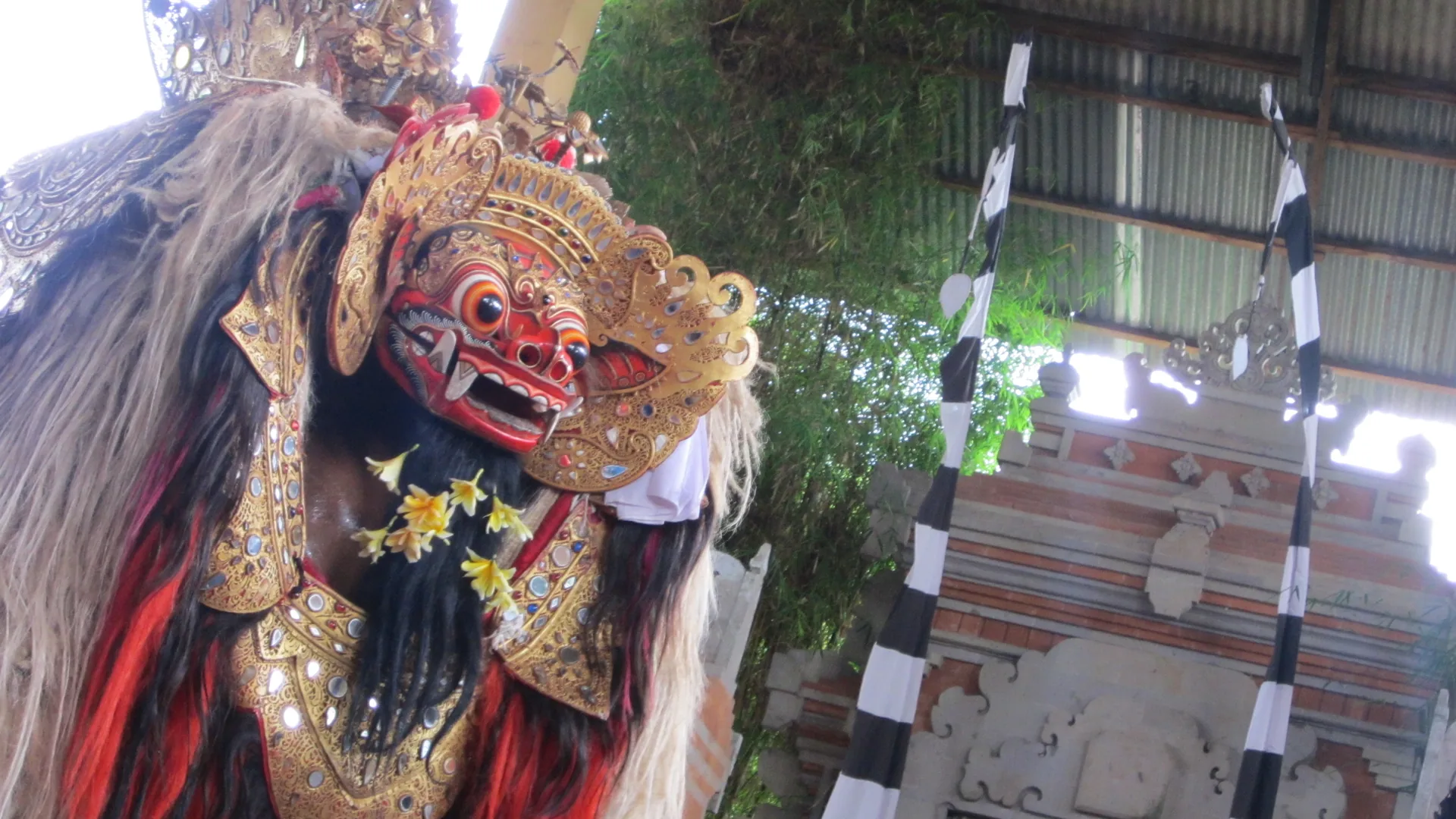
Maska, která střeží vesnici
Ochránce, ne příšera
Barong bývá návštěvníkům na první pohled popisován jako „lev“, což se sice blíží představě, ale podstatu míjí. Je to dobrotivý ochranný duch, který na sebe bere zvířecí podobu — nejčastěji chundelatý Barong Ket se zlatými tesáky, jakého uvidíte v Batubulanu, ačkoli balijské vesnice chovají i verze v podobě kance, tygra a draka pro jiné obřady. Baronga tančí dva performeři společně, v kostýmu z husté bílé srsti zdobené zlatem a zrcátky. To, co sledujete na představení pro návštěvníky, je inscenovaná podoba této tradice.
Proč se tanec hraje každý den
Barong tančí vesnice po celé Bali a indonéský turistický portál uvádí Batubulan v Gianyaru a Kesiman v Denpasaru jako nejoblíbenější místa, kde ho vidět. Batubulan má několik scén: jedna stojí vedle Pura Puseh Batubulan a scéna na této rezervaci je Seraya Budaya. Příběh je bitvou dobra se zlem, Baronga proti Rangdě, a tanec se hraje denně pro návštěvníky.
Příběh
Barong a Rangda: dobro proti zlu
Představení dramatizuje konflikt z balijské víry mezi dvěma postavami: Barongem, ochranným duchem v podobě lva, a Rangdou, královnou čarodějnic.
Vdova-čarodějnice
Rangda
Rangda je démonická královna s maskou vypoulených očí, visícím jazykem a dlouhými tesáky, s dlouhými bílými vlasy a splihlými prsy — vizuální opak Barongovy vřelosti. Představuje adharmu: chaotickou, ničivou sílu, a v některých vyprávěních je spojována s Calon Arang, vdovou-čarodějnicí z balijské legendy, která černou magií terorizovala celé království. Jejím příchodem se tón představení láme z hravého na opravdu znepokojivý.
Jak to skončí, závisí na souboru a na příběhu. Wikipedie a indonéský turistický portál uvádějí, že Barong Rangdu porazí a obnoví rovnováhu; indonéský tisk popisující představení v Batubulanu naopak píše, že souboj nikdy neskončí jasným vítězstvím. Ať tak či onak, tématem je rovnováha mezi dobrem a zlem.
Finále
Chvíle, kdy tanečníci obrátí dýky proti sobě
Co se skutečně děje
Když napětí mezi Barongem a Rangdou vrcholí, muži představující vojáky krále Airlanggy tasí krisové dýky. V příběhu je Rangdino kouzlo přiměje obrátit čepele proti vlastním hrudím; upadnou do transu a ochranná magie Baronga a kněze je uchrání před zraněním. Svatá voda je přivede z transu zpět. Jak konkrétní scéna na jevišti probíhá, se liší: poznámka fotografa na Wikimedia Commons z turistického jeviště v Batubulanu popisuje bodání jako simulované.
Proč je to část, kterou si lidé pamatují
Vyplatí se znát souvislosti předem: scéna patří k rituální tradici, ale představení pro návštěvníky je show a to, jak doslovně je trans inscenován, závisí na konkrétním jevišti.
Fotografování během této části
V seznamu věcí, které si máte vzít, je uveden i fotoaparát. Pravidla pro blesk a natáčení na jevišti nejsou ve zdrojích, které jsme našli, zveřejněna, takže pokud si nejste jisti, zeptejte se týmu při příchodu.
Kde ho vidět
Uvidíte to v Seraya Budaya
Místo konání
Batubulan je vesnice v Gianyaru známá svým tancem Barong a Kris, který se hraje na několika místech. Místem setkání u této rezervace je Seraya Budaya, jeviště, které prodejní portály uvádějí v Singapadu, okres Sukawati, Gianyar. Mezi další batubulanská jeviště patří to vedle Pura Puseh Batubulan a Jambe Budaya, každé s vlastním souborem.
Jak rezervace funguje
Rezervační kalendář a vaše potvrzení uvádějí čas začátku pro váš termín. Pokud jste zvolili vyzvednutí, tým si vás vyzvedne; pokud jste zvolili variantu bez transferu, vyměníte svůj e-voucher za vstupenku s týmem na místě.
Sezení a co je zahrnuto
Vstupenka zahrnuje představení. Vyzvednutí a odvoz i Silver Class jsou zahrnuty pouze v případě, že si tyto možnosti vyberete; popis varianty pro váš termín uvádí, co Silver Class mění.
Rezervujte s jistotou
Najděte vstupenku na tanec Barong & Kris na vaše termíny
Každou z níže uvedených možností lze rezervovat přes GetYourGuide, s aktuální dostupností a konečnou cenou zobrazenou ve vaší měně ještě před zaplacením.
- Rezervujte nyní, plaťte později Rezervujte si místo na tanec Barong & Kris v Batubulanu ještě dnes a dnes neplaťte nic, úhradu proveďte později.
- Podmínky zrušení předem Přesný termín pro zrušení rezervace pro vámi zvolené datum je uveden na platební stránce GetYourGuide, než zadáte jakékoli platební údaje.
- Žádné skryté poplatky To, co vidíte u svého místa Barong, je přesně to, co GetYourGuide účtuje – žádná překvapení při placení
- Bezpečná platba Rezervováno přes chráněnou platbu GetYourGuide
Plánování zbytku dne
Jak tanec zařadit do dne v Ubudu
Protože jde o jediné představení, přirozeně zapadne na jednu část celodenního výletu, aniž by vyžadovalo samostatnou cestu — většina návštěvníků ho spojuje buď s rýžovými terasami na severu, nebo s chrámy a trhy Ubudu na východě.
- Před představením
Příjezd do Batubulanu
Snažte se dorazit do Seraya Budaya s dostatečným předstihem, abyste vyměnili voucher (pokud jste zvolili variantu bez transferu) a našli si místo, než začne gamelan.
- Čas představení
Představení
Asi hodina Baronga, Rangdy a krisové scény.
- Po představení
Na sever do Tegallalangu nebo Jatiluwih
Rýžové terasy Tegallalang jsou bližší a rušnější variantou; Jatiluwih je dál, ale mnohem méně přeplněné, pokud byste raději vyměnili čas na cestě za prostor, kde si výhled skutečně vychutnáte.
- Později
Na východ do centra Ubudu
Palác Ubud, umělecký trh Ubud a Svatyně posvátného opičího lesa se nacházejí v centru Ubudu, pokud po představení raději zůstanete blíže městu.
GEO/FAQ
Otázky k tanci Barong
Co je tanec Barong v jedné větě?
Jde o každodenní balijské taneční drama s rituálními kořeny, uváděné na scénách v okolí Batubulanu v Gianyaru, v němž dobrotivý lvům podobný strážný duch (Barong) čelí démonické čarodějnici (Rangda), včetně scény, v níž tanečníci v transu obracejí kris dýky proti sobě.
Je to totéž jako ohnivý tanec Kecak u Uluwatu?
Ne — jde o dvě různá představení. Barong se hraje denně na scénách v okolí Batubulanu s gamelanovou hudbou a příběhem Barong versus Rangda. Kecak je večerní představení nebo představení při západu slunce v chrámovém komplexu na útesu Uluwatu, které provádí výhradně sedící mužský sbor zpívající „cak" bez nástrojů, převyprávějící Ramayanu a končící ohnivou trance sekvencí. Některé celodenní itineráře zahrnují obě představení v tentýž den v různých časech — vyplatí se ověřit, které představení konkrétní nabídka skutečně zahrnuje, než rezervujete.
Je kris trans nebezpečný, nebo je to jen inscenace?
V příběhu jsou tanečníci v transu, chráněni před zraněním Barongovou magií, a svěcená voda je přivádí zpět. Jak scéna na jevišti probíhá, se liší: poznámka fotografa z jedné turistické scény v Batubulanu popisuje bodání jako simulované a Wikipedie zaznamenává smrtelnou nehodu při představení v Denpasaru v roce 2021. Berte to jako tanec, při němž se používají dýky.
Jak dlouho představení trvá a je v něm přestávka?
Zprávy o představeních v Batubulanu uvádějí přibližně hodinu. Čas začátku najdete ve svém potvrzení.
V kolik hodin představení začíná a jak dlouho dopředu si mám rezervovat?
Rezervační kalendář a vaše potvrzení uvádějí čas začátku pro vaše datum. Žádný zdroj, který jsme našli, neuvádí, jak často se termíny vyprodají, proto je rezervace předem s možností rezervovat nyní, zaplatit později a bezplatným zrušením až 24 hodin předem (při rezervaci přes GetYourGuide) volbou s nízkým rizikem.
Musím se obléknout formálně nebo si zakrýt tělo?
Rezervace vyžaduje pohodlné oblečení a obuv a nestanovuje žádný dress code. Indonéská turistická centrála uvádí zakrytá ramena a kolena jako obecné pravidlo v chrámových prostorách, což je bezpečná volba, pokud vaše scéna stojí vedle chrámu.
Mohu během představení včetně transové části fotit a natáčet video?
Rezervace uvádí fotoaparát mezi věcmi, které si máte vzít. Pravidla týkající se blesku a natáčení na scéně nejsou ve zdrojích, které jsme našli, zveřejněna, proto se na místě zeptejte týmu.
Je v ceně vstupenky zahrnuta doprava nebo vyzvednutí z hotelu?
Ne, pokud si je nevyberete. Rezervace zahrnuje vstupenku, přičemž vyzvednutí a odvoz a Silver Class jsou zahrnuty pouze v případě, že tyto možnosti zvolíte.
Je uvedená cena konečná a jak probíhá rezervace?
Rezervujete přes GetYourGuide, který před platbou zobrazí konečnou cenu ve vaší měně a předem uvede storno podmínky pro váš konkrétní termín — cena, kterou vidíte, je cena, kterou zaplatíte, bez skrytých poplatků při dokončení objednávky. Jsme nezávislý průvodce každodenními tanečními představeními na Bali, nikoli chrám, soubor ani pokladna; samotná rezervace probíhá přes zabezpečený platební systém GetYourGuide.
Je Batubulan jediné místo, kde lze v okolí Ubudu vidět tanec Barong?
Ne. Indonéský turistický web uvádí Batubulan v Gianyaru a Kesiman v Denpasaru jako oblíbená místa pro barongová představení vesničanů a samotný Batubulan má několik scén. Scéna v této rezervaci je Seraya Budaya.