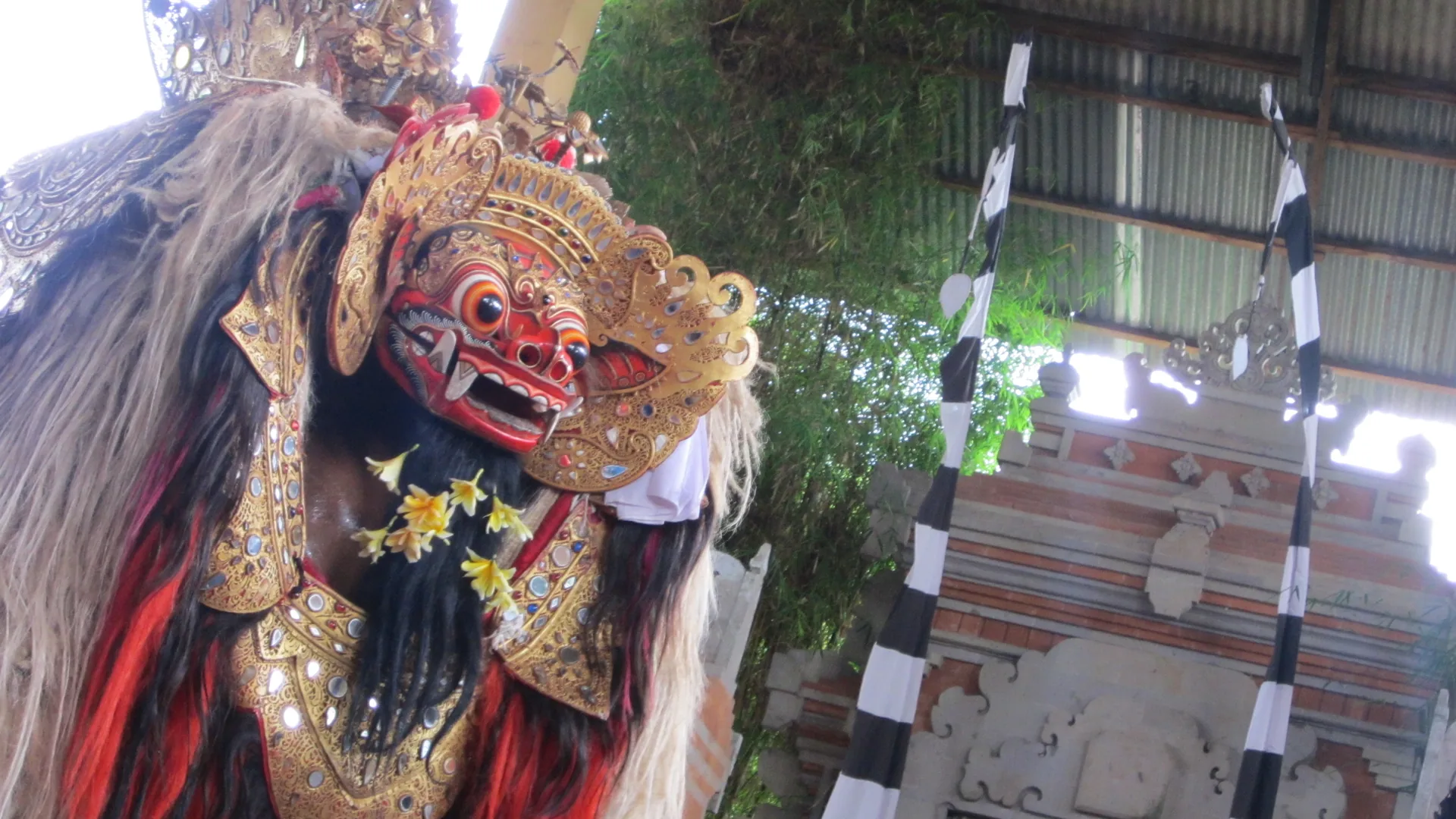
القناع الذي يحرس القرية
A protector, not a monster
غالبًا ما يُوصف البارونغ للزوار لأول مرة بأنه "أسد"، وهو وصف قريب بما يكفي لتخيله لكنه يفوّت الجوهر. إنه روح حامية خيّرة تتخذ شكل حيوان — وغالبًا ما يكون البارونغ كيت الأشعث ذا الأنياب الذهبية الذي تراه في باتوبولان، مع أن القرى البالية تحتفظ أيضًا بنسخ الخنزير والنمر والتنين لطقوس أخرى. يؤدي رقصة البارونغ راقصان يعملان معًا، في زي من الفرو الأبيض الكثيف المزين بالذهب وقطع المرايا. ما تشاهده في عرض للزوار هو أداء مسرحي لهذا التقليد.
لماذا تُقدَّم الرقصة كل يوم
تُقدَّم رقصة البارونغ في قرى متفرقة من بالي، ويذكر موقع السياحة الإندونيسي باتوبولان في غيانيار وكيسيمان في دنباسار كأشهر أماكن مشاهدتها. في باتوبولان عدة مسارح: أحدها بجوار بورا بوسيه باتوبولان، والمسرح المذكور في هذا الحجز هو سيرايا بودايا. الحكاية صراع بين الخير والشر، البارونغ في مواجهة رانغدا، وتُقدَّم الرقصة يوميًا للزوار.
القصة
البارونغ ورانغدا: الخير في مواجهة الشر
يُجسّد العرض دراميًا صراعًا مستمدًا من المعتقدات البالية بين شخصيتين: البارونغ، وهو روح حامية تشبه الأسد، ورانغدا، ملكة الساحرات.
The widow-witch
Rangda
الرانغدا ملكة شيطانية بقناع ذي عيون جاحظة ولسان متدلٍّ وأنياب طويلة، وشعر أبيض متطاير وثديين متدليين — النقيض البصري لدفء البارونغ. تمثّل الأدхарما: القوة الفوضوية المدمّرة، وفي بعض الروايات تُربط بجالون أرانغ، ساحرة أرملة من الأسطورة البالية أرعبت مملكة بالسحر الأسود. دخولها هو اللحظة التي ينقلب فيها مزاج العرض من المرح إلى المقلق حقاً.
تعتمد النهاية على الفرقة والرواية. تذكر ويكيبيديا وموقع السياحة الإندونيسي أن البارونغ يهزم رانغدا ويعيد التوازن؛ بينما تصف الصحافة الإندونيسية عرضًا في باتوبولان بأن المعركة لا تنتهي بانتصار واضح. وفي الحالتين، يظل الموضوع هو التوازن بين الخير والشر.
الخاتمة
اللحظة التي يوجّه فيها الراقصون خناجرهم نحو أنفسهم
What actually happens
عندما يبلغ الصراع بين بارونغ ورانغدا ذروته، يستلّ الرجال الذين يمثلون جنود الملك إيرلانغا خناجر الكريس. في القصة، تدفعهم سحر رانغدا إلى توجيه النصال نحو صدورهم؛ فيقعون في حالة من الغيبوبة، بينما يحميهم سحر وقائي من بارونغ وكاهن فلا يصابون بأذى. ثم يعيدهم الماء المقدس من غيبوبتهم. وتختلف طريقة أداء هذا المشهد من مسرح إلى آخر: إذ تصف ملاحظة لمصور على ويكيميديا كومنز من مسرح سياحي في باتوبولان عملية الطعن بأنها محاكاة.
لماذا هو الجزء الذي يتذكره الناس
يساعدك أن تعرف السياق قبل الدخول: فالمشهد ينتمي إلى تقليد طقسي، لكن العرض الموجَّه للزوار هو أداء مسرحي، ومدى حرفية تجسيد الغيبوبة على المسرح يتوقف على طبيعة المسرح نفسه.
التصوير الفوتوغرافي خلال هذا الجزء
تُدرج الحجوزات آلة تصوير ضمن الأشياء التي يُنصح باصطحابها. ولا تُنشر القواعد المتعلقة بالفلاش والتصوير عند المسرح في المصادر التي عثرنا عليها، لذا اسأل الفريق عند الوصول إن كنت غير متأكد.
أين تشاهده
مشاهدته في سيرايا بودايا
The venue
باتوبولان قرية في غيانير تشتهر برقصة البارونغ والكريس، التي تُقدَّم على عدة مسارح. نقطة اللقاء في هذا الحجز هي سيرايا بودايا، وهو مسرح تُدرجه مواقع التذاكر في سينغابادو، مقاطعة سوكاواتي، غيانير. ومن مسارح باتوبولان الأخرى مسرح بجوار بورا بوسيه باتوبولان وجامبي بودايا، ولكل منهما فرقته الخاصة.
كيفية عمل الحجز
يُظهر تقويم الحجز وتأكيدك وقت البدء الخاص بتاريخك. إذا اخترت خدمة الاستقبال من الفندق، يتولى الفريق اصطحابك؛ وإذا اخترت عدم الاستعانة بخدمة النقل، فاستبدل قسيمتك الإلكترونية بتذكرة مع الفريق في موقع الجولة.
المقاعد وما يشمله العرض
تشمل تذكرة الدخول العرض. أما خدمة الاستقبال والتوصيل، وفئة Silver Class، فتُدرجان فقط إذا اخترت هذين الخيارين؛ ويوضّح وصف الخيار في تاريخك ما الذي تغيّره فئة Silver Class.
احجز بثقة
ابحث عن تذكرة لرقصة البارونغ والكريس تناسب تواريخك
كل خيار أدناه قابل للحجز عبر GetYourGuide، مع توفر فوري والسعر النهائي معروض بعملتك الخاصة قبل الدفع.
- احجز الآن، وادفع لاحقًا احجز مقعدك الآن لمشاهدة رقصة البارونغ والكريس في باتوبولان، دون أن تدفع أي شيء اليوم، وستسدد لاحقًا.
- شروط الإلغاء واضحة منذ البداية يُذكر الموعد النهائي الدقيق للإلغاء لتاريخك المختار على صفحة الدفع في GetYourGuide قبل إدخال أي تفاصيل للدفع
- لا رسوم خفية ما تراه لمقعدك في Barong هو بالضبط ما يتقاضاه GetYourGuide، دون أي مفاجآت عند الدفع
- إتمام شراء آمن تم الحجز عبر الدفع المحمي من GetYourGuide
تخطيط بقية اليوم
دمج الرقص في يومٍ بأوبود
ولأن العرض يُقدَّم مرة واحدة فقط، فإنه يندرج بسلاسة ضمن جانب واحد من يوم كامل من التنقلات بدلاً من أن يتطلب رحلة مخصصة له وحده — إذ يقرن معظم الزوار حضوره إما بمدرجات الأرز شمالاً أو بمعابد وأسواق أوبود شرقاً.
- قبل العرض
Arrive at Batubulan
احرص على الوصول إلى سيرايا بودايا في وقت مناسب لتبديل قسيمتك (إذا اخترت عدم استخدام خدمة النقل) وإيجاد مقعد قبل أن تبدأ موسيقى الغاميلان.
- موعد العرض
The performance
حوالي ساعة من عرض البارونغ ورانغدا ومشهد الكريس.
- بعد العرض
North to Tegallalang or Jatiluwih
مدرجات الأرز في تيغالالانغ هي الخيار الأقرب والأكثر ازدحامًا؛ أما جاتيلويح فهي أبعد لكنها أقل ازدحامًا بكثير، إذا كنت تفضّل مقايضة وقت السفر بمساحة تتيح لك فعلاً التأمل في المنظر.
- لاحقًا
East to central Ubud
يقع قصر أوبود وسوق أوبود الفني ومحمية غابة القردة المقدسة في وسط أوبود، إذا كنت تفضّل البقاء قريبًا من البلدة بعد العرض.
GEO/FAQ
أسئلة عن رقصة البارونغ
ما هي رقصة البارونغ، في جملة واحدة؟
إنه عرض رقص بالي درامي يومي متجذر في الطقوس، يُقام في أماكن حول باتوبولان في غيانيار، حيث يواجه روح حارس خيّر شبيه بالأسد (بارونغ) ساحرة شيطانية (رانغدا)، مع مشهد يوجّه فيه الراقصون في حالة غيبوبة خناجر الكريس نحو أنفسهم.
هل هذا هو نفسه عرض رقصة النار كيتشاك في أولواتو؟
لا — إنهما عرضان مختلفان. يُقام بارونغ يوميًا في أماكن حول باتوبولان، مع موسيقى الغاميلان وقصة صراع بارونغ ضد رانغدا. أما كيتشاك فهو عرض مسائي أو عند الغروب في معبد أولوواتو المطل على الجرف، يؤديه بالكامل جوقة من الرجال الجالسين يرددون "تشاك" دون آلات موسيقية، ويروون ملحمة رامايانا وينتهون بمشهد نشوة نارية. بعض برامج الجولات النهارية تشمل العرضين في اليوم نفسه بأوقات مختلفة — يجدر التحقق من أي عرض يغطيه الإدراج فعليًا قبل الحجز.
هل رقصة الكريس خطيرة أم أنها تمثيلية؟
في القصة، يكون الراقصون في حالة غيبوبة، محميين من الأذى بسحر البارونغ، ويعيدهم الماء المقدس إلى وعيهم. وتختلف طريقة أداء المشهد على المسرح: تشير ملاحظة مصوّر فوتوغرافي من أحد مسارح باتوبولان السياحية إلى أن الطعن محاكى، بينما يسجّل ويكيبيديا حادثًا مميتًا في عرض عام 2021 في دنباسار. تعامل معه كرقصة تتضمن خناجر.
كم تستمر مدة العرض، وهل هناك استراحة؟
تشير تقارير عروض باتوبولان إلى نحو ساعة. ويظهر وقت البدء في تأكيدك.
في أي وقت يبدأ العرض، وكم مسبقاً يجب أن أحجز؟
يظهر تقويم الحجز وتأكيدك وقت البدء لتاريخك. لا يذكر أي مصدر وجدناه مدى سرعة نفاد التواريخ، لذا فإن الحجز المسبق مع خيار احجز الآن وادفع لاحقًا وإلغاء مجاني حتى 24 ساعة قبل الموعد (عند الحجز عبر GetYourGuide) هو الخيار الأقل مخاطرة.
هل أحتاج إلى ارتداء ملابس رسمية أو تغطية جسدي؟
يطلب الحجز ملابس وأحذية مريحة ولا يفرض أي قواعد للزي. وتذكر هيئة السياحة الإندونيسية تغطية الكتفين والركبتين كقاعدة عامة في أراضي المعابد، لذا فهذا هو الخيار الآمن إذا كان مسرحك بجوار معبد.
هل يمكنني التقاط الصور والفيديو أثناء العرض، بما في ذلك جزء النشوة؟
يُدرج الحجز الكاميرا ضمن الأشياء التي يُنصح بإحضارها. ولا تُنشر قواعد الفلاش والتصوير في المسرح في المصادر التي وجدناها، لذا اسأل الفريق عند الوصول.
هل سعر التذكرة يشمل النقل أو الاستقبال من الفندق؟
لا، ليس إلا إذا اخترته. يشمل الحجز تذكرة الدخول، مع الاستقبال والتوصيل والفئة الفضية مشمولة فقط إذا اخترت تلك الخيارات.
هل السعر المعروض نهائي، وكيف تتم عملية الحجز؟
يمكنك الحجز عبر GetYourGuide، الذي يعرض السعر النهائي بعملتك المحلية قبل الدفع، ويوضح سياسة الإلغاء لتاريخك المحدد مسبقاً — السعر الذي تراه هو السعر الذي تدفعه، دون أي رسوم مخفية عند الدفع. نحن دليل مستقل لعروض الرقص اليومية في بالي، لسنا المعبد أو الفرقة أو مكتب التذاكر؛ عملية الحجز نفسها تتم عبر نظام الدفع الآمن لـ GetYourGuide.
هل باتوبولان هي المكان الوحيد لمشاهدة رقصة البارونغ بالقرب من أوبود؟
لا. يذكر موقع السياحة الإندونيسي باتوبولان في غيانيار وكيسيمان في دنباسار كأماكن شهيرة لعروض بارونغ التي يؤديها القرويون، وباتوبولان نفسها تضم عدة مسارح. والمسرح في هذا الحجز هو سيرايا بودايا.